You notice rust-colored dust on your shoes or fingers after walking the lawn. The grass blades look a little orange or dirty, and it seems to spread fast.
This can be turf rust fungus, but it can also be soil dust or pollen sticking to damp blades. In Japan, humid summers and rainy season air keep leaves wet longer, so rust symptoms can show up quickly.
In this guide, you’ll learn how to confirm turf rust and calm it down. You’ll check humidity, airflow, and nitrogen balance so you fix the cause instead of just chasing the color.

Hi, I’m Ken — I’m Japanese, and I live in Malaysia long-term, so I explain everyday life in Japan from a practical ‘from abroad’ perspective.
I hold a building design qualification and I’ve been on site for 20+ years across hundreds of jobs. I turn Japan’s unspoken rules into simple checks, so you can avoid costly mistakes and take the next step with clear actions that feel safe.
1. Lawn shows rust colored dust 5 checks for fungus
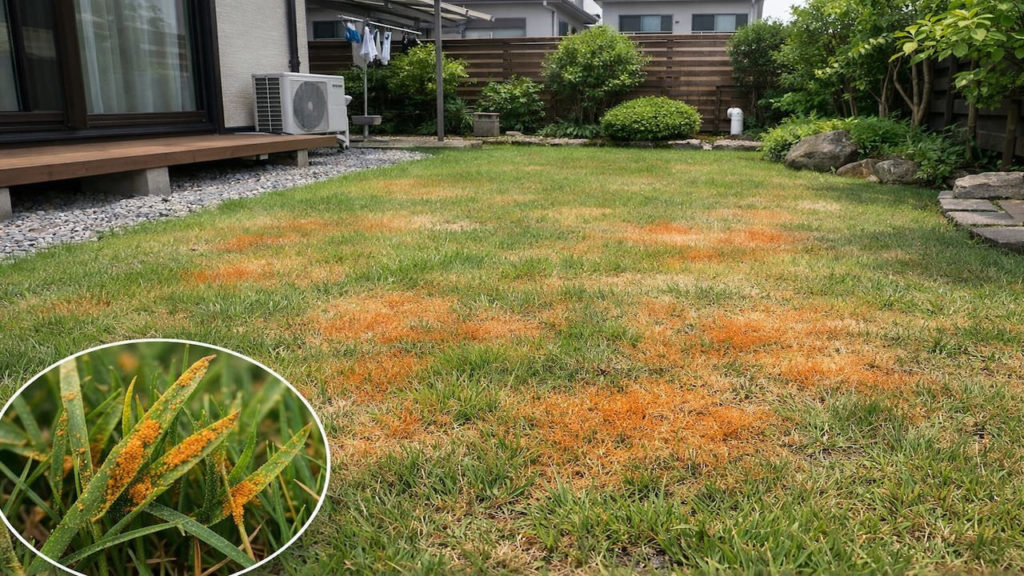
If the dust wipes off as orange powder, rust fungus is likely.
Turf rust leaves orange spores that rub onto shoes, pets, or your fingers. It often shows on slow-growing grass that’s a bit hungry and shaded. In Japan, warm humid nights plus slower drying in small yards can make spores build up fast. Orange smear. Clear clue.
- Rub a blade with tissue and check orange stain
- Check if shoes pick up powder after walking
- Look for yellowing blades with orange specks
- Compare sunny and shaded areas for severity
- Check if growth is slow and thin lately
You might think it means the lawn is dying. Usually it’s more nuisance than fatal. If the grass is still rooted and growing, rust is something you manage, not something you fear.
2. Humidity airflow and nitrogen
Rust loves humid air and grass that’s underfed.
High humidity keeps spores active and blades wet for longer. Weak airflow traps that humidity near the turf surface. Low nitrogen slows growth, so the lawn can’t outgrow the infected leaf tissue—common after rainy stretches in Japan when people avoid fertilizing. Slow growth. Easy target.
If you choose to apply a light nitrogen feed or basic lawn fertilizer, expect about ¥1,000–3,000 for small-yard supplies depending on product and area. Keep it light, not a heavy dump.
- Check morning dew duration in the problem zone
- Look for blocked wind lanes by shrubs or fences
- Review recent feeding and mowing schedule changes
- Check if you water late and keep blades wet
- Notice if shade keeps turf damp into afternoon
You could argue “more fertilizer means more problems.” Overfeeding can cause issues, but rust often appears when the lawn is too lean and slow. A gentle correction plus better drying usually beats aggressive chemicals.
3. Why rust fungus shows up on lawns
Rust appears when leaf wetness stays long and growth stays slow.
Rust fungi produce spores on leaf surfaces, and those spores spread when conditions stay humid. If the lawn is stressed or underfed, it grows slowly and can’t shed infected tissue through new growth. In Japan’s humid seasons, leaf wetness duration is the big driver, especially in shaded yards. Wet leaves. Slow recovery.
- Long humid periods keep spores producing daily
- Shade reduces drying and slows grass growth
- Low nitrogen reduces new leaf replacement rate
- Thatch holds moisture near the blade base
- Overwatering extends leaf wetness overnight
Some people blame “dirty soil” because of the color. But if it stains a tissue orange from the blade, that’s spores, not soil. Treat it like a humidity and growth balance issue.
4. How to reduce rust without nuking the lawn
Speed up drying and push healthy growth gently.
Rust hates dry leaves and steady growth. Improve airflow, mow properly, and water only at dawn so blades dry fast. In Japan, avoid evening watering because warm humid nights keep spores active—morning watering reduces leaf wetness hours. Keep it boring and consistent.
If you need a small bag of fertilizer, a thatch rake, or pruning tools for airflow, plan around ¥1,000–5,000 depending on what you already own. Don’t chase perfection in one day.
- Water only at dawn and stop evening watering
- Mow regularly and bag clippings if dusty
- Apply a light nitrogen feed to boost growth
- Rake out thatch to improve air at crown level
- Prune shrubs to open a wind lane
You might want to spray fungicide immediately. Sometimes it’s needed, but rust often fades when weather dries and growth improves. If the rust keeps returning for weeks even after airflow and feeding, then consider targeted treatment or a pro check.
5. FAQs
Q1. Is rust fungus harmful to people or pets?
It’s mostly a nuisance stain, not a serious hazard. Still, wash hands and paws if they get coated, and avoid letting pets chew unknown fungal growth.
Q2. Can I just mow it away?
Mowing helps remove infected leaf tissue, but it can also spread spores if it’s very dusty. Bagging clippings for a few cycles and cleaning the mower can reduce re-spread.
Q3. Does rust mean I need more nitrogen?
Often yes, especially if growth is slow and blades look pale. A light nitrogen boost can help the lawn outgrow rust, but don’t overdo it in hot weather.
Q4. Will watering more fix it?
No, frequent watering can keep blades wet and worsen rust. Water less often, deeper, and only in the morning so the leaf surface dries.
Q5. When should I call a pro?
If rust persists for weeks despite better airflow and mowing, or if large areas thin out. A pro can confirm diagnosis and rule out other diseases.
Pro's Tough Talk

I’ve spent 20+ years working around Japanese homes, so I’ve seen what tends to work—and what tends to go wrong—in everyday use. Rust dust on your lawn looks scary, but it’s usually your turf telling you it’s tired and damp.
Cold breakdown: humidity keeps blades wet, airflow dies near fences, and low nitrogen slows growth so infected leaves just sit there. Then you walk through and come out looking like you kicked a bag of cinnamon. It’s like wearing a damp shirt all day and wondering why it smells weird.
Seriously?
Water at dawn only. Mow and bag clippings tomorrow. Give a light nitrogen feed this weekend.
If the lawn starts growing stronger, rust fades fast. If it keeps dusting orange after you improve drying and feeding, stop guessing and get it confirmed and treated properly.
Keep ignoring it and you’ll start matching your lawn like a rust-themed outfit.
Summary
Rust-colored dust usually points to turf rust fungus when it wipes off orange from the blades. Check for humid conditions, slow growth, and poor airflow before you panic.
Reduce rust by drying leaves faster, mowing regularly, and correcting low nitrogen with a light feed. If rust persists for weeks despite these changes, consider targeted treatment or a pro diagnosis.
Do one dawn-only watering shift and one light feeding fix. Once the lawn grows steadily and dries faster, the rust dust usually disappears on its own.