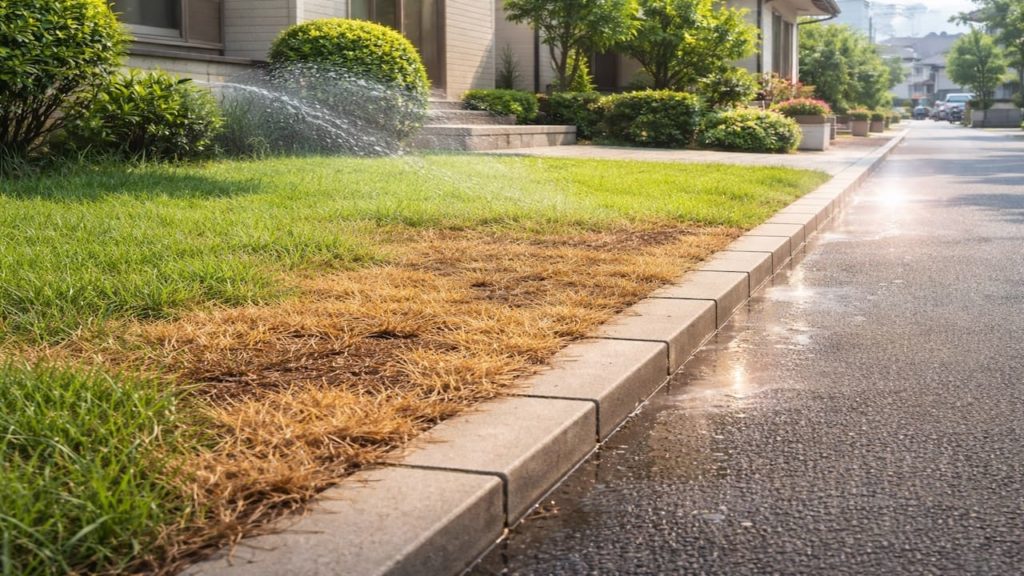
You mow the lawn and suddenly you see bald stripes or brown patches where the mower scalped it. It looks harsh, and it can take weeks to recover.
Scalping usually comes from uneven ground, a deck set too low, or mowing when the lawn is soft and bumpy. In Japan, heavy rain cycles and compact small yards can make tiny ruts and bumps that catch a low deck fast.
In this guide, you’ll learn how to stop mowing scalps and keep turf even. You’ll check ground level, deck height, and mowing habits so the lawn stays green after every cut.

Hi, I’m Ken — I’m Japanese, and I live in Malaysia long-term, so I explain everyday life in Japan from a practical ‘from abroad’ perspective.
I hold a building design qualification and I’ve been on site for 20+ years across hundreds of jobs. I turn Japan’s unspoken rules into simple checks, so you can avoid costly mistakes and take the next step with clear actions that feel safe.
1. Lawn keeps getting scalped 5 mistakes to avoid
Scalping is a setup problem more than a mowing skill problem.
If the mower hits high spots, it shaves crowns and exposes soil. Once crowns are damaged, grass weakens and weeds move in. In Japan, small lawns often have hidden dips from drainage and foot traffic, so one low pass can scalp a whole lane. One pass. Big damage.
- Mow too low trying to reduce weekly mowing
- Mow when soil is soft and rutted
- Use a deck height that hides uneven ground
- Repeat the same direction and create wheel ruts
- Ignore high spots that keep getting shaved
You might think lowering the deck makes the lawn “cleaner.” It often just makes it weaker and uglier. The clean look comes from even height and steady growth, not shaving it down.
2. Uneven ground and low deck
Uneven ground plus a low deck guarantees scalp marks.
Even small bumps are enough when the deck is set low. Wheels drop into dips, the blade hits the next rise, and the crown gets clipped. In Japan, rainy season water can soften soil and create tiny sink spots, so the ground changes over time even if it looked flat last month. Sneaky shifts.
If you need leveling material like topsoil or sand mix and a basic rake, plan around ¥2,000–10,000 depending on lawn size and depth. Go light and repeat over time instead of dumping a thick layer.
- Walk the lawn and mark bumps with flags
- Check deck height setting on all wheels
- Inspect for wheel ruts forming in one lane
- Check mower blade condition and balance
- Measure grass height before cutting each time
You could argue leveling is too much work. True, but if your lawn is uneven, you either level slowly or accept scalp marks forever. Raising the deck is the quick fix; leveling is the lasting fix.
3. Why scalping happens so often
Scalping happens when the mower cuts into the crown zone.
The crown is the growth point near the soil surface. When you shave it, the lawn browns and regrows slowly, and the spot becomes sensitive to heat and weeds. In Japan’s humid summer, scalp spots can also stay stressed longer because the soil surface overheats once it’s exposed. Exposed soil. Hot stress.
- Low deck hits crown on high spots
- Uneven ground makes blade height unpredictable
- Fast mowing speed increases bounce and dip cuts
- Dull blades tear crowns and widen damage
- Mowing wet turf causes clumping and uneven cut
Some people think scalping is just “how lawns look after mowing.” No; consistent scalping is avoidable. If you keep seeing bare streaks, your mower height and ground level are out of sync.
4. How to mow without scalping and fix the worst spots
Raise the deck and level high spots gradually.
Start by raising the deck one step and mowing more often until the lawn thickens. Then level the worst bumps with light topdressing and firming. In Japan, choose a dry window because leveling on wet soil turns into footprints and mud, and you’ll create the bumps you’re trying to remove. Timing matters.
For topdressing material, a leveling rake, and patch seed, expect about ¥3,000–15,000 depending on how many low spots you need to correct. Keep it targeted and slow.
- Raise deck height and reduce cutting amount
- Mow in different directions each week
- Slow down on bumpy areas to reduce bounce
- Topdress low spots lightly and brush it in
- Sharpen blades to avoid tearing and scalps
You might want to keep mowing low and “train it.” That’s not training, that’s shaving. If the lawn scalp keeps repeating, stop chasing short grass and focus on even ground and steady height. The lawn will look better, not worse.
5. FAQs
Q1. Is mowing low always bad?
It depends on grass type and conditions, but low mowing increases scalp risk on uneven ground. If you have bumps or ruts, raising the deck usually improves appearance fast.
Q2. How do I know if my mower deck is uneven?
Check wheel height settings and inspect cut patterns on flat pavement edges. If one side consistently cuts shorter, the deck or wheels may be mis-set or worn.
Q3. Can I fix scalped spots without reseeding?
Sometimes, if crowns are intact and the grass type spreads. If you see bare soil and no recovery in two weeks, patching helps, but fix height and bumps first.
Q4. Should I mow when the lawn is wet?
Try not to. Wet turf clumps and the mower can sink into soft soil, increasing scalps. Wait until the surface is firm enough to support your steps.
Q5. How long does it take to level a bumpy lawn?
It depends on severity, but gradual topdressing over a season is safer than one thick dump. Slow leveling keeps grass alive and avoids creating new layers.
Pro's Tough Talk

I’ve spent 20+ years working around Japanese homes, so I’ve seen what tends to work—and what tends to go wrong—in everyday use. Scalping is what happens when you bring a low-deck mower to an uneven yard and act surprised.
Cold truth: bumps plus low deck equals shaved crowns, and shaved crowns equal brown scars. Then you mow again to “fix it” and just shave it harder, like arguing louder when nobody’s listening. It’s like trying to shave a watermelon and blaming the razor.
Seriously?
Raise the deck today. Change mowing direction tomorrow. Mark and topdress the worst dips this weekend.
If scalps keep repeating, your ground needs leveling. If raising the deck stops the scars and the lawn thickens, stay there and level slowly over time instead of chasing super-short cuts.
Keep mowing low on bumps and you’ll end up with a lawn that looks like a bad haircut.
Summary
Scalping usually comes from mowing too low on uneven ground and soft soil. Check deck height, wheel settings, and where bumps and ruts are forcing the blade into crowns.
Raise the deck, mow more often, and vary direction to reduce bounce and ruts. If scalps keep happening, level the worst spots gradually with light topdressing during dry weather.
Raise the deck one step and mark the high spots. Once the mower stops shaving crowns, the lawn stays green and mowing stops feeling like damage control.