You’re thinking about artificial turf because mowing is a pain and weeds keep winning. But you also worry it will look fake, feel weird, or turn into a hot plastic pan.
The truth is turf success is mostly about base prep, drainage, and choosing the right pile feel for your life. In Japan, wet seasons and tight side yards punish bad drainage fast, so the “cheap win” can flip into regret.
In this guide, you’ll learn what to check before buying artificial turf. You’ll focus on heat, drainage, and touch so your yard stays usable, not just photo-ready.

Hi, I’m Ken — I’m Japanese, and I live in Malaysia long-term, so I explain everyday life in Japan from a practical ‘from abroad’ perspective.
I hold a building design qualification and I’ve been on site for 20+ years across hundreds of jobs. I turn Japan’s unspoken rules into simple checks, so you can avoid costly mistakes and take the next step with clear actions that feel safe.
1. Considering artificial turf 5 checks before you buy
Buy turf for your daily use not for photos.
Before you get hypnotized by “realistic” marketing, picture how you actually walk, sit, and clean that space. If you have kids, pets, or you hang laundry nearby, the wrong surface becomes annoying fast—then you avoid your own yard. In Japan, summer humidity and sudden downpours stress the base layer more than the blades. Cost is mostly time/effort.
- Touch a sample and test barefoot comfort
- Check backing holes and water exit points
- Ask how seams are joined and hidden
- Confirm the base plan not just turf roll
- Picture cleaning routine after mud and leaves
You might think all turf is basically the same. It’s not, because the backing, base, and seam work decide whether it feels natural or turns into a wrinkled mat.
2. Heat drainage and feel
Heat and drainage decide if turf is livable.
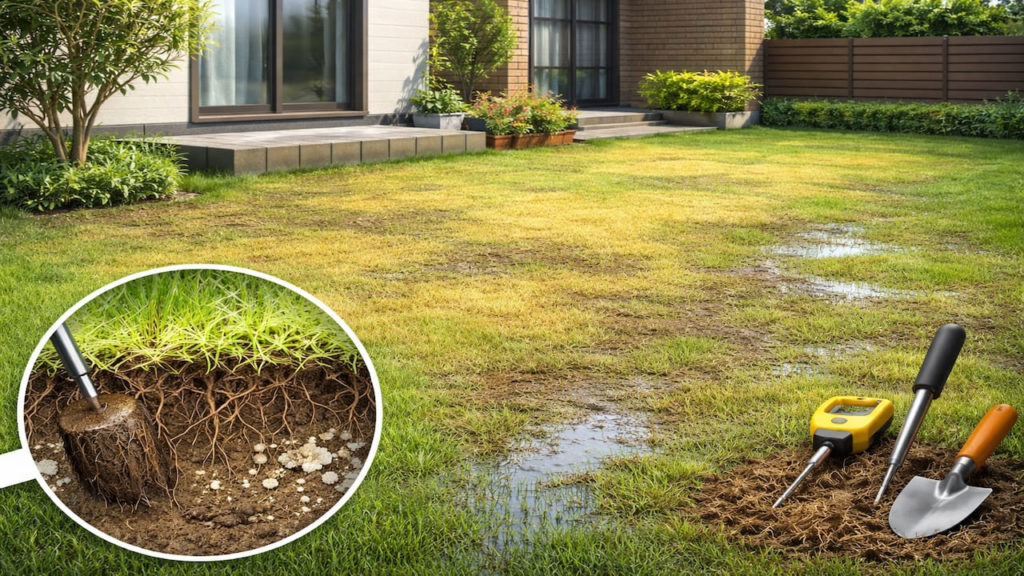
Turf can feel fine in spring and become brutal in peak sun, especially when airflow is low near fences and walls. Drainage matters because trapped water makes smells, algae film, and squishy spots that never fully dry. In Japan, that damp cycle repeats for months, so small mistakes stack up. Cost is mostly time/effort.
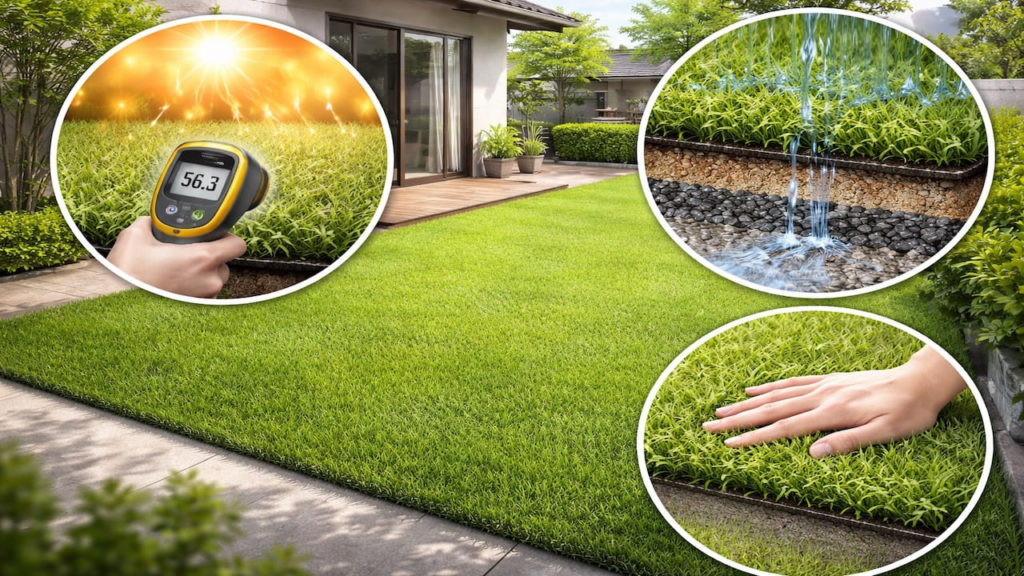
- Stand on it in sun and feel heat
- Pour water and watch pooling versus flow
- Press heel and check rebound softness level
- Rub surface and notice scratchy plastic feel
- Smell after wetting to catch chemical odor
You might assume drainage is only about “holes in the backing.” Not enough, because the base layer is the real highway for water, and a bad base turns good turf into a swamp.
3. Why artificial turf disappoints after install
Most turf regret comes from a lazy base.
If the base is uneven, the turf telegraphs every bump and makes the surface look cheap even if the blades are nice. If the base holds moisture, you get a sour smell and slippery film, then you start hating summer barefoot use. In Japan, pollen and fine dust can sit on the surface and feed grime when it stays damp. Same pattern.
- Base not compacted so dips appear later
- Edges not pinned so corners curl upward
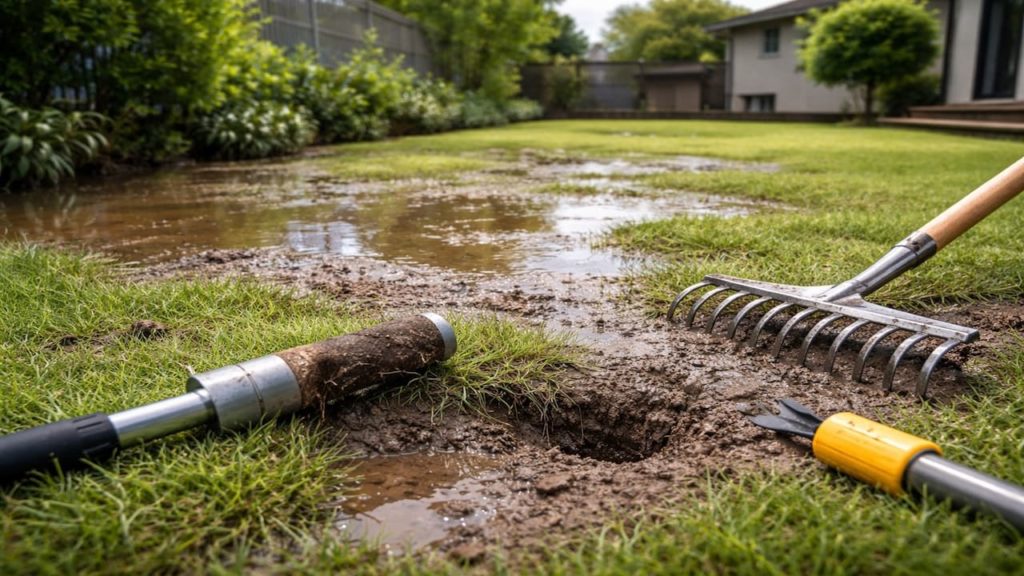
- Wrong slope so water sits and stinks
- Seams misaligned so lines stay visible
- Infill skipped so blades collapse flat
You might blame the turf product when it looks bad. But most of the time the product is fine, and the underlayer is what betrayed you.
4. How to choose turf and prep for long life
Pick the feel first then engineer the drainage.
Start with a sample test for skin comfort, then match it to your cleaning tolerance and how much shade the area gets. For Japan installs, a common all-in budget ends up around ¥6,000–13,000 per m2 when you include turf plus installation costs, depending on conditions and options.
- Choose pile feel that matches barefoot use
- Plan base slope so water exits naturally
- Compact base in layers not one rough pass
- Install weed barrier with tight overlap seams
- Brush and infill so blades stand upright
You might think DIY is always cheaper and “good enough.” It can be, but only if you can actually compact and level well, because fixing a bad base later costs more than doing it right once.
5. FAQs
Q1. Will artificial turf always feel hotter than grass?
It often feels hotter in direct sun because it does not cool the same way living grass does. If your yard has strong afternoon sun, treat heat as a real usability issue and test a sample outside.
Q2. Is drainage just about holes in the backing?
No, drainage is a full system: slope, base material, compaction, and how water exits the edges. If any part traps water, the surface will stay damp and start smelling.
Q3. Does turf feel fake even if it looks real?
Sometimes, yes, because touch is different from looks. Always test barefoot on a real sample before you commit to a full roll.
Q4. Can I install turf over existing soil?
You can, but it usually performs poorly—soil shifts, holds water, and grows bumps. A proper base takes effort, but it is what keeps the surface stable.
Q5. What maintenance should I expect after install?
You still need to remove leaves, rinse dust, and brush fibers back up once in a while. If you have pets, plan for spot cleaning so odor does not build.
Pro's Tough Talk

I’ve spent 20+ years working around Japanese homes, so I’ve seen what tends to work—and what tends to go wrong—in everyday use. In one hot humid season, a bad base turns turf into a warm sponge you stop stepping on.
Three reasons it goes ugly: people buy with their eyes, they skip compaction, and they ignore where water actually goes. You’re not stupid, and installers are not all villains, but turf is a suit jacket over a crooked frame. The frame wins.
Right now, get a sample and torture-test it outside. Today, map where rainwater flows and where it should exit. This weekend, plan the base layers and compaction like you mean it.
If you cannot guarantee drainage then do not buy yet. That’s the line, because smell and slime will beat “realistic blades” every time. It’s like putting lipstick on a leaky pipe.
Yeah, it’ll be fine because the photo looked fine.
Summary
Artificial turf can be a win, but only if heat, drainage, and feel match your real daily life. The biggest risk is not the turf roll, it is the base system under it.
Test a sample in real sun, watch water behavior, and plan a base that stays stable through wet seasons. If the area traps water or stays shady and damp, treat that as a dealbreaker until you fix it.
Do a sample test and a water flow check today. If those pass, move forward with a base-first plan so the turf stays usable all year.