You water the lawn, yet it still looks tired, and the bill feels stupid. You want a simple schedule that keeps grass green without wasting water.
The problem is rarely “not enough water” and more often timing, depth, and soil that refuses to soak. In Japan, humid nights and sudden heat spikes can trick you into watering at the worst moments.
In this guide, you’ll learn how to water on a schedule that actually works. You’ll match morning timing to deep soak habits and read your soil so the lawn drinks, not runs off.

Hi, I’m Ken — I’m Japanese, and I live in Malaysia long-term, so I explain everyday life in Japan from a practical ‘from abroad’ perspective.
I hold a building design qualification and I’ve been on site for 20+ years across hundreds of jobs. I turn Japan’s unspoken rules into simple checks, so you can avoid costly mistakes and take the next step with clear actions that feel safe.
1. Lawn watering schedule basics 5 tips that save water
Water less often but deeper to train stronger roots.
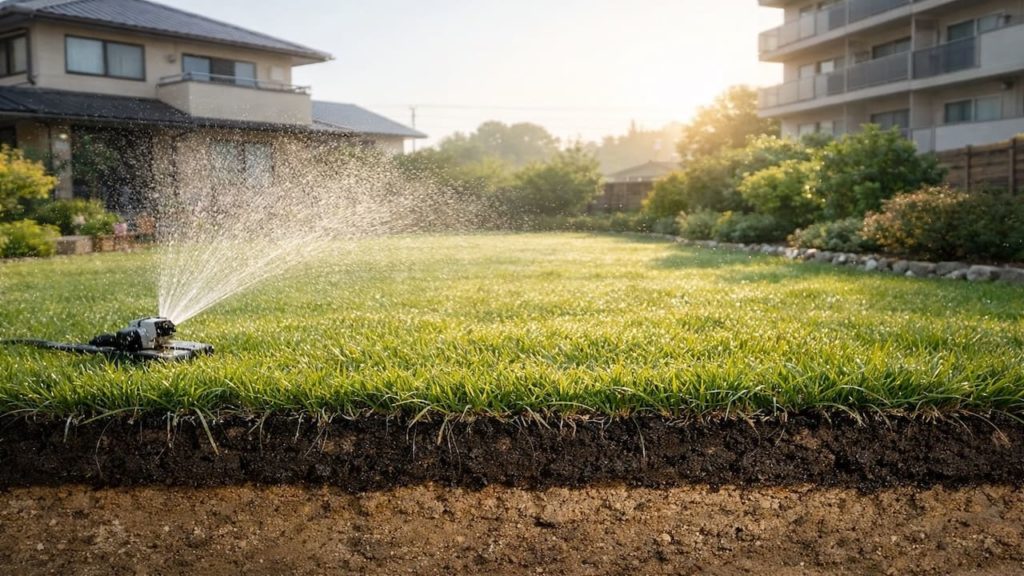
A good schedule is about repeatable recovery, not daily sprinkling—deep soaking teaches roots to chase moisture instead of camping near the surface. In Japan, sticky evenings can keep the top layer damp, so daily watering can backfire and invite weak roots. cost is mostly time/effort. Keep it steady.
- Water at the same hour most mornings
- Skip days so roots search deeper
- Check soil soak before adding more water
- Adjust after rain instead of following habit
- Raise mowing height to reduce water loss
You might think “more days” means “more green.” Usually it means shallow roots and stressed turf, so the lawn needs more water forever.
2. Morning depth and soil
Morning watering works only if the soil actually absorbs.
Morning is best because the lawn can use water before heat builds—so evaporation and midday scorch stay lower. But if your soil is sealed, water runs sideways, and you only wet the surface, which dries fast in Japanese summer sun. cost is mostly time/effort. Soil truth.
- Push a screwdriver to test soil resistance
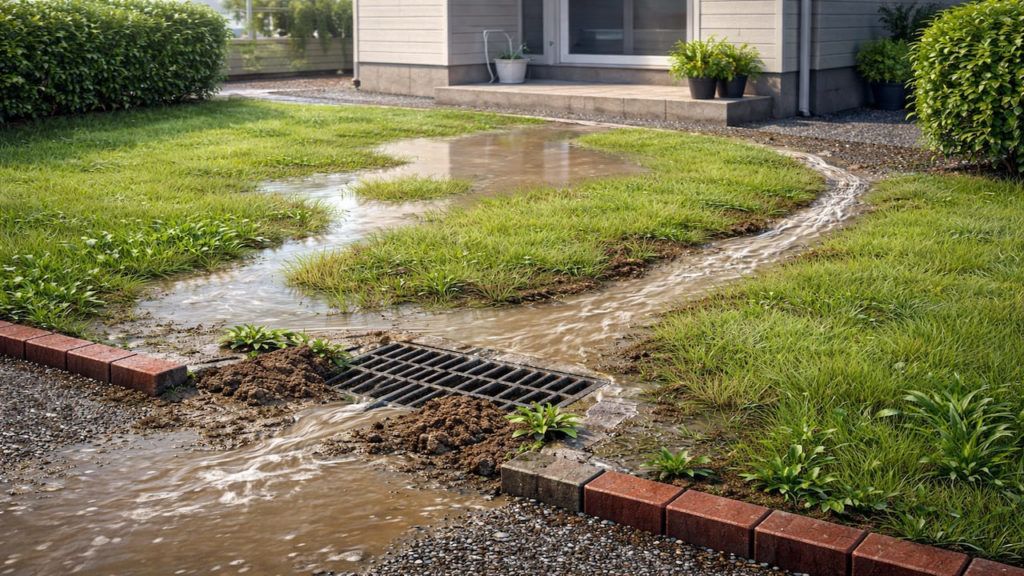
- Watch puddles and stop before runoff starts
- Water in cycles to let it soak down
- Feel under grass for cool damp soil
- Fix low spots that collect water
You might assume your sprinkler “covers everything.” Coverage means nothing if the soil is hard, so focus on soak-in first and coverage second.
3. Why lawn schedules waste water when they look reasonable
Most waste comes from watering by clock not by soil.
A fixed schedule ignores the real driver: how fast your soil loses moisture, which changes with shade, wind, and compaction. In Japan, rainy season humidity can hide drought stress, then a clear hot day flips the lawn into panic in hours. cost is mostly time/effort. No shortcut.
- Watering after rain because schedule says so
- Short daily sprays that never reach roots
- Even watering ignoring sun and shade differences
- Soil compaction making water run off fast
- Night watering leaving leaf blades wet longer
You might believe “consistent” means “same minutes every day.” Real consistency is matching water to soil need, so the schedule stays smart instead of stubborn.
4. How to set a simple schedule that saves water
Build a two-step routine: soak then verify.
Start with morning watering on spaced days, then verify soil moisture after the soak instead of guessing—use your finger or a simple probe and trust what you feel. In Japan, small yards near walls can dry unevenly because heat reflects back onto turf, so zone your schedule by sun exposure. cost is mostly time/effort. Make it boring.
- Water early then wait and recheck soil
- Split watering into two short soak cycles
- Skip shaded zones when they stay moist
- Use footprints to spot stress before browning
- Change direction when watering to avoid dry lanes
You might want one perfect schedule for the whole yard. That fails in mixed sun, so keep one base routine and tweak zones by what the soil tells you.
5. FAQs
Q1. Is morning always the best time to water?
Most of the time, yes, because the lawn can use water before heat ramps up. Early watering also reduces the chance you overwater at night just to “feel safe.”
Q2. How do I know if I watered deep enough?
Check under the grass and feel for cool damp soil, not just wet blades. If the top is wet but the soil is dry, you only teased the lawn.
Q3. Should I water every day during a heat wave?
Usually no because daily shallow watering weakens roots. Water deeper, then recheck soil the next morning and only repeat if it truly dried out.
Q4. What if water runs off before it soaks in?
Stop and switch to short cycles so the surface can absorb between rounds. If runoff happens every time, you are dealing with compaction and slope, not “lack of water.”
Q5. Can I water at night to avoid evaporation?
You can, but it often leaves blades wet longer—so problems like slime and patchy stress show up later. If night watering is your only option, keep it light and focus on soil soak, not leaf wetness.
Pro's Tough Talk

I’ve spent 20+ years working around Japanese homes, so I’ve seen what tends to work—and what tends to go wrong—in everyday use. When muggy nights stick around, people keep watering and still wonder why the lawn looks tired.
Three blunt causes: you water by habit, you water too shallow, and your soil is packed like a hallway carpet. I’m not blaming you, and I’m not calling your gear trash, but a sealed surface won’t drink no matter how long you spray. It’s like pouring tea onto a plastic lid.
Right now, poke the soil and see if it resists. Today, water in short cycles and stop before runoff. This weekend, fix compacted spots and lock in a spaced morning routine.
If the soil stays dry under wet blades, you’re not “watering,” you’re just making the lawn look busy. That’s the line where you stop adding minutes and start changing the method. Like trying to fill a bucket with a hole.
Spraying every day because it feels responsible. Nope.
Summary
A water-saving schedule is built on deep soaks, spaced days, and soil checks, not daily spraying. Morning timing helps, but only if water actually soaks into the root zone.
Adjust for Japan’s humidity swings by skipping after rain and zoning by sun and shade. If runoff happens fast or the soil stays hard, fix absorption before you add more watering time.
Tomorrow morning do one deep soak then verify the soil. Keep the schedule simple, tweak by what you feel, and the lawn will stop acting thirsty all the time.