You want kids to enjoy ofuro time, but one slip or one gulp of water can flip the mood fast. That fear is real.
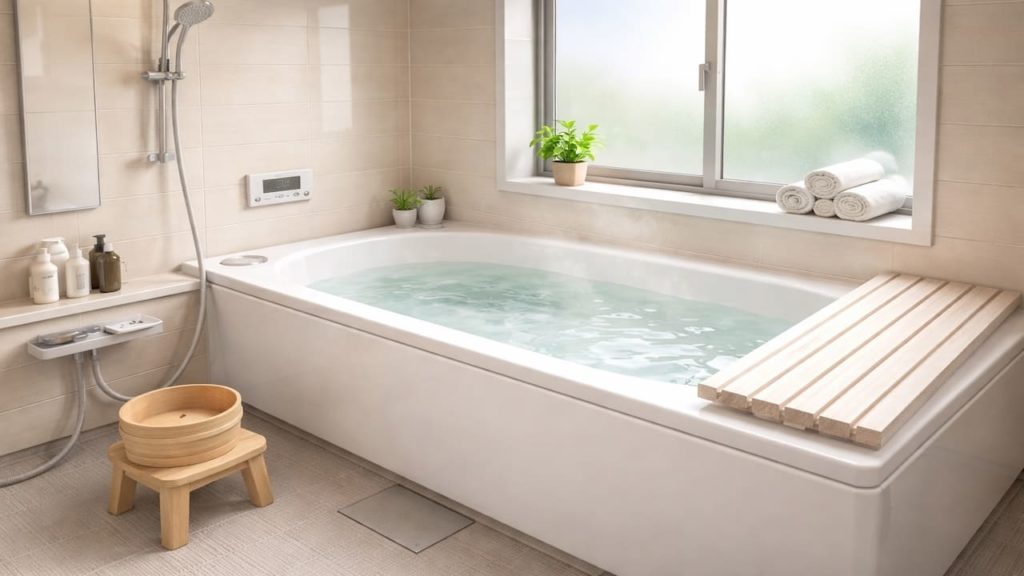
Japanese bathrooms are compact, and the tub edge is higher than many parents expect. Add wet floors and small hands, and “fine” can turn into “oh no.”
In this guide, you’ll learn simple bath rules that prevent panic and how to run a calm routine that fits typical Japan home layouts and habits.

Hi, I’m Ken — I’m Japanese, and I live in Malaysia long-term, so I explain everyday life in Japan from a practical ‘from abroad’ perspective.
I hold a building design qualification and I’ve been on site for 20+ years across hundreds of jobs. I turn Japan’s unspoken rules into simple checks, so you can avoid costly mistakes and take the next step with clear actions that feel safe.
1. Ofuro kids bath safety: 5 tips
Stay within arms reach and remove slip risks first.
Most scary moments come from two things: a fall on wet flooring or a brief loss of supervision. In Japan’s rainy season, tile and plastic floors stay slick—especially in small unit baths. Drowning can happen quickly and quietly even in shallow water, so “just for a second” is the trap. Quiet danger.
Children can drown in only a few inches of water, and the core rule is never leaving a child alone in the bath. According to healthychildren.org.
- Keep one hand on child during rinsing
- Test water with wrist before child enters
- Place non slip mat before kids step in
- Keep shampoo and cleaners out of reach
- Drain tub fully right after bath time
You might think this sounds strict, but it is faster than dealing with tears and bruises later. Gear helps, yet your hands and eyes matter more than any product. Do the basics every time, and the risk drops hard. Simple.
2. Simple rules that prevent scary moments
Use the same short rules every single bath.
Kids learn patterns, so safety gets easier when your rules never change. In winter, Japanese bathrooms can feel cold before the tub warms up, and rushing makes mistakes. Keep rules short enough that a tired adult can follow them without debate. No bargaining.
Hot tap water can scald quickly, so lowering tap temperature and testing bath water is a real safety layer for children. According to cpsc.gov.
- Set a towel and clothes within reach
- Keep phone out and eyes on kid
- Use one rule for turning away never
- Pour cold first then add hot slowly
- Teach sit first then stand on cue
You may feel awkward being strict, especially when a child is excited. But rules are not punishment, they are a predictable frame that keeps everyone calm. Once kids know the script, they cooperate faster. Routine wins.
3. Why kids get hurt in ofuro bathrooms
Most accidents start with small physics not bad parenting.
Water plus soap makes an invisible film, and little feet lose grip without warning. A deep tub edge changes balance, so one step turns into a fall. In many Japan homes, the bathroom floor drains slowly, so puddles stay longer than you think—then someone runs. Physics.
- Notice slippery film after soap and conditioner
- Watch stepping height at tub edge daily
- Check drain cover for wobble or sharp
- Spot toys that become trip hazards fast
- See steam fog hiding puddles on floor
You might blame yourself or blame the bathroom design. The useful move is identifying which trigger happens in your home, then cutting that one first. When the floor is controlled and the steps are controlled, the scary moments fade. Control.
4. How to run a calm kid bath routine
Follow one fixed order so safety becomes automatic.
Start with setup, then wash, then exit, and never swap the order. Buy only the basics if you need them, and keep it boring at ¥100–500 for simple supplies like a small cup or hook. Japan bathrooms reward repetition because space is tight and mistakes compound. Rhythm.
- Make a three step script and repeat
- Rinse hair with cup not direct shower
- Seat child and wash from top down
- End with quick lukewarm rinse on skin
- Wrap towel and exit before playing again
You might want bath time to be a long playful hangout, and that is fine after safety is locked in. Keep the active play for outside the tub, where slipping and gulping are not on the table. A calm routine still feels warm and fun. Safe fun.
5. FAQs
Q1. What is the single most important rule in a kids bath?
Never leave the child alone in the bathroom, even for a moment. If you must move, take the child with you and reset the bath later.
Q2. How hot is too hot for kids in the bath?
Warm is safer than hot for kids and you should always test the water before they enter. If the water stings your wrist or feels “too nice,” lower it.
Q3. Are bath seats or rings safe to rely on?
No, they are aids, not safety devices, and a child can still tip or slip. Treat them as comfort tools while you stay within arm’s reach.
Q4. What should I do if my child slips or gets a bump?
Stop the bath, dry the child, and check for pain, swelling, or unusual sleepiness. If you see worrying signs or a head hit, get medical advice promptly.
Q5. How do I prevent trouble when the bathroom is cold?
Pre-warm the room briefly and keep the routine short, because shivering makes kids stand and move suddenly. In Japan winter, rushing is the hidden risk, so slow down instead.
Pro's Tough Talk

I’ve spent 20+ years working around Japanese homes, so I’ve seen what tends to work—and what tends to go wrong—in everyday use. During Japan’s rainy season, the bathroom floor can turn into an ice rink. One splash is all it takes, and the “cute bath time” vibe vanishes.
Cause one is supervision drift, when you reach for pajamas and your eyes leave the tub. Cause two is scald risk, when the tap runs hotter than you think and you trust it anyway. Cause three is slip mechanics, when soap film and toys turn the floor into a trap. You know that moment you turn your back to grab a towel and hear sudden silence? And that moment your kid stands up to grab a floating toy like it is a game show prize? Classic.
Nope.
Stay within arm’s reach now. Set the water warm and clear the floor today. Add a non slip surface and a timer this weekend.
Safety is a routine not a mood. If you did this and it still fails, next is checking hot water settings and the bathroom floor grip with a professional. You are not weak for upgrading the setup, you are smart.
Ignore the routine and you will end up sprinting half naked with shampoo in your hair, which is not the parenting highlight reel you want.
Summary
Keep a hand on your child and control water and floor first. That prevents most scary bath moments.
If slips or near misses keep happening after a week, upgrade your setup—then check water temperature and floor grip as the next step. Use repeat issues as your decision trigger.
Tonight set the rules and follow the same order. Once kids learn the script, bath time becomes calm instead of tense.