Your ofuro bathroom feels tight, and every bottle looks like it is in the way. You want space, not a construction project.
In Japan, unit baths and narrow wash areas make “storage” collide with “drying.” When rainy-season humidity lingers, clutter also turns into smell and slime.
In this guide, you’ll learn how to gain space without remodeling using small layout moves that fit typical Japanese bathrooms and daily habits.

Hi, I’m Ken — I’m Japanese, and I live in Malaysia long-term, so I explain everyday life in Japan from a practical ‘from abroad’ perspective.
I hold a building design qualification and I’ve been on site for 20+ years across hundreds of jobs. I turn Japan’s unspoken rules into simple checks, so you can avoid costly mistakes and take the next step with clear actions that feel safe.
1. Ofuro small bathroom layout: 5 tips
Space appears when you reduce touch points and clear surfaces.
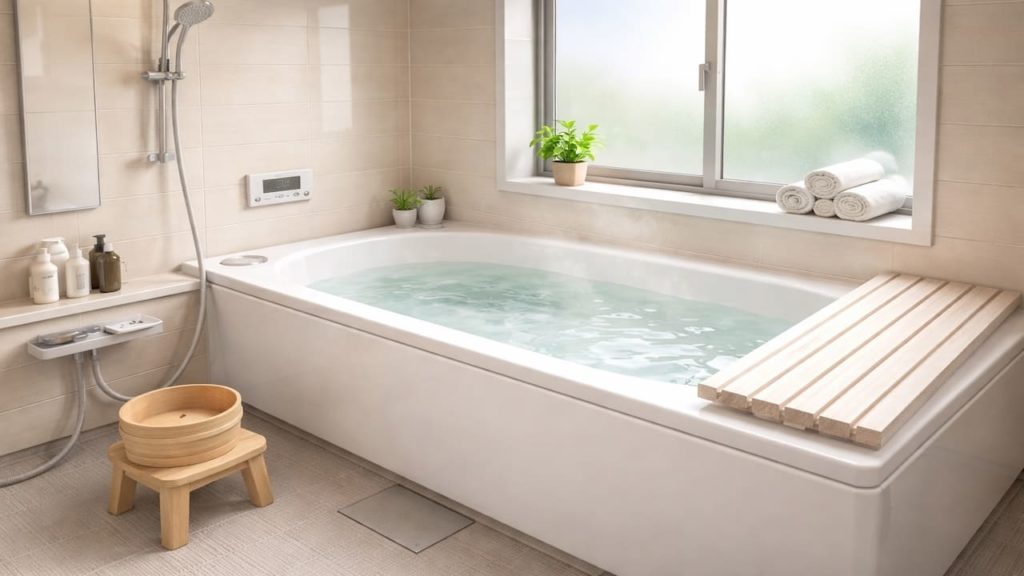
Small bathrooms feel smaller because every extra object steals motion space and drying space—especially in Japan apartments with compact unit baths. Start by making the “cleaning path” obvious, so you can wipe and dry without moving ten items first. One clear surface becomes two, and the room feels different. Breathing room.
Planning storage by category and reducing visual clutter helps small spaces feel calmer. According to MUJI.
- Remove duplicates and keep one daily body set
- Store refills outside bathroom to cut clutter
- Hang a caddy and free floor space
- Use small tray to group loose items
- Dry bottles after use to prevent slime
You might think you need more shelves, but more shelves often become more “stuff parking.” Clear first, then store, then dry. When you can wipe in one pass, the bathroom stops feeling like a puzzle. It is layout, not willpower.
2. Gain space without messy remodeling
Use vertical and door space so the floor stays empty.
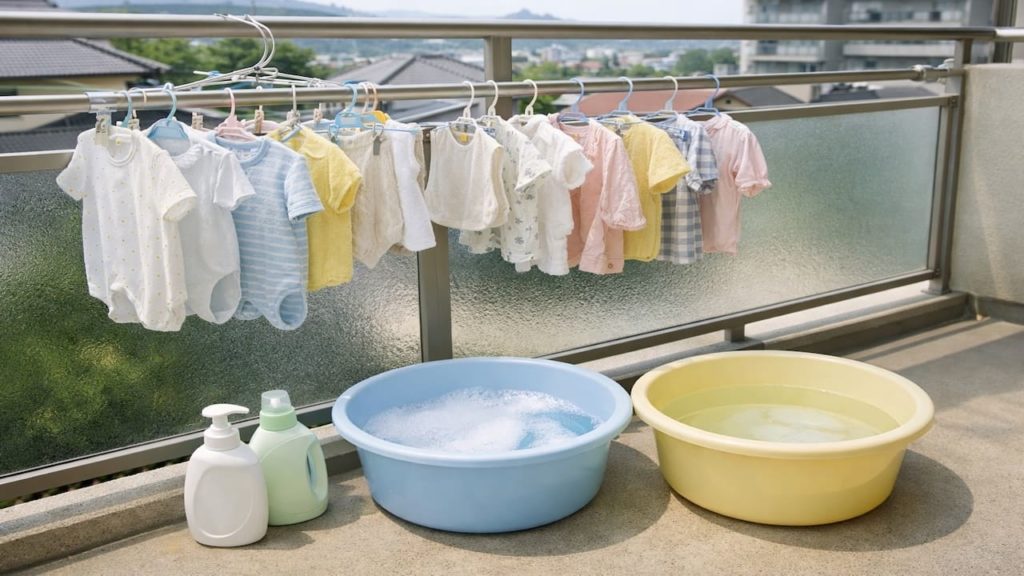
Japanese bathrooms reward wall and door organization because floors get wet and need fast drying—especially when you dry laundry indoors. Aim for “float storage,” where nothing sits directly on the floor or tub edge. If you can see the floor, you can clean it fast. Clean floor.
Keeping exhaust fans and airflow paths clean supports drying and reduces damp buildup. According to Panasonic.
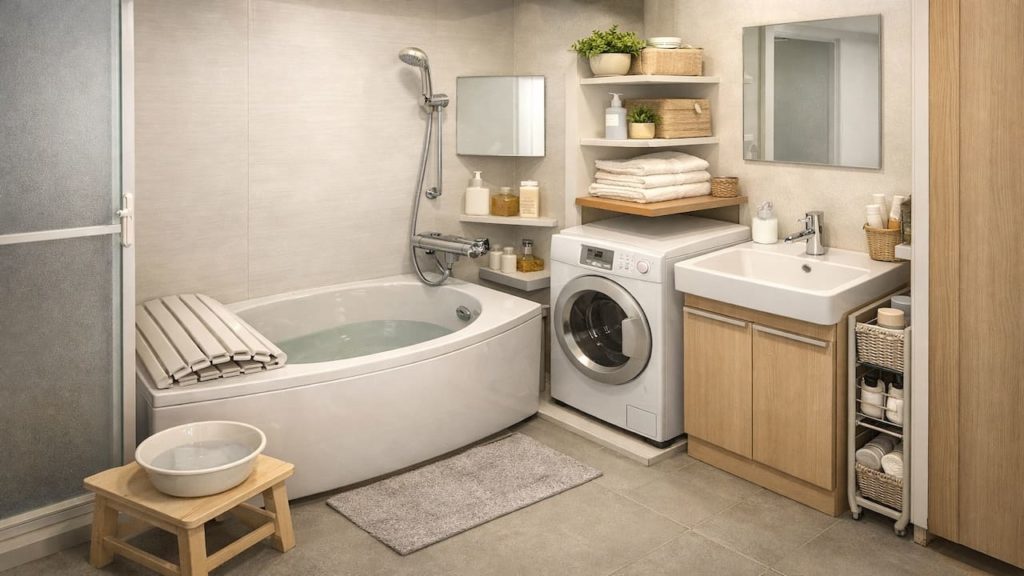
- Mount hooks for towels at shoulder height
- Use tension pole for two basket tiers
- Place mirror shelf above faucet for essentials
- Slide slim cart beside washer for backups
- Keep floor empty for easy wipe downs
You may worry hooks look messy, but “mess” is usually too many items, not the hook itself. Keep only the daily set in the wet zone and the rest outside. In humid Japan months, fewer objects also means faster drying. Less to dry.
3. Why small ofuro bathrooms stay cluttered
Clutter grows when wet zones and dry zones mix.
Cause one is boundary blur: bottles spread from the wash area into the tub edge, then into the floor. Cause two is reach stress: if your essentials are not within easy reach, you add “temporary” items that become permanent. Cause three is drying delay: in Japan’s closed bathrooms, damp shelves invite slime, so you keep wiping, then you add more tools, then it gets worse. Chain reaction.
- Identify wet zone versus dry zone boundaries
- Measure reach from tub edge to shelf
- Limit ledge items to one soap bottle
- Move razors and brushes to hanging pouch
- Check door swing clearance before adding rack
You might think your bathroom is simply “too small,” and yes, it is small. But the real problem is mixing zones, so every surface becomes a storage surface. Separate the zones and the same room starts behaving. That is the lever.
4. How to redesign your layout in 10 minutes
Pick one zone rule and reset the room around it.
Do this in one short session, then maintain it with a tiny reset after each bath—Japan homes reward repetition because space is tight. Start by sorting items by frequency, then assign a single home for each group, then protect the wet zone from overflow. cost is mostly time/effort. One rule.
- Sort items into daily weekly and rare groups
- Assign one spot for each group and label
- Use after bath wipe to reset surfaces
- Open fan and door for timed drying
- Review layout once a month and remove extras
You might worry it will snap back to chaos in two days. It will, if you rely on “being careful,” so rely on a reset step instead. If the daily set returns to one spot, the room stays calm. Small reset, big effect.
5. FAQs
Q1. What is the fastest way to make a small ofuro feel bigger?
Clear the floor and the tub ledge first because those surfaces control movement and cleaning speed. In Japan bathrooms, fewer items also dry faster in humid weeks.
Q2. Where should I keep refills and backups?
Keep them outside the bathroom if you can, like a closet or cabinet. The bathroom should hold only what you use daily, or it becomes a damp storage room.
Q3. Are suction cups better than hooks?
Suction cups work, but they fail when the surface is damp or textured. If you use them, keep the load light and check them weekly so they do not drop items suddenly.
Q4. What if my bathroom has no storage at all?
Use vertical space with a tension pole or a slim shelf above the faucet area. Keep the wet zone minimal, and store everything else in a dry zone outside.
Q5. How do I stop slime on shelves and bottles?
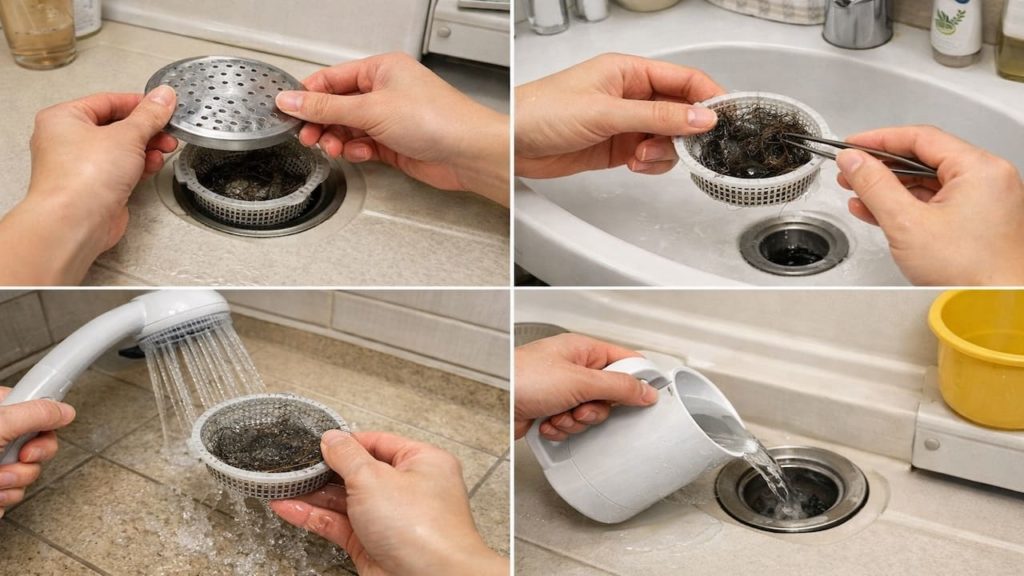
Reduce items in the wet zone and dry bottles after use, then run the fan long enough for surfaces to feel dry. Slime thrives when water lingers and airflow is weak.
Pro's Tough Talk

I’ve spent 20+ years working around Japanese homes, so I’ve seen what tends to work—and what tends to go wrong—in everyday use. In rainy-season humidity, a cluttered unit bath turns into a slime factory fast. You are not lazy, but the room will punish “later.”
Cause one: you keep mixing wet and dry zones, so every flat surface becomes a junk shelf. Cause two: you store backups inside the bathroom, so the room is always over capacity, like stuffing a suitcase that already cannot close. Cause three: you never reset, so “temporary” items pile up like snowdrifts and block drying. Scene one: you step in, knock three bottles, and one goes under the tub cover. Scene two: you try to wipe the floor, but you spend more time moving stuff than cleaning.
Clear the tub ledge now.
Move all refills outside today.
Hang one caddy and commit this weekend.
One zone rule beats ten new shelves. If you did this and it still fails, next is adding a single vertical storage point and removing another category from the bathroom.
Your bathroom is not a warehouse, so stop treating it like one.
Summary
Separate wet and dry zones, then clear the floor and tub ledge. That is how small ofuro bathrooms start feeling bigger.
If clutter returns within a week, your reset step is missing, not your storage. Use “can I wipe in one pass” as your decision test.
Tonight clear one surface and set one home spot. Do that, and you will feel the space every single day.