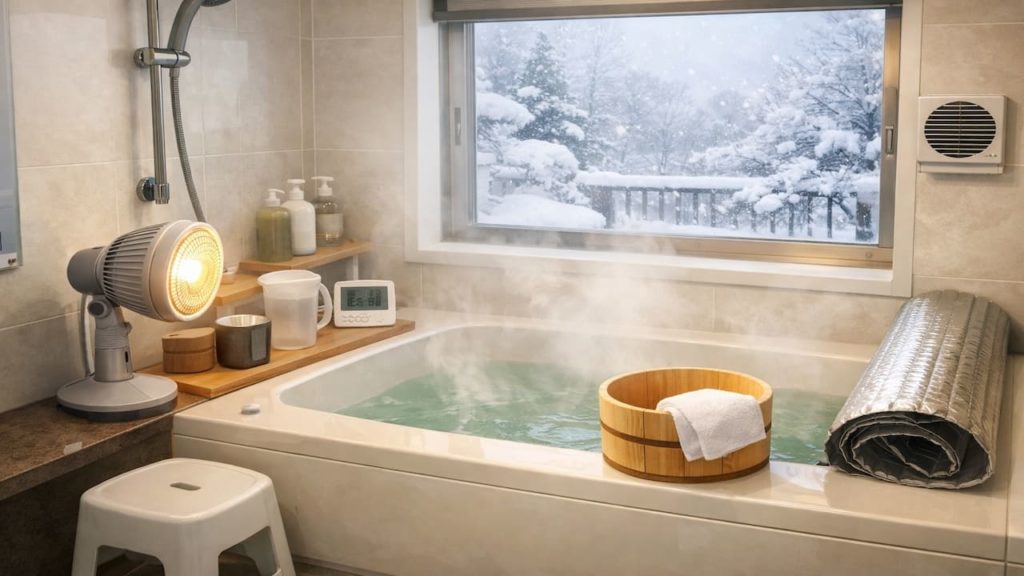
You searched this because you are torn between a full ofuro soak and a quick shower in Japan. You want a routine that feels good and still fits real life.
In winter, the dressing room can be cold, while in summer and rainy season the air stays wet and sticky. Small unit-bath layouts and shared schedules make the choice feel bigger than it is.
In this guide, you’ll learn 5 checks to choose bath or shower without regret for cost, comfort, and hygiene. You will also build a simple rule you can repeat on busy days.

Hi, I’m Ken — I’m Japanese, and I live in Malaysia long-term, so I explain everyday life in Japan from a practical ‘from abroad’ perspective.
I hold a building design qualification and I’ve been on site for 20+ years across hundreds of jobs. I turn Japan’s unspoken rules into simple checks, so you can avoid costly mistakes and take the next step with clear actions that feel safe.
1. Ofuro vs shower in Japan: 5 checks
The best choice depends on your room gap and your energy—not on what feels “more Japanese.”
In Japan, the harsh part is often the temperature change between rooms, not the water itself. A shower can be enough when you are tired, sweaty, or rushed in a small apartment. An ofuro soak can help when your body is cold and you can exit slowly and safely. The smart move is to decide before you turn on the water.
- Check dressing room temperature before choosing bath
- Choose shower when you feel dizzy today
- Choose bath when legs feel cold nightly
- Check household schedule before starting long soak
- Check bathroom ventilation during rainy season humidity
You might feel guilty skipping the tub, but hygiene does not require soaking every day. A clean shower plus a calm exit often beats a rushed bath. In winter homes, comfort comes from steady transitions, not maximum heat.
2. Cost comfort and daily hygiene habits
Hot water is the real cost driver in daily washing—so focus on how much you heat, not the label “bath” or “shower.”
In Japan’s household energy planning, water heating is treated as a major target for efficiency. That is why water heaters and reheating functions get policy attention, not just room heating. If you are watching bills, shorten hot water time, reduce reheating, and avoid waste in winter. According to enecho.meti.go.jp.
- Limit hot water time when bills rise
- Skip tub reheating when you can bathe together
- Use shower for quick sweat removal summer
- Use bath for warmth when rooms are cold
- Rinse body first before shared family soak
You might think comfort always means a long soak, but comfort also means sleeping well after. If your bathroom stays steamy, you may feel sticky even after bathing in rainy season. Match the habit to the day, not to an ideal image.
3. Why the bath or shower choice changes in Japan
Japan’s seasons and home layouts change how your body reacts—so the same routine can feel great in May and awful in January.
In winter, cold rooms make you rush, then you overheat the water, then you feel weak when standing. In summer, humidity slows drying, so a long soak can leave you sweaty again right after. Many homes use water heaters with a bathtub reheating function, which can add energy use if you reheat often. According to enecho.meti.go.jp.
- Notice cold shock risk when exiting winter
- Notice sweat return after long soak summer
- Check reheating use if tub cools quickly
- Check skin dryness if showers are too hot
- Check noise timing in thin wall apartments
You may blame your stamina, but the environment is doing half the work. When you respect seasonal shifts, you stop forcing one routine all year. That makes both shower days and bath days feel better.
4. How to choose bath or shower on busy days
Use a simple rule that picks safety first—then adjust for comfort in Japan’s winter nights or humid evenings.
Start with your body state, then your home state, then your schedule. If you feel lightheaded, go shower and keep it short and lukewarm, then dry off fully. If you are chilled and stable, take a short soak and stand up slowly. The cost is mostly time/effort.
- Choose shower when you are exhausted tonight
- Choose bath when feet stay cold indoors
- Set timer and stop before overheating happens
- Stand up slowly and sit before walking
- Ventilate after bathing to dry unit bath
You might want a perfect formula, but you only need a repeatable one. If you did this and it still fails, next is lowering water temperature and avoiding reheating on weekdays. In Japanese homes, consistency beats intensity.
5. FAQs
Q1. Is it normal in Japan to shower only sometimes?
Yes, especially on busy nights, after sports, or when you feel unwell. Many people mix habits depending on season and schedule.
Q2. What is the cleanest order if I take an ofuro bath?
Rinse and wash your body first, then soak in the tub. That keeps the tub water cleaner, especially in shared households.
Q3. Which is better for daily hygiene in humid seasons?
A short shower can be enough for daily hygiene when rainy season humidity makes you sweat again quickly. If you soak, keep it short and dry the room well after.
Q4. How can I stay warm in winter without a long bath?
Use a warm shower, then put on warm layers right away. Prewarming the dressing area briefly can also reduce the cold shock.
Q5. What if my partner wants bath but I want shower?
Split it by day type, not by argument. Use bath on colder nights or weekends, and default to showers on rushed weekdays.
Pro's Tough Talk

I’ve spent 20+ years working around Japanese homes, so I’ve seen what tends to work—and what tends to go wrong—in everyday use. I’ve been on site for 20+ years. I’ve worked on hundreds of jobs. In winter apartments, the bath vs shower choice can quietly turn into a safety problem.
Cause 1: you chase comfort with hotter water, then your body rebels when you stand. Cause 2: you reheat the tub out of habit, so energy use climbs without adding real comfort. Cause 3: you treat “must soak” as a rule, so you ignore fatigue signs like a flashing warning light. It’s like revving an engine in neutral. It’s like carrying water in a basket and acting surprised.
Stop and choose shower if you feel shaky now. Today, set a timer and keep hot water short. This weekend, agree on a shared bath schedule that avoids reheating.
You’re trying to feel clean and calm, not prove something. Pick the method that lets you exit steady. If you did this and it still fails, next is lowering water temperature and treating dizziness as a medical check item.
Bruh. Scene one: you tell yourself “just a quick soak,” then you sit there until your legs go jelly. Scene two: you reheat the tub twice, then complain about bills like the meter is trolling you.
Summary
In Japan, shower vs ofuro is not a moral choice, it is a daily fit choice. Use your room temperature gap, your energy, and your schedule to decide.
If comfort or safety keeps failing, shorten hot water time and avoid reheating first. If you still feel faint or weak after bathing, treat that as your clear decision line.
Tonight, choose the option that keeps you steady on exit and you will sleep better with less stress. Then keep exploring nearby habits like ventilation and towel drying for cleaner daily routines.