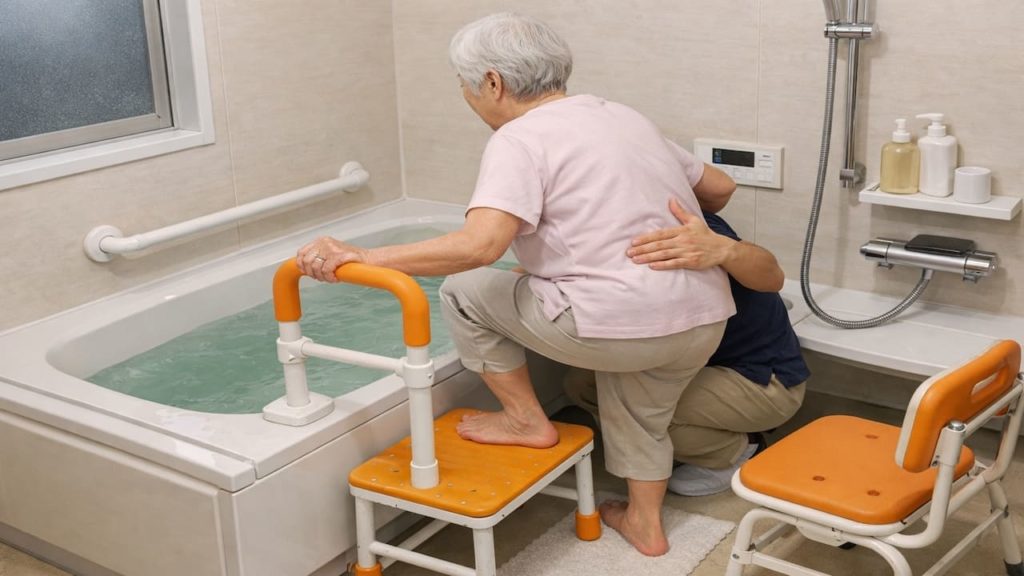
You searched this because summer baths feel great, but you still end up sweaty or woozy after. You want the comfort of ofuro without feeling like you got hit by heat.
In Japan, the mix of high humidity, small unit-bath spaces, and strong AC can make temperature swings tricky. It is not just “too hot” or “too cold,” but the speed of change that bites.
In this guide, you’ll learn 5 summer bath checks that cool you down safely while keeping your body steady. You will also know what to change first when you feel lightheaded at night.

Hi, I’m Ken — I’m Japanese, and I live in Malaysia long-term, so I explain everyday life in Japan from a practical ‘from abroad’ perspective.
I hold a building design qualification and I’ve been on site for 20+ years across hundreds of jobs. I turn Japan’s unspoken rules into simple checks, so you can avoid costly mistakes and take the next step with clear actions that feel safe.
1. Ofuro summer bath habits: 5 checks
In a humid Japanese summer, your bath should refresh you not trap heat—so check these basics before you soak.
Hot water can feel like a reset, but it can also push your core temperature up if the room is already warm. A tight unit bath holds moisture, so you may step out and keep sweating. Small habits make the exit safer, especially when you are tired after work. Heat illness prevention starts with hydration and managing indoor heat. According to mhlw.go.jp.
- Check bathroom fan and open door gap
- Drink water before bathing and keep bottle nearby
- Set bathwater warm not scalding for summer
- Limit soak time and stand up slowly
- Rinse sweat off with lukewarm shower after
You might think “I’ll just soak longer to relax,” but longer often means more heat load. If you want the calm part, make the room cooler, not the water hotter. Steady cooling wins. Simple habits.
2. Cool down safely without cold shock
If you want to cool down fast, avoid sudden icy water on a hot body—use a gentle ramp instead.
Cold shock is not just a winter story, because sudden cold on skin can trigger a strong reflex response. That is why “ice-cold and instant” can backfire when your body is already stressed from heat. Do cooling in steps, and keep your breathing calm as you change temperatures. Cold water shock risks come from rapid skin cooling and the reflex gasp. According to RNLI.
- Cool wrists and ankles with running cool water
- Use lukewarm shower and finish with cooler rinse
- Sit on stool while water temperature changes
- Dry quickly and move to ventilated room
- Avoid ice baths and sudden full body chills
You may have heard “coldest is best,” but the goal is heat release, not a shock test. If you cool your extremities first, your whole body follows more smoothly. Your head stays clearer. Calm pace.
3. Why summer ofuro can leave you hotter
Even in summer, the bath can trap heat if exit timing is wrong—and Japan’s humidity makes it easier to miss.
First, steam adds moisture to already damp air, so sweat cannot evaporate well after you step out. Second, hot water boosts circulation and warmth, which is great until you move into a warm changing area. Third, strong AC in the next room can create a sharp swing that makes you feel dizzy or weak. Heat balance. That is the whole game.
- Notice lingering sweat and sticky skin after baths
- Watch for headache nausea or racing heartbeat
- Check bathroom temperature difference before stepping out
- Track hydration by urine color and thirst
- Pause bathing when you feel lightheaded at night
Some people blame the bath itself, but the real culprit is often the transition zone. Fix the exit, not the ritual. A few checks let you keep ofuro as a summer tool. Transition control.
4. How to build a 10-minute post-bath cool-down routine
To cool down after bathing, make a short routine you can repeat nightly—not a perfect plan you quit.
Do this in Japanese summer so your body drops heat without a crash, and so your bedding stays drier. Start with airflow, then skin cooling, then water intake, in that order. The cost is mostly time/effort. If you need a reference, cool showers and regular hydration are standard heat-safety advice. According to World Health Organization.
- Run fan for 10 minutes after bathing
- Wipe moisture from walls and floor fast
- Drink a glass of water before bed
- Set AC to gentle mode not freezing
- Cool feet with damp towel for 2 minutes
You might say “I don’t have time,” but this routine is shorter than scrolling your phone in bed. Do the smallest version on busy nights, then return to the full set tomorrow. Consistency beats intensity. Night rhythm.
5. FAQs
Q1. Should I take a cold shower right after an ofuro in summer?
A cool or lukewarm shower is usually easier on your body—especially right after hot water. If you want colder, step down temperature slowly, not all at once.
Q2. What is a safer bath temperature in hot Japanese weather?
In Japan’s muggy season, aim for “warm and comfortable,” not “steaming hot.” If you step out and keep sweating, the water or the room was too warm.
Q3. I feel dizzy after bathing, what should I do first?
Stop bathing and cool down slowly by sitting, breathing, and sipping water. If dizziness repeats or feels severe, treat it as a warning and change your routine before you push through.
Q4. Is it okay to drink alcohol before a bath?
It can raise dehydration risk and make lightheadedness more likely. If you drink, wait, rehydrate, and keep the soak short.
Q5. Can kids use the same summer bath routine?
Kids heat up and cool down differently, so keep it shorter and watch for flushed face or unusual quietness. Make the room ventilated and keep water available.
Pro's Tough Talk

I’ve spent 20+ years working around Japanese homes, so I’ve seen what tends to work—and what tends to go wrong—in everyday use. In sticky summer nights, people try to “win” against heat with extremes. That is when the body throws a tantrum.
Cause 1: you are already low on water, so your circulation runs rough. Cause 2: a hot soak adds heat like charging a phone that is already overheating. Cause 3: sudden cold water hits the skin and your breathing spikes before your brain catches up.
No, ice-cold hero showers are not a personality.
Now, sit down. Today, lower your soak temperature. This weekend, clean the fan cover.
Do those, and you get calm cooling without the drama. Cooling should be a slope not a cliff. If you did this and it still fails, next is tracking symptoms and talking to a clinician about dizziness.
Scene one: you step out, stand in front of AC, and your knees feel hollow for a second. Scene two: you feel “fine,” then the moment you bend to dry your feet, the room spins. Treat your body like a rice cooker, not a frying pan—stop flipping the lid and blasting ice like you are in a commercial.
Summary
Summer ofuro can cool you down, but only if you manage heat and humidity on the way out—especially in tight bathrooms. Your top checks are water, warm-not-hot soaking, and a slow cool-down.
If you feel dizzy, treat it as a signal, not a challenge, and shorten the soak while improving airflow. If the same symptoms keep repeating after you change the routine, use that as your decision point to seek help.
Tonight, do the gentle ramp and keep it repeatable so you sleep cooler without the crash. Then explore one related habit next, like fan cleaning or moisture control, and keep building from there.