You lay patio pavers, they look great, and then a few months later they wobble or sink. If you’re asking about gravel base depth, you’re already ahead of most DIY jobs.
The “right depth” isn’t one magic number. In Japan, heavy rain weeks and tight lot drainage make base prep matter more than the paver brand.
In this guide, you’ll learn how to pick a base depth that stays flat by checking soil, compaction, and thickness in the right order. You’ll also learn what to fix before you lock pavers in.

Hi, I’m Ken — I’m Japanese, and I live in Malaysia long-term, so I explain everyday life in Japan from a practical ‘from abroad’ perspective.
I hold a building design qualification and I’ve been on site for 20+ years across hundreds of jobs. I turn Japan’s unspoken rules into simple checks, so you can avoid costly mistakes and take the next step with clear actions that feel safe.
1. Patio gravel base depth: 5 checks for long lasting pavers
Base depth only lasts when it matches your soil and load not your guess.
Start by deciding what the patio needs to handle: chairs, a grill, or just foot traffic. In Japan’s rainy season, weak subgrade turns a shallow base into a sponge—then the pavers start rocking. Measure, plan, then dig. No drama.
- Check soil firmness by heel twist test
- Confirm water drains away from the house edge
- Pick base depth based on expected patio load
- Plan edging so pavers cannot spread outward
- Verify you can compact without hitting utilities
You might think “It’s just a patio, shallow is fine.” That works only if the soil is firm and water never sits. If you see puddles or soft spots, depth alone won’t save you. Match the base to the ground.
2. Compaction and thickness
Thickness is useless without compaction because loose gravel settles later.
A thick base that’s fluffy is still a future dip. Japanese patios often sit near sliding doors and narrow paths—so small settlement feels huge when it catches your toe. Compact in layers, keep the top even, and don’t try to “fix level” with extra sand—sand is a bedding layer, not a correction tool.
- Compact in thin layers instead of one dump
- Wet the base lightly for better binding
- Screed bedding layer uniform not thick patches
- Keep slope consistent to avoid ponding water
- Lock edges before final plate compaction pass
You might want to skip the plate compactor to save effort. Then your feet become the compactor over time, and your pavers become the victim. Compact now or re-lay later. Pick one.
3. Why pavers fail when the base is too shallow
Shallow bases fail because they can’t spread loads so stress concentrates and sinks.
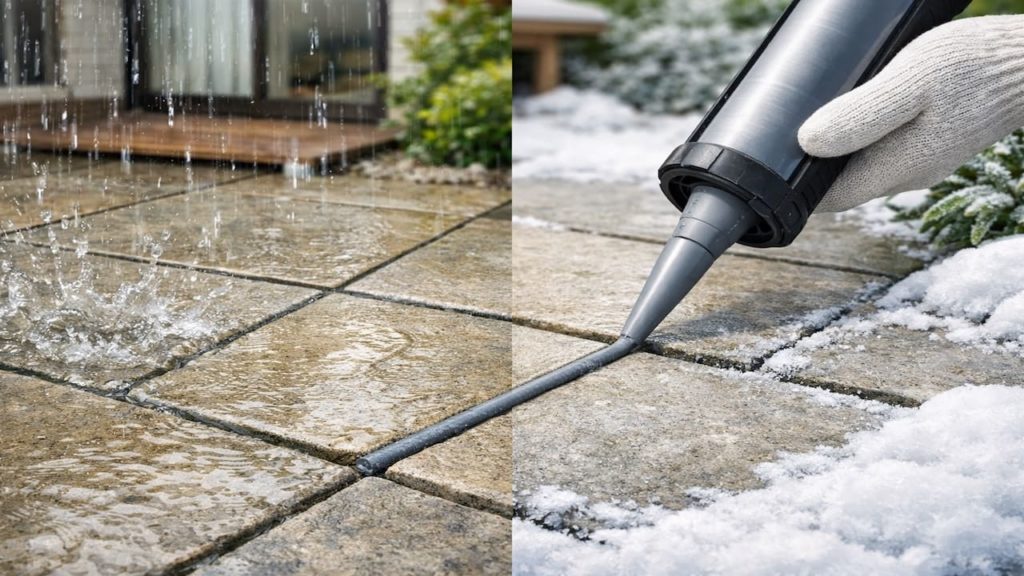
When the base is thin, every step pushes force into a small area. Add water, and the subgrade softens, especially after long wet stretches common in Japan. One low corner becomes a gutter, and that corner keeps getting worse. Small tilt, big annoyance.
One installation guide notes a compacted basecourse of 50 mm to 75 mm for patios and pathways, and at least 25 mm per metre fall for drainage. According to firth.co.nz.
- Soft soil compresses and steals your paver level
- Standing water pumps fines out of base
- Thin base makes edge restraints work harder
- Uneven bedding sand creates rocking spots quickly
- Freeze thaw is rare but water still moves
You might blame the pavers for being “warped.” Most of the time, the paver is fine and the base isn’t. Fix the support and the surface magically “improves.” That’s not luck.
4. How to set the right depth and compact it properly
Dig to a target depth then compact to a flat plane before you touch bedding sand.Budget ¥200–400 per 20 kg bag for basic crushed stone if you’re buying in small batches.
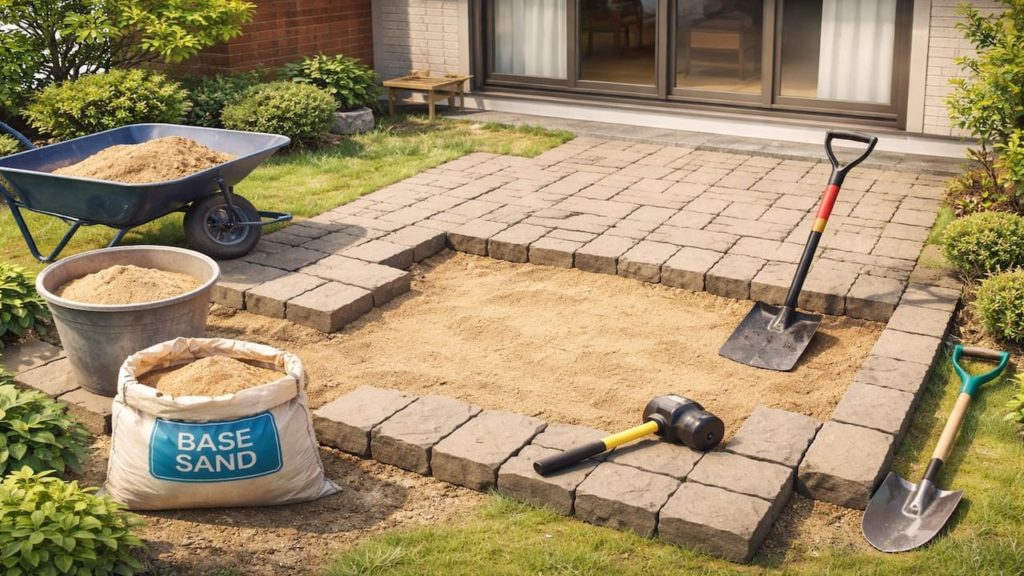
Mark finished height first, then subtract paver thickness, bedding, and base. Keep the finished surface below door sills and let water run away from walls, which matters a lot with Japanese overhangs and tight drainage paths. Compact the subgrade if it’s loose, then add base in layers and compact each one. Flat is the goal.
- Set string lines for finish height and slope
- Excavate to include base bedding and paver thickness
- Compact subgrade where soil feels loose or wet
- Add base in layers and compact each layer
- Screed bedding thin then lay pavers immediately
You might think thicker bedding sand fixes low spots. It doesn’t, it just creates soft zones that settle unevenly. If the base isn’t flat, redo the base until it is. Then your pavers stay quiet and solid.
5. FAQs
Q1. How deep should the gravel base be for a patio?
Start with a compacted 50–75 mm base for patios and go thicker if soil is soft or stays wet. Use drainage and soil firmness as the decision tool, not a random number.
Q2. Do I need geotextile fabric under the base?
If your soil is clay, silty, or gets muddy, fabric helps separate base from soil. If the subgrade is firm and well draining, it can be optional.
Q3. Can I skip a plate compactor?
You can, but expect settlement—especially after the first long rainy spell. Renting a compactor for a short window is usually cheaper than re-laying pavers.
Q4. What if the patio area always holds water?
Fix drainage first: add slope, route runoff, and stop water pooling at the base level. A thicker base without drainage still gets saturated and shifts.
Q5. My pavers already sank in one spot, what’s the fastest fix?
Pull pavers in that zone, remove soft bedding, and rebuild the base flat and compacted. Then re-screed bedding thin and reset the pavers level.
Pro's Tough Talk

I’ve spent 20+ years working around Japanese homes, so I’ve seen what tends to work—and what tends to go wrong—in everyday use. If your pavers move, the base is telling on you.
Here’s the ugly mechanism: loose base settles, water softens soil, and your “flat” patio turns into a tiny roller coaster. A shallow base is a cardboard shield in a rain fight. And bedding sand isn’t a magic mattress.
Do this now: mark slope and finished height with string. Do this today: excavate to the real depth and compact the subgrade. Do this on the weekend: rebuild the base in layers and compact like you mean it.
If a paver rocks after final compaction pull it, fix the low base spot, and reset it. If a whole area keeps sinking, your subgrade is weak and you need more base and better drainage.
You know that moment when you carry a tray outside and feel the wobble? And the one where you swear it was level yesterday. Nice. Your patio is doing improv comedy.
Summary
Long lasting pavers come from the right base depth and real compaction. Check soil firmness, drainage, and a target thickness before you start laying.
Compact in layers, keep the base plane flat, and keep bedding sand thin and uniform. If you see rocking after compaction, fix the base spot immediately.
Pick one corner and measure your real dig depth today then you can build the rest with confidence. Once the patio stays flat, the next upkeep topic gets way easier too.