You set patio border bricks, they look crisp, and then they start leaning like they’re tired. If your edge is drifting, the problem is almost never the brick itself.
Leaning usually comes from a soft base, missing restraint, or water moving fines out. In Japan’s wet months and small patio layouts, that edge gets stressed every day.
In this guide, you’ll learn how to reset the edge so it stays straight by checking the base pack, stakes, and drainage. You’ll also learn what not to “patch” with extra sand.

Hi, I’m Ken — I’m Japanese, and I live in Malaysia long-term, so I explain everyday life in Japan from a practical ‘from abroad’ perspective.
I hold a building design qualification and I’ve been on site for 20+ years across hundreds of jobs. I turn Japan’s unspoken rules into simple checks, so you can avoid costly mistakes and take the next step with clear actions that feel safe.
1. Patio border bricks lean: 5 checks to reset the edge cleanly
A leaning border means the edge has no real lock even if it felt tight on day one.
Start by figuring out what moved: the brick, the bedding, or the whole base. In Japan, repeated rain then dry cycles pump water through joints—so weak spots loosen in slow motion. Look for wobble, gaps, and any place the border lost support. Quick check, clear answer.
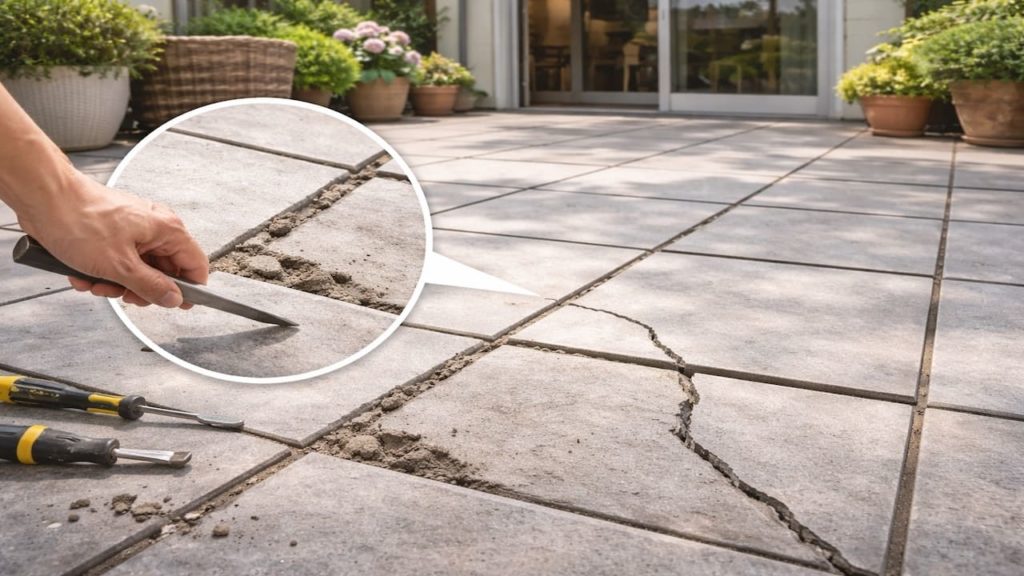
- Wiggle each border brick to find loose zones
- Check joint gaps for missing sand and voids
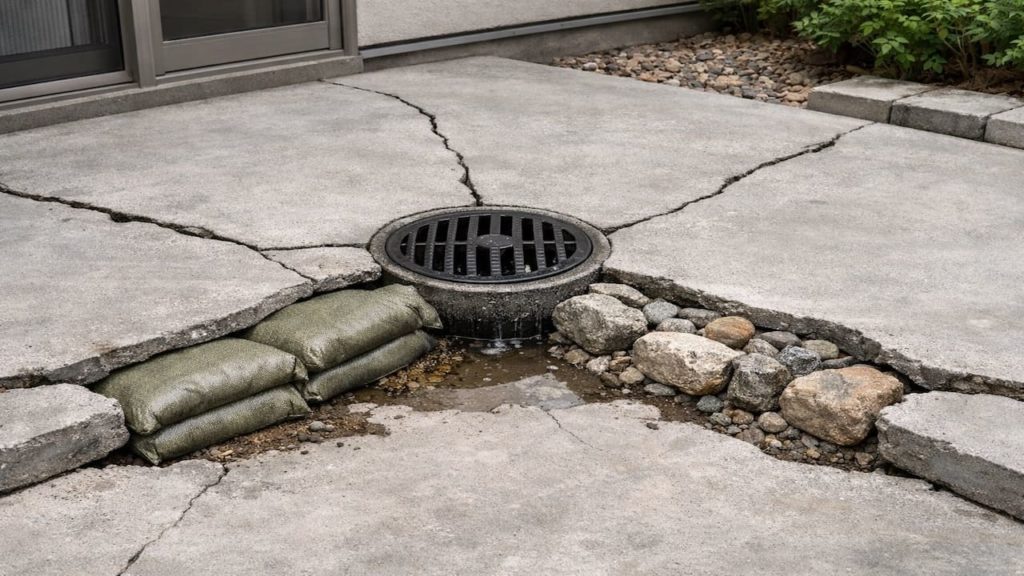
- Look for soil washout near corners and drains
- Confirm edging is pinned not just buried
- Check slope so water leaves the patio edge
You might think it’s “just settling” and it’ll stop—then it keeps leaning because the base keeps shrinking. Resetting one brick rarely fixes the line if the base under it is soft. Find the first weak section and rebuild that section properly. Clean edge comes from boring work.
2. Base pack and stakes
The base has to be packed flat before stakes mean anything or the edge will still wander.
Stakes and pins are not magic, they’re just clamps. If the base under the border is uneven, the clamp holds a crooked line and the bricks still tip over time—especially where people step off the patio. Pack the base, lock the restraint, then re-seat the bricks. Order matters.
- Scrape out soft base until it feels firm
- Add base material in thin lifts and tamp
- Set edging straight before driving any stakes
- Drive stakes into solid ground beyond base
- Re-seat bricks tight then refill joints slowly
You might want to hammer stakes harder and call it done. If the ground is mushy, the stake just wiggles in a bigger hole. Pack the base first, and the stake finally has something to bite. That’s how the line stays sharp.
3. Why border bricks start leaning in the first place
Edges lean because sideways force beats weak support and water helps it happen.
Every step near the edge pushes the border outward, a little at a time. Add water and fine sand, and the base starts “breathing” as moisture comes and goes in Japan’s humid seasons—so the border loses contact and tips. Corners lean first because two directions fight the same brick. Physics wins.
- Foot traffic near edges creates outward creep
- Water carries fines out through tiny gaps
- Soft subgrade compresses and tilts the border
- No restraint lets bricks spread under small loads
- Over-thick bedding sand settles unevenly later
You might blame the mortar or the brick shape. Most leaning borders are dry-laid jobs that never got a true restraint and compacted base. Fix the support and the same bricks behave. Same materials, different outcome.
4. How to rebuild the edge so it stays straight
Rebuild the edge in a short section and lock it so the new line doesn’t fight the old one.
Pull a manageable length, clean out loose bedding, and go down until the base is firm. Basic base materials can cost around ¥200–700 per bag at common home centers. According to komeri.com. Pack in thin layers, then set edging and stakes before you place the border bricks back. Keep your finished height and slope consistent with the rest of the patio.
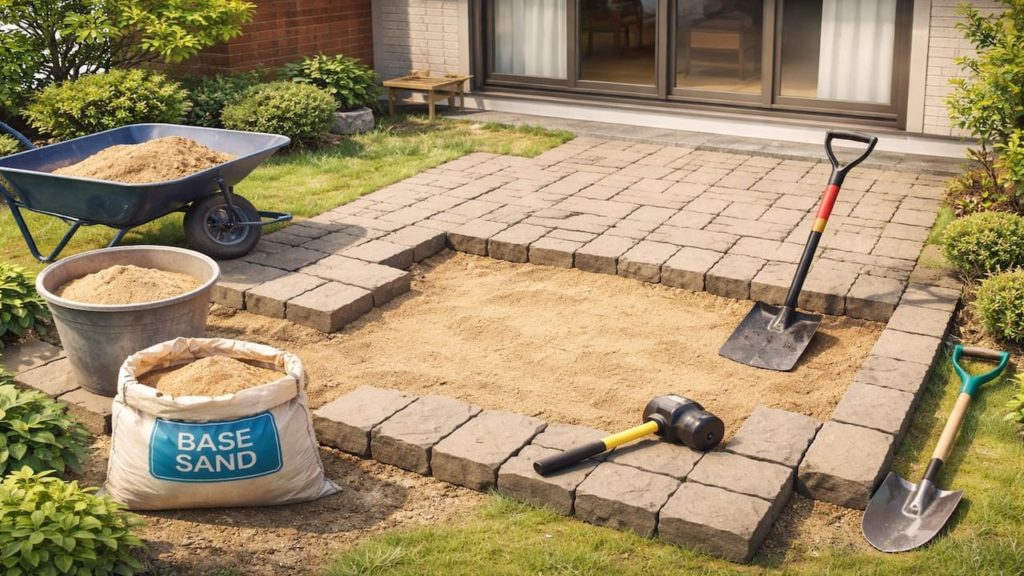
- Remove bricks and scrape out loose bedding fully
- Compact base in layers until it feels rock hard
- Set edging line and pin it with stakes
- Lay border bricks tight and tap level gently
- Refill joints then mist lightly to settle sand
You might try to “shim” the lean with extra sand and push the brick back—works for a week, then it tilts again. If the base is weak, the edge always returns to its true shape. Rebuild the base plane, lock the restraint, then reset the bricks. Clean line, long life.
5. FAQs
Q1. Do I need concrete to stop border bricks leaning?
No if the base and restraint are done right and the edge is pinned into firm ground. Concrete can help in some cases, but most lean problems are base pack issues.
Q2. Why do corners lean first?
Corners take force from two directions, so they creep faster. If the corner isn’t locked, the whole border line starts drifting from that point.
Q3. Can heavy rain cause the edge to move?
Yes—water can wash fines out and soften the subgrade, especially during long humid stretches. Fix drainage and rebuild the base so water is not trapped at the edge.
Q4. How deep should I rebuild under the border?
Go until you hit firm material that doesn’t deform under a hard tamp. If you stop at soft soil, the edge will keep settling even with stakes.
Q5. Should I reset the whole patio or just the edge?
If only the border leans and the field pavers are stable, rebuild sections of the edge. If the whole surface has dips, you need a bigger reset, not a border patch.
Pro's Tough Talk

I’ve spent 20+ years working around Japanese homes, so I’ve seen what tends to work—and what tends to go wrong—in everyday use. When a border leans, it’s the patio telling you the base was never truly locked.
The mechanism is savage and boring: soft base compresses, water steals fines, and feet shove the edge sideways. A loose border is a zipper with missing teeth, and your stakes are toothpicks in pudding. During the rainy season, that weak spot gets bullied daily.
Do this now: pull the worst 1 m section and inspect the base. Do this today: compact in thin lifts until it stops squishing. Do this on the weekend: set edging, drive stakes into firm ground, then reset bricks tight.
If the border still rocks after you pin the edging you’re sitting on soft subgrade and you need to excavate deeper. If the line stays straight for a week of normal use, lock in the joints and stop touching it.
That “one brick” that keeps leaning is not special.
Summary
Leaning border bricks usually mean a soft base or missing restraint. Check wobble zones, drainage, and whether the edging is truly pinned.
Reset the edge in short sections by rebuilding the packed base first. Then stake the restraint and re-seat the bricks tight, not on thick sand.
Pull one short problem section today and rebuild it clean so you can confirm the fix fast. Once the edge holds, the rest of the patio maintenance gets calmer too.