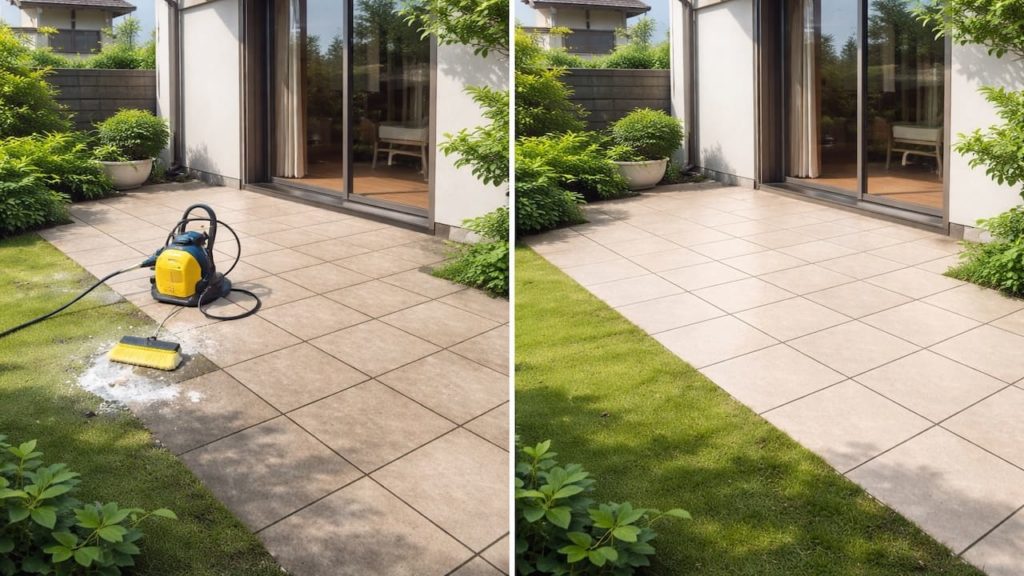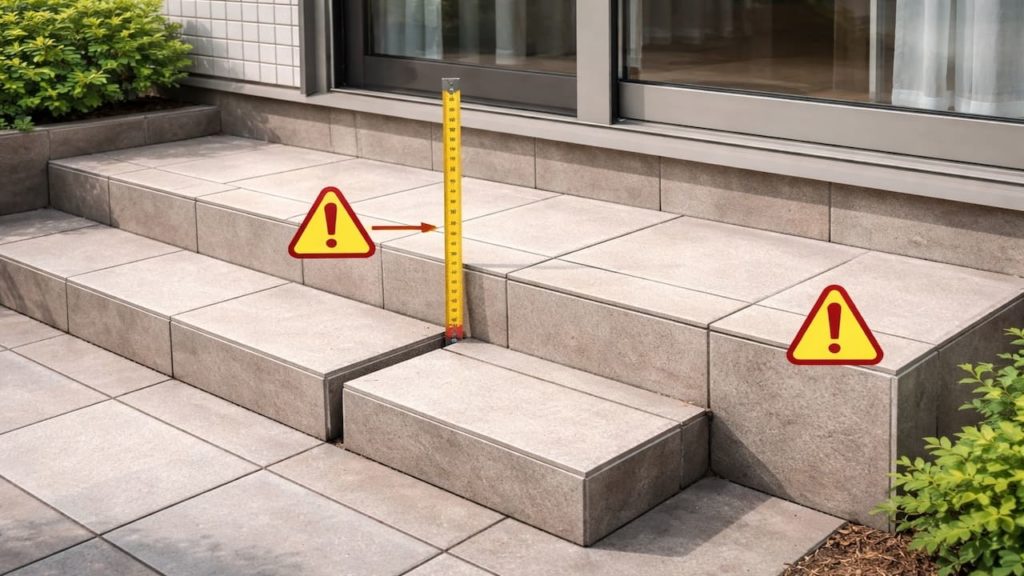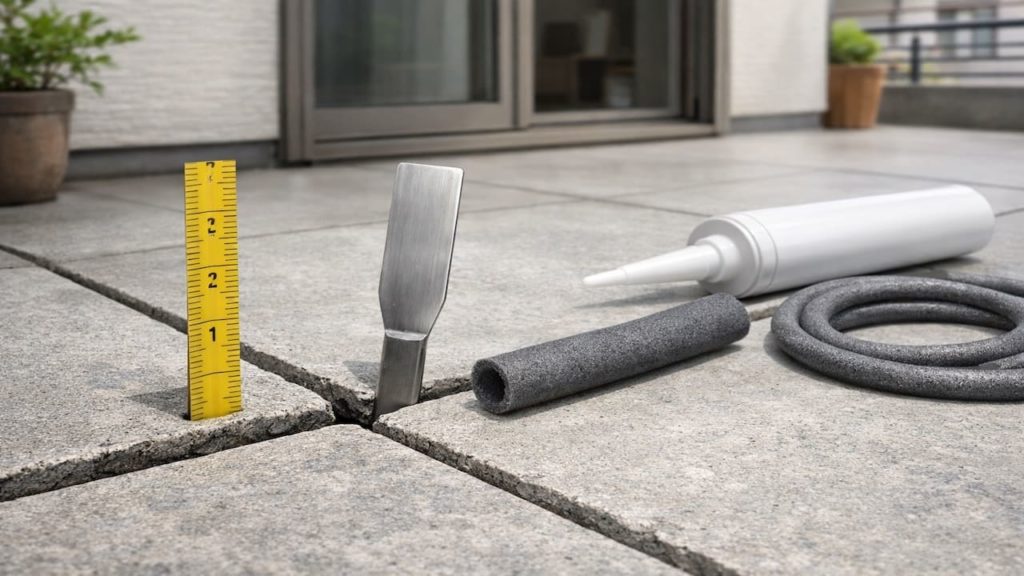
You hose the patio, the tiles look fine, and then water still hugs the edge like it’s glued there. If you keep getting puddles, the surface is telling you the drain path is weak.
A drainage channel can help, but only if it’s placed where water actually wants to run. In Japan, sudden downpours and humid weeks make small drainage mistakes show up fast.
In this guide, you’ll learn how to choose and place a drain channel that keeps tiles drier without making your patio ugly or hard to clean. You’ll also learn what to check before you cut or lift anything.

Hi, I’m Ken — I’m Japanese, and I live in Malaysia long-term, so I explain everyday life in Japan from a practical ‘from abroad’ perspective.
I hold a building design qualification and I’ve been on site for 20+ years across hundreds of jobs. I turn Japan’s unspoken rules into simple checks, so you can avoid costly mistakes and take the next step with clear actions that feel safe.
1. Patio drainage channel ideas: 5 checks to keep water off tile
The best channel is the one that intercepts water early before it spreads across tile.
First, watch where water pools after a real rain, not after a gentle hose—Japan’s storms hit harder than your test. Mark the low spots, then find the nearest “exit” line where a channel could catch flow. If the puddle sits near a wall, you’re fighting the worst place.
- Spray water and mark where puddles persist
- Check slope direction with a long straight board
- Find the lowest edge where water wants to exit
- Locate walls and door tracks that block runoff
- Plan a channel line that stays easy to clean
You might think “I’ll add a channel anywhere and it’ll drain.” If you place it upstream of nothing, it becomes decoration. Put it where water is already traveling, then it works like a catcher’s mitt, not a random trench.
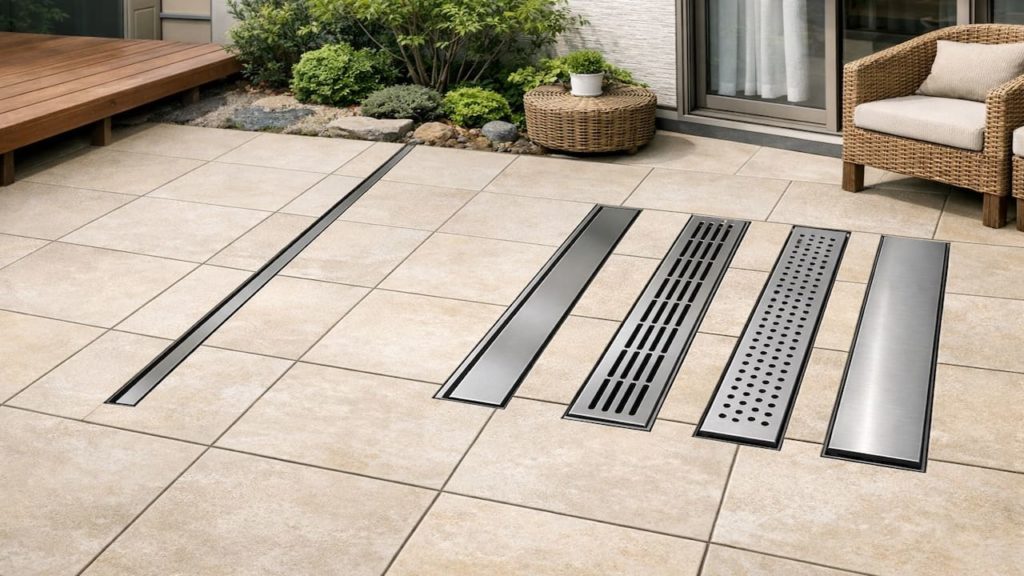
2. Slot drain and covers
Slot drains look clean but clog quietly so the cover choice matters.
A slot style is great when you hate the look of a wide grate—common on small Japanese patios where every line shows. But the tighter the opening, the more you need a plan for leaves, sand, and moss. Pick a cover style you can lift and rinse without a meltdown.
Some slit-drain units use a narrow gap (for example 6 mm) and are sold as complete sets with specified walking strength ratings. According to monotaro.com.
- Choose a cover you can remove without tools
- Check opening style for leaves and fine sand
- Confirm the channel has a cleanout access point
- Avoid sharp grate edges that catch mop fibers
- Match cover texture so wet feet feel stable
You might assume a prettier cover is always better. If it traps gunk and you avoid cleaning it, it turns into a slow dam. The best cover is the one you’ll actually lift on a lazy weekend.
3. Why patio tile stays wet even with a channel
Tile stays wet when water cannot reach the channel or the channel cannot discharge.
Water needs a path, not just a hole. If the patio is flat, water spreads into a thin sheet and never commits to the drain line, especially when humidity keeps surfaces damp in Japan. Also, a channel that dumps into nowhere just fills and overflows. Path in, path out.
- Flat tile causes water to sheet and linger
- Low grout lines trap dirt and slow runoff
- Channel sits too high so water bypasses it
- Outlet is blocked so channel backs up fast
- Moss film makes water stick and slow down
You might blame “tile quality” or think sealant will fix it. Sealant can reduce staining, but it won’t create slope or an outlet. Fix the flow geometry and the surface dries faster.
4. How to place a channel so it stays low effort
Place the channel at the choke point where water must pass and cleaning stays simple.
If you buy a full slit-drain unit with cover and trough, budget can land around ¥50,000–80,000 depending on type and size. According to monotaro.com. Put the channel just before the problem zone, not inside it, so water is intercepted while it still has speed. Keep it away from door tracks, and keep one straight run you can rinse end-to-end after a storm.
- Set a clear slope toward the channel line
- Keep the channel slightly lower than tile edge
- Route discharge to a real outlet point
- Leave access to lift covers and flush debris
- Test with a bucket pour before final fixing
You might want to place the channel tight to the wall to hide it. That’s where grime collects and where you least want trapped moisture. Put it where you can see it, rinse it, and trust it.
5. FAQs
Q1. Do I need a slot drain or a wide grate?
Pick slot drains for looks and grates for easy cleaning if your patio collects leaves or sand. The right choice is the one you will maintain.
Q2. Can I add a channel without redoing the whole tile patio?
Sometimes, yes, if you can create a clean cut line and a stable bed. If the surface is flat and the outlet is missing, a small patch won’t solve the main problem.
Q3. Why does my patio still feel damp after the water drains?
Humidity slows drying, and fine grime holds moisture on tile—especially after long wet spells. Clean the film and improve airflow around the edge.
Q4. How often should I clean the drain cover?
During leaf season, quick checks weekly helps. In calmer months, a rinse after big rain is usually enough if the outlet stays open.
Q5. Will a channel drain stop moss on the tile?
It helps by reducing standing water, but moss also feeds on shade and dirt. You still need regular washing and sun exposure where possible.
Pro's Tough Talk

I’ve spent 20+ years working around Japanese homes, so I’ve seen what tends to work—and what tends to go wrong—in everyday use. A drain channel doesn’t “fix water,” it just gives water a route.
The failure pattern is brutal: flat tile lets water loaf around, dirt turns into a sponge, then the drain clogs and becomes a tiny bathtub. A slot drain is like a skinny mailbox slot, and leaves are the junk mail. A wide grate is like a shopping cart, and sand is the annoying pebble that rides along.
Do this now: pour a bucket and watch the real flow. Do this today: mark the low line and find a real outlet. Do this on the weekend: install where you can lift the cover and flush it.
If water still sheets across tile after you intercept it you need more slope, not more hardware. If the channel fills and sits, your outlet is blocked, so clear it or reroute discharge.
You know that moment you step out in socks and the tile feels like a wet sponge? And the one where you rinse the patio and the drain burps up gunk. Yeah, your drain is not “self-cleaning,” it’s just shy.
Summary
A drainage channel works when it sits on the real water path and has a real discharge point. Check puddle zones, slope, and outlet before you pick a style.
Slot drains look cleaner but demand smarter cover access and routine rinsing. If tile stays wet, the issue is usually flow path or outlet, not the tile itself.
Do one bucket test and mark the low line today so you stop guessing and start placing the channel correctly. Then keep moving with one more patio upkeep topic while the surface is still on your mind.