You move a chair and see dents, scuffs, or little crushed spots under the legs. Patio furniture can quietly chew up tiles and pavers, especially when you shuffle it around often.
The damage usually comes from pressure and grit, not “weak pavers.” In Japan, wet days bring sand and tiny stones onto the patio, and that grit turns every chair leg into a tool.
In this guide, you’ll learn how to stop dents and marks without babying the patio using pads, layout changes, and outdoor rugs. You’ll also learn what to check before you buy anything.

Hi, I’m Ken — I’m Japanese, and I live in Malaysia long-term, so I explain everyday life in Japan from a practical ‘from abroad’ perspective.
I hold a building design qualification and I’ve been on site for 20+ years across hundreds of jobs. I turn Japan’s unspoken rules into simple checks, so you can avoid costly mistakes and take the next step with clear actions that feel safe.
1. Patio furniture leaves dents: 5 tips to protect tiles and pavers
Dents happen when small feet concentrate load on one point and the surface can’t spread it.
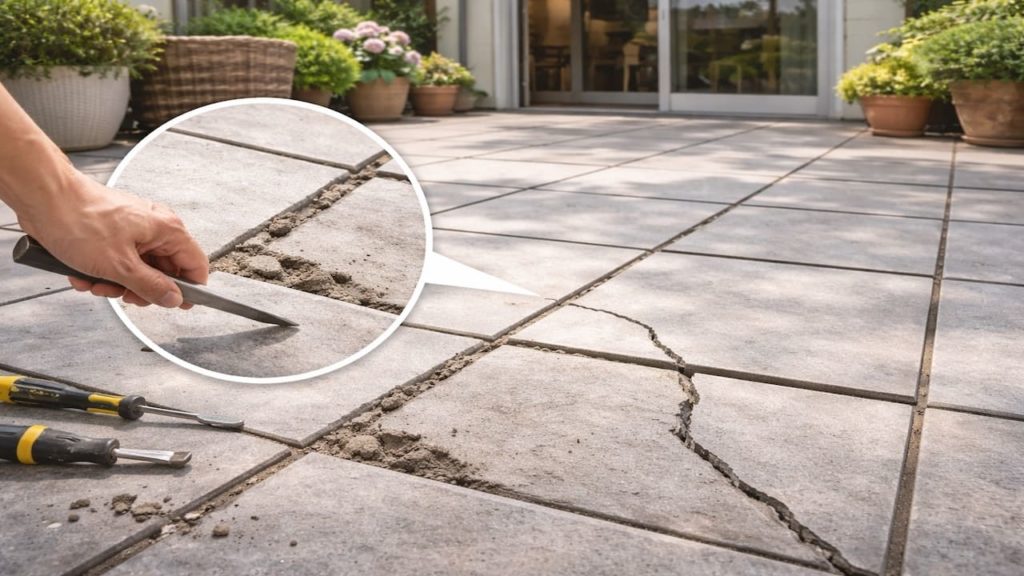
Start by checking what kind of mark you’re seeing: a dent, a scratch, or a crushed joint. In many Japanese patios, the surface is compact and close to the house, so furniture gets moved constantly and grit stays trapped near door tracks—one slide can do a week of damage. Diagnose first, then choose the simplest protection.
- Identify whether marks are dents or scratches
- Check leg tips for sharp edges or missing caps
- Remove grit near door tracks before rearranging
- Test furniture feet on spare tile off to side
- Confirm pavers are stable and not already rocking
You might think heavier furniture always makes worse dents. Sometimes light chairs cause more damage because they slide more and grind grit. The real enemy is pressure plus movement. Stop those and the patio calms down.
2. Pads layout and rugs
Pads protect points while rugs protect zones so use both where they make sense.
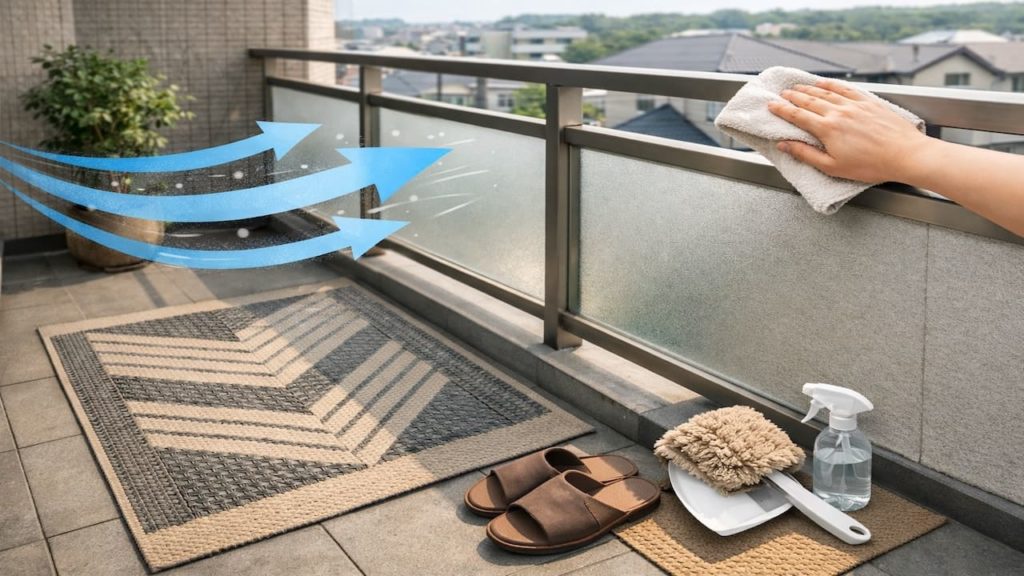
Pads work best under narrow legs and metal feet, while rugs help under table sets where shifting is constant. For Japan’s humid weather, pick pads that won’t go gooey and rugs that dry fast—wet rugs can trap moisture and cause staining or algae. Keep it breathable and easy to lift.
- Use wide furniture pads to spread leg load
- Choose non marking pads that resist humidity
- Place an outdoor rug under the dining zone
- Leave rug edges lifted for faster drying
- Reposition chairs so legs stay on joints less
You might assume any cheap pad is fine. Some pads harden, peel, or leave residue when they get hot and wet. If you can, test one pad for a week before you pad everything. Small test, big save.
3. Why dents and marks show up so fast outdoors
Outdoor marks accelerate because grit turns movement into abrasion and moisture keeps it sticky.
When fine sand gets under furniture legs, every small adjustment becomes a grinding action. Moisture makes grit cling to surfaces, and Japan’s wet seasons make that worse, especially near entry doors where shoes bring debris in. If your pavers have soft joints, shifting legs can also crush joint sand and create low spots. It adds up fast.
- Grit under legs acts like sandpaper
- Moisture makes dirt stick and stay longer
- Narrow legs create high pressure points
- Uneven pavers rock and grind at edges
- Dragging furniture crushes joints and corners
You might think the surface is “too soft.” Often it’s fine, it’s just getting abused in a predictable way. Reduce grit and reduce dragging and your patio lasts longer. Simple mechanics.
4. How to set up protection that still looks good
Create one stable furniture zone and protect it instead of chasing dents everywhere.
Basic pads and an outdoor rug usually cost ¥500–3,000 depending on size and type. Start by choosing a layout that doesn’t force constant dragging, like leaving a clear walkway to the door and keeping the table set in one zone. Then add wide pads under legs, and use a rug for the “high movement” area under chairs. In Japanese homes, this also helps keep outdoor grit from traveling back inside.
- Choose layout that avoids dragging through tight paths
- Add felt free outdoor pads designed for exterior use
- Use rug under chairs to stop grinding marks
- Lift and carry furniture instead of sliding it
- Sweep grit weekly especially after rainy days
You might want to protect every inch of patio with mats. That can trap moisture and look cluttered. One protected zone plus good habits beats a carpeted patio. Keep it clean, dry, and breathable.
5. FAQs
Q1. Do furniture pads really stop dents on pavers?
Yes if the pad is wide and stays in place because it spreads the load. Tiny pads that slip still allow point pressure and marks.
Q2. What is better for outdoors, rubber pads or plastic caps?
Rubber pads grip better but can trap moisture or leave residue if low quality. Plastic caps slide more but stay clean, so pick based on whether you need grip or glide.
Q3. Will an outdoor rug trap moisture and cause algae?
It can if it stays wet and blocks airflow. Choose quick drying material and lift edges so air can move underneath.
Q4. My tiles scratch when I move chairs, what should I do?
Stop dragging and remove grit first, then use pads that are made for hard surfaces. Also check chair legs for sharp burrs or missing caps.
Q5. How often should I sweep to prevent marks?
Weekly is a good baseline, and after storms or windy days is even better. The goal is to remove grit before it becomes sandpaper under legs.
Pro's Tough Talk

I’ve spent 20+ years working around Japanese homes, so I’ve seen what tends to work—and what tends to go wrong—in everyday use. If your patio keeps getting dents, your furniture is basically doing weight training on one tiny point.
The mechanism is ruthless: narrow legs concentrate load, grit gets under them, and every little slide becomes a grinding session. A chair leg on pavers is like a high heel on soft ground, and wet grit is like glue mixed with sandpaper. Then people wonder why the marks appear “overnight.”
Do this now: sweep the grit and check leg caps. Do this today: add wide pads to every leg and stop dragging. Do this on the weekend: set a rug zone under chairs and lock the layout.
If dents keep forming in the same spots your layout forces constant movement or the pads are too small. If scratches keep appearing, you’re dragging over grit, so change the habit, not the paver.
You know that moment you pull a chair back and hear the tiny scrape? And then you pretend it was the wind. Yeah. The patio heard it too.
Summary
Dents and marks happen when furniture legs concentrate pressure and grit turns movement into damage. Check leg caps, remove grit, and stop dragging first.
Use wide pads for point protection and an outdoor rug for the high movement zone under chairs. Keep airflow in mind so humidity does not trap moisture under mats.
Sweep the patio and pad every leg today so the damage stops immediately. Then keep improving the patio with one more small fix while the setup is fresh.