Your patio pavers looked perfect, and then the color started looking washed out or patchy. That white bloom can make dark pavers look like they are fading.
Sometimes it is just salts surfacing, and sometimes it is moisture trapping dirt in the pores. In Japan, long wet weeks and humid air make this show up faster than most people expect.
In this guide, you’ll learn how to confirm efflorescence and stop it returning by checking moisture paths and salt sources. You’ll also learn how to clean without bleaching the surface or chasing ghosts.

Hi, I’m Ken — I’m Japanese, and I live in Malaysia long-term, so I explain everyday life in Japan from a practical ‘from abroad’ perspective.
I hold a building design qualification and I’ve been on site for 20+ years across hundreds of jobs. I turn Japan’s unspoken rules into simple checks, so you can avoid costly mistakes and take the next step with clear actions that feel safe.
1. Patio pavers discolor: 5 checks for salts and efflorescence
Most white discoloration is a moisture story not a color failure.
Start by checking if the white film changes when the pavers are wet versus dry—efflorescence often fades when wet and reappears as it dries. In Japanese homes, patios sit close to walls and door tracks, so runoff and splashback can keep edges damp longer than the center. Look at patterns, not single spots. Pattern tells you the source.
- Wet a test area and watch bloom disappear or stay
- Check if white film sits mostly near edges
- Compare shaded damp zones versus sunny dry zones
- Look for repeat patches after every rain event
- Rub with dry cloth to see powder transfer
You might think the pavers are “bleaching” in the sun. Sun fading is slow and usually even, not blotchy. If the white returns after rain, it is not fading. It is movement of salts and moisture.
2. White bloom and moisture
White bloom needs water to travel and a place to dry.
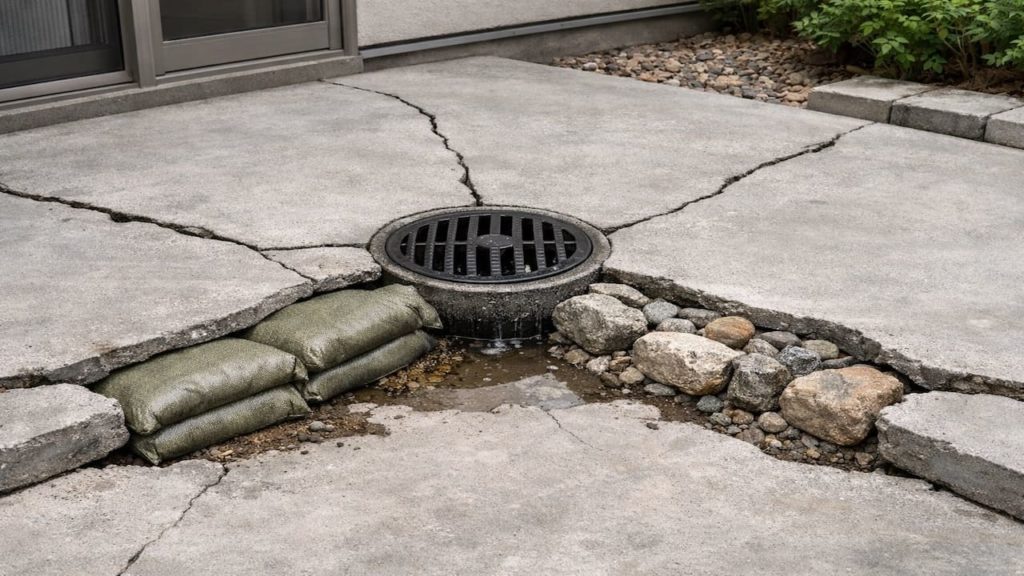
If water can soak into the bedding or base, it can carry dissolved salts upward and leave them on the surface as it evaporates. Humid Japanese seasons stretch drying time, so salts can migrate longer and show up more. Check downspouts, drip lines, and any spot where water drips repeatedly. Small drip. Big effect.
- Check roof runoff hits the same paver strip
- Look for puddles that linger longer than a day
- Inspect joints for gaps that let water dive down
- Check planters for constant seepage onto pavers
- Confirm the patio edge has a clean runoff exit
You might blame the cleaner you used last time. Cleaners can leave residue, but moisture patterns usually draw sharp borders you can map. Follow the wet path and you will find the bloom path. Same route.
3. Why salts appear and why they keep coming back
Efflorescence is salts crystallizing after moisture cycles.
Concrete-based products contain compounds that can move with water, then react and form white deposits at the surface as the paver dries. Repeated wetting and drying pushes the process forward, especially when water keeps entering from below. A patio that stays damp underneath becomes a salt elevator. Slow elevator.
Efflorescence can form when calcium compounds migrate to the surface through repeated wetting and drying, then show up as a white deposit as the surface dries. According to unilock.com.
- New installs release salts during early cure cycles
- Base stays wet so salts keep traveling upward
- Flat spots trap water and extend drying time
- Edge dams block runoff and force soak-in
- Planter and hose habits feed constant moisture
You might assume you can scrub it once and be done. If the moisture route stays open, the bloom returns like a bad habit. Stop the water path and the problem fades over time. That is the real fix.
4. How to clean and reduce efflorescence without damaging pavers
Clean gently first then reduce water entry from below.
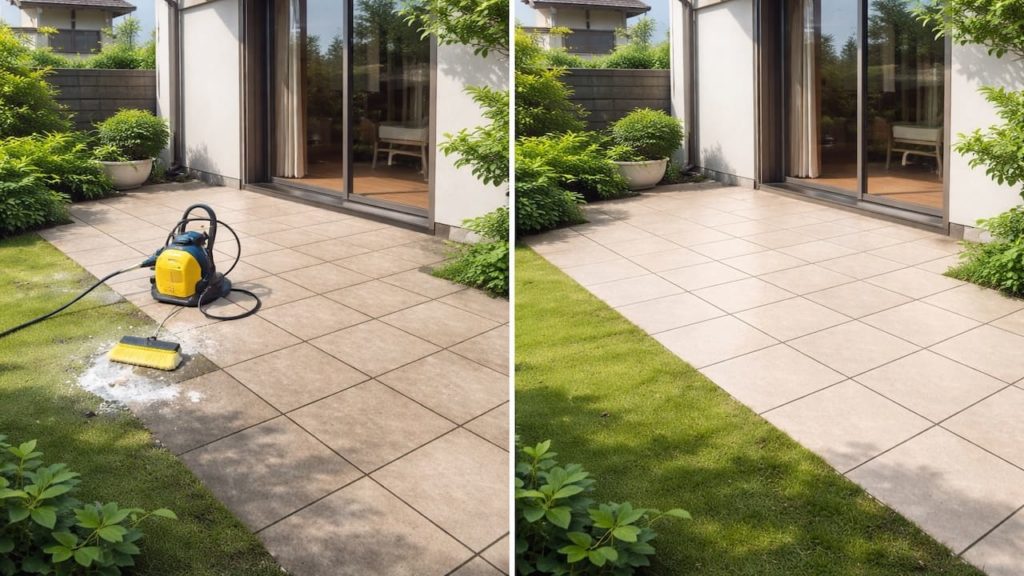
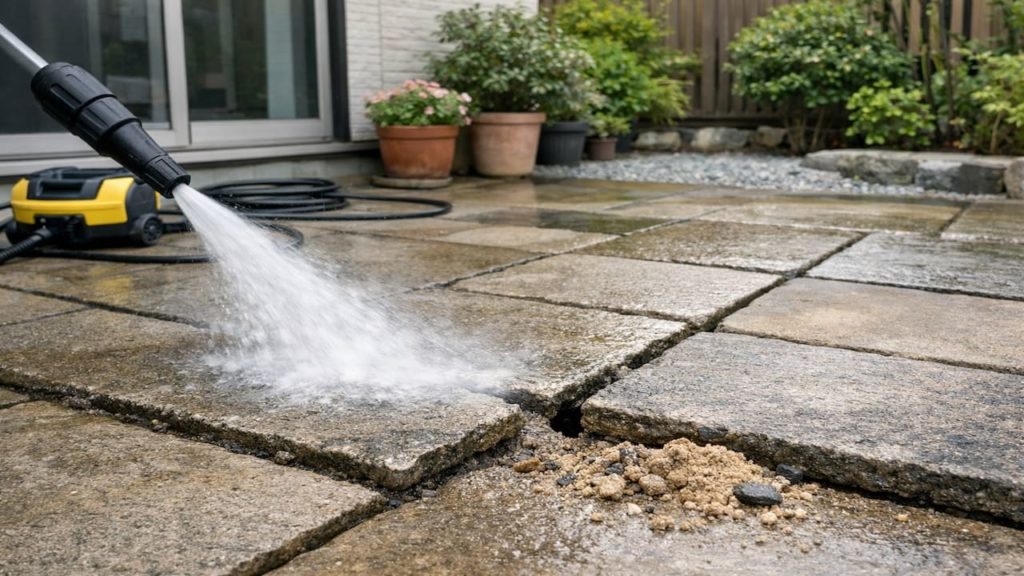
Cost is mostly time/effort. Start with dry brushing to remove loose powder, then rinse lightly and brush again while the surface is wet so grit does not scratch. Avoid blasting high pressure into joints because that can pull out joint sand and invite more water under the pavers. Then work on drainage and slope so water exits instead of soaking down—simple geometry beats harsh chemicals in Japan’s wet months.
Applying cleaners to dry pavers can risk damage, so wetting first and rinsing away loose dirt is a safer starting point for most cleaning steps. According to belgard.com.
- Dry brush powder then rinse and brush again
- Clean small sections so residue cannot dry fast
- Keep runoff moving away from walls and door tracks
- Top up joints after cleaning if sand is missing
- Reduce constant drips from hoses and planters
You might want an acid wash to make it vanish instantly. That can lighten surfaces, roughen texture, or create uneven tone, especially if you do not rinse perfectly. Start mild, fix moisture, and give it time to calm down. Strong chemicals are the last move.
5. FAQs
Q1. Is white bloom on pavers always efflorescence?
Often yes when it fades when wet and returns as it dries. If it stays bright white when soaked, it may be residue or surface wear.
Q2. How long does efflorescence last?
It can fade over time as salts are exhausted, especially if moisture entry is reduced. If water keeps feeding the base, it can keep reappearing for much longer.
Q3. Should I seal pavers to stop efflorescence?
Sealing can help after the surface is clean and dry, but sealing too early can trap moisture underneath—then the bloom finds a new exit. Fix drainage first and let the pavers dry out.
Q4. Why is it worse near walls or the patio edge?
Edges often stay damp longer and collect runoff from roofs, hoses, and planters. A small edge dam can also block runoff and force water down into the base.
Q5. What is the fastest low-risk cleaning method?
Dry brush, wet rinse, and brush again, then let it dry fully and reassess. Repeat a few cycles while you work on stopping the water source below.
Pro's Tough Talk

I’ve spent 20+ years working around Japanese homes, so I’ve seen what tends to work—and what tends to go wrong—in everyday use. That white bloom is not a mystery stain, it is your patio sweating minerals.
Here’s the cold truth: water goes in, grabs salts, climbs back out, and leaves chalk behind. It is a slow conveyor belt, like a vending machine that only sells dust. During Japan’s rainy season, it gets extra fuel.
Do this now: wet a test patch and see what changes. Do this today: dry brush, rinse, brush again, and stop grinding grit into the face. Do this on the weekend: fix the drip source and give water a clean exit line.
If bloom returns in the same shape after you fix runoff you still have moisture coming from below, so check joints and edge dams next. If it fades and stays faded, keep it simple and stop poking it.
Seriously.
Summary
White discoloration on pavers is usually efflorescence driven by moisture cycling through the base. Confirm it by testing wet versus dry behavior and mapping the repeat pattern.
Clean with brushing and gentle rinsing first, then reduce water entry by improving runoff and stopping constant drips. If the pattern keeps returning, the moisture path is still open under the surface.
Do one wet test and one gentle brush cycle today so you stop guessing and start controlling the cause. Once the surface stays clean, your next patio maintenance step gets easier too.