You look at your patio and the paver joints look wider than before. The pattern still looks fine, but the gaps feel like they are slowly creeping.
Widening gaps usually mean the field is spreading or settling, not that the joint sand “disappeared for no reason.” In Japan, wet seasons and repeated moisture cycles can accelerate small base and edge issues.
In this guide, you’ll learn why paver gaps widen and how to stop the movement by checking edge restraint and base stability. You’ll also learn which quick fixes are worth doing now.

Hi, I’m Ken — I’m Japanese, and I live in Malaysia long-term, so I explain everyday life in Japan from a practical ‘from abroad’ perspective.
I hold a building design qualification and I’ve been on site for 20+ years across hundreds of jobs. I turn Japan’s unspoken rules into simple checks, so you can avoid costly mistakes and take the next step with clear actions that feel safe.
1. Patio paver gaps widen: 5 checks to stop shifting over time
Widening gaps mean the pavers are moving as a group not just losing sand.
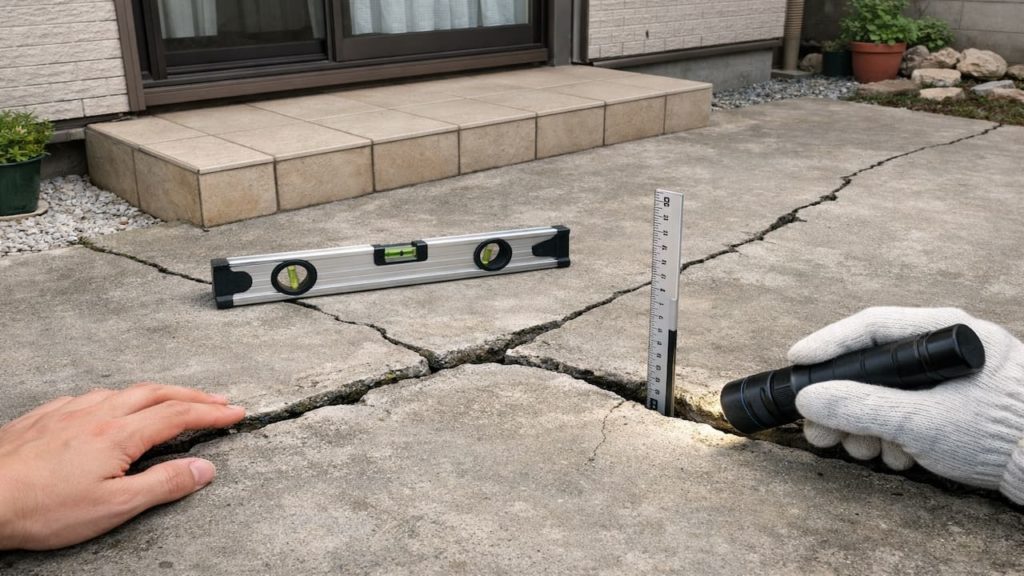
Start by checking whether the movement is local or global. If gaps widen more near an edge, the field is creeping outward because the restraint is weak. In Japanese patios, tight edges near walls and door tracks can hide early movement until joints suddenly look uneven—so you need a simple map of where it is happening. Don’t guess. Mark it.
- Measure joint width in several areas and compare
- Look for larger gaps near one specific edge
- Check if pavers are touching tightly elsewhere
- Inspect corners where movement starts first often
- Watch after heavy rain for new joint changes
You might think topping up joint sand will fix it. That is cosmetic if the field is still moving. Sand is the symptom sponge, not the root stop. Find the moving part first.
2. Edge restraint and base
Edge restraint stops spread only if the base is firm and the edge is actually anchored.
Edge restraint is the “frame” that keeps the pavers locked together. If the restraint is floating, broken, or not pinned into firm ground, the whole field can relax outward under foot traffic and temperature cycles. In Japan’s wet months, soft base edges and washed-out fines make restraint failures show up quickly. Check the edge system like it is a structural part, not decoration.
- Check edging for loose sections you can wiggle
- Confirm spikes are present and driven into firm ground
- Inspect border bricks for lean and outward creep
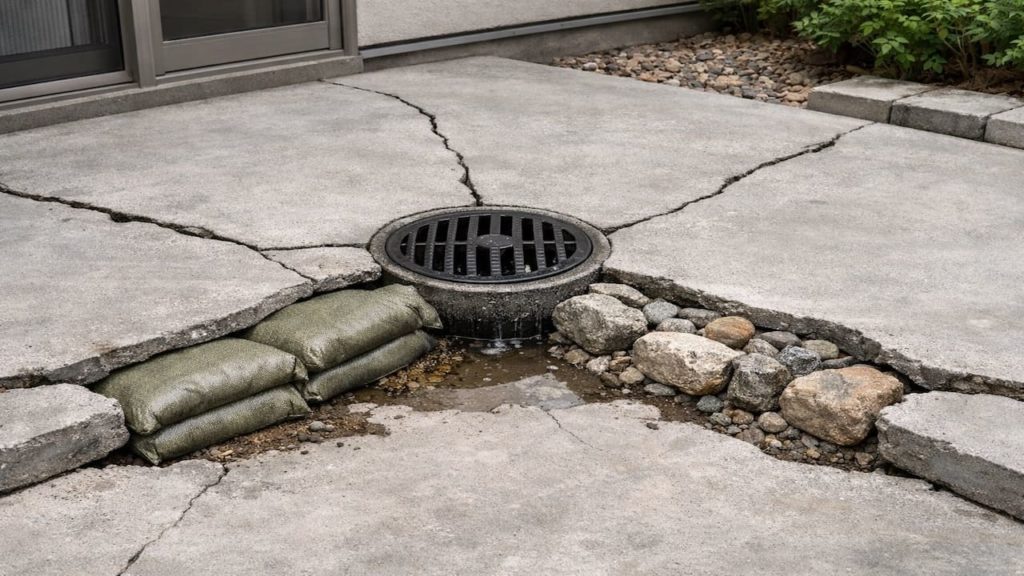
- Look for soil washout outside the patio perimeter
- Check for base material missing under edge pavers
You might assume the edge is fine because it looks straight. A straight edge can still be unanchored under the surface. If you can lift an edge paver and see loose bedding, the frame is failing. Fix the frame first.
3. Why paver joints widen over time
Joints widen when repeated micro movement pumps sand out and the field spreads.
Every step and chair drag creates tiny movement, and movement shakes joint sand downward and outward. Water then carries fines away, especially if drainage is poor or the base stays damp. In humid Japanese seasons, joints stay wet longer, making sand easier to migrate and weeds more likely to take advantage. Movement plus moisture is the combo.
- Foot traffic causes slow outward creep at edges
- Water washes joint fines out through small voids
- Soft base settles and opens gaps unevenly
- Missing restraint lets the field relax outward
- Dragging furniture vibrates pavers and pumps sand
You might blame “cheap joint sand.” Better sand helps, but it cannot hold back a moving patio. Stop the movement and the sand stays where it belongs. Cause first, filler second.
4. How to stop shifting and reset gaps the right way
Stabilize edges then recompact and refill joints so the lock comes back.
Basic supplies can run ¥1,000–4,000 if you need edging spikes, joint sand, and a tamper, depending on what you already have. Start by resetting any loose edging or border bricks and anchoring them into firm ground. Then lift and re-level only the worst moving zone if needed, compact the base, and relay pavers tight. Finally, refill joints with dry sand and compact to lock the field. Japan’s humid air makes drying slower, so do this during a dry stretch if possible.
- Fix edge restraint first before touching joint sand
- Lift and reset any rocking pavers in the zone
- Compact base properly then re-lay pavers tight
- Sweep joint sand in and compact multiple passes
- Recheck after rain and top up sand once more
You might want to glue joints or use rigid filler to “stop everything.” That often cracks, traps water, and makes repairs harder later. A paver patio is meant to flex as a system. Stabilize the frame and base, then let the surface do its job.
5. FAQs
Q1. Are widening paver gaps always a sign of failure?
Not always but it is a sign of movement that should be checked. If it is widening fast or unevenly, the edge restraint or base is likely weak.
Q2. Can I just add more joint sand each time?
You can, but it is temporary if the pavers keep shifting. Repeated sand loss usually means the patio is pumping sand out due to movement and moisture.
Q3. How do I know if my edge restraint is failing?
If edging wiggles, spikes are missing, border bricks lean, or gaps widen mainly near one edge, the restraint is failing. Also check for soil washout outside the patio.
Q4. What is the quickest fix that actually helps?
Stop edge movement first: re-anchor restraint, reset leaning border sections, and correct any washout. Then refill joints and compact to restore the lock.
Q5. Why do gaps get worse after heavy rain?
Water softens the base edge and carries fines away, and wet sand migrates easier. After rain, small movements become larger and joint loss accelerates.
Pro's Tough Talk

I’ve spent 20+ years working around Japanese homes, so I’ve seen what tends to work—and what tends to go wrong—in everyday use. When paver gaps widen, the patio is quietly sliding apart like a cheap zipper.
The mechanism is brutal: edges creep, the frame fails, and every step pumps sand out like a tiny bellows. Water shows up, steals the fines, and the joints open wider. Edge restraint without a firm base is like a belt on sweatpants, and a soft edge is basically an escape ramp.
Do this now: measure gaps near the edge and in the center. Do this today: wiggle the edging and check for washout outside the border. Do this on the weekend: re-anchor the edge, reset the worst zone, then compact and refill joints.
If gaps keep widening mostly near one edge your restraint is the main culprit, so fix the frame before you waste sand. If pavers rock and dip, your base is failing, and you need a lift-and-reset in that zone.
Nice try.
Summary
Widening paver gaps usually mean the field is moving, most often from weak edge restraint or soft base edges. Measure patterns and focus on where gaps widen most.
Fix the frame first by re-anchoring edging or resetting border bricks, then recompact and refill joints. If the base is settling, lift and reset the worst area instead of topping sand forever.
Measure three joint spots and wiggle-check your edging today so you can find the real cause fast. Then keep the patio maintenance routine moving with one more small check.