You clean the patio, step back, and suddenly it looks worse: dull haze, cloudy streaks, or patchy “shadow” marks. That usually means the cleaner or rinse method damaged the surface or left residue behind.
Most haze is not permanent, but some is etching that will not wash off. In Japan, humid air slows drying, so residue sits longer and haze marks show up more.
In this guide, you’ll learn which cleaning mistakes create haze and how to avoid them before you scrub your finish away. You’ll also learn the rinse checks that stop cloudy film fast.

Hi, I’m Ken — I’m Japanese, and I live in Malaysia long-term, so I explain everyday life in Japan from a practical ‘from abroad’ perspective.
I hold a building design qualification and I’ve been on site for 20+ years across hundreds of jobs. I turn Japan’s unspoken rules into simple checks, so you can avoid costly mistakes and take the next step with clear actions that feel safe.
1. Patio cleaning mistakes: 5 warnings that cause haze marks
Haze marks come from chemistry plus bad rinsing not from “old tile.”
Start by identifying what the haze looks like: chalky white film, dull etched patches, or streaky residue lines. In Japan’s rainy season, patios stay damp and dry slowly, so cleaner residue can dry into a visible film even if you “rinsed.” The warning is when the surface looks worse as it dries. That is your clue.
- Watch if haze appears only after full drying
- Check if streaks match your rinse direction lines
- Rub with damp cloth to see if film lifts
- Compare haze in shade versus sun exposure areas
- Test hidden corner to see if gloss is etched
You might think you need stronger cleaner to remove haze. If haze is residue, stronger chemistry can deepen it. If haze is etching, stronger chemistry can widen it. First confirm what type you created, then choose the right response.
2. Acid misuse and rinse
Acid on the wrong surface creates etching that looks like haze.
Acid cleaners can react with calcium-based stone and cement products, leaving a dull patch that does not wipe away. Even on hard tile, acid can leave residue if it is not neutralized and rinsed fully. Natural stone like limestone, marble, and travertine should not be cleaned with acidic products because they can etch the surface. According to naturalstoneinstitute.org.
- Confirm surface type before using any acidic cleaner
- Dilute and spot test instead of full surface wash
- Pre wet the surface so acid cannot soak deep
- Rinse more than you think then rinse again
- Neutralize after acid use when product requires it
You might assume “acid equals clean” because it removes minerals fast. That is the trap. Acid is a tool for specific deposits, not a general patio wash. Wrong tool, permanent dullness.
3. Why haze marks happen even with mild cleaners
Haze is often dried residue and micro scratches not a stain.
Soap, degreaser, and even “neutral” cleaners can leave a film if they dry on the surface. If you scrub with a gritty pad, you can also create micro scratches that scatter light and look cloudy. In Japan, wind-blown dust plus humidity makes grit stick, so wiping can turn into sanding without you noticing. The haze pattern often follows your wiping strokes.
- Cleaner dries on surface and leaves a thin film
- Hard water minerals dry as white cloudy residue
- Grit in sponge creates micro scratches and haze
- Too little rinse water spreads residue into streaks
- Drying in sun bakes residue before it rinses off
You might blame “bad tile quality.” Most of the time it is the process: wrong pad, not enough water, and letting product dry. Fix the process and the haze stops appearing. Simple.
4. How to clean without creating haze marks again
Use more water less pressure and never let product dry.
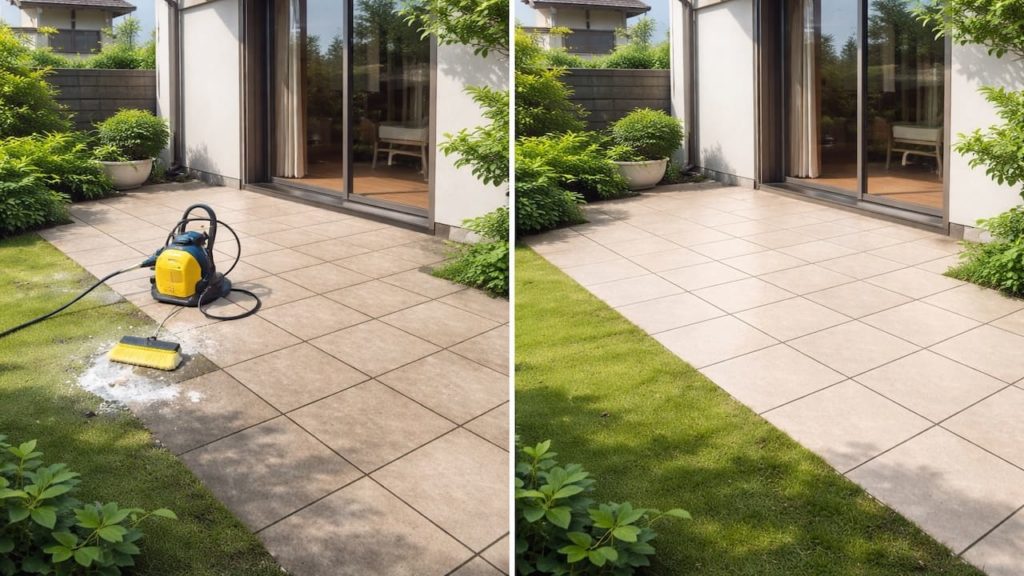
Cost is mostly time/effort. Pre-rinse to float grit, clean in small sections, and rinse until runoff is clear, not just “looks okay.” Use a soft nylon brush or microfiber, and avoid abrasive pads unless you know the surface is scratch-resistant. In Japan’s humid months, give it extra rinse time because drying is slow and residue loves slow drying.
- Pre rinse the whole area to float grit away
- Clean in small zones so product never dries
- Use soft brush and plenty of rinse water
- Final rinse from top to bottom with clean water
- Dry wipe one test patch to confirm no film
You might want to pressure wash harder to “blast haze off.” That can make it worse by etching soft surfaces or roughening grout and joints. When in doubt, go gentler and rinse longer. Most haze is residue you can remove, not dirt you must attack.
5. FAQs
Q1. How do I tell haze residue from etching?
Residue lifts with a damp wipe while etching does not. If it stays dull after rinsing and drying and feels slightly rough, that is likely etching.
Q2. Can I fix haze marks if I used acid?
If it is residue, yes with thorough rinsing and neutralizing. If it is etched, cleaning will not restore gloss and you may need polishing or resurfacing depending on material.
Q3. Why do haze streaks follow my rinse lines?
Because residue dried where you pushed it, like a soap film. Clean and rinse in smaller sections and do a final clear-water rinse.
Q4. Should I use vinegar for patio cleaning?
Skip it on natural stone and cement-based surfaces because of etching risk. If you use it on hard tile, dilute, spot test, and rinse very thoroughly.
Q5. What is the safest default cleaner?
A mild neutral cleaner with lots of water, plus a soft brush and good rinsing. Most patios look better from process, not stronger chemistry.
Pro's Tough Talk

I’ve spent 20+ years working around Japanese homes, so I’ve seen what tends to work—and what tends to go wrong—in everyday use. Patio haze is usually self-inflicted.
The ugly mechanism: you use acid like it is magic, the surface reacts, and you “clean” the finish right off. Or you use mild cleaner, let it dry, and the residue becomes a cloudy skin. Then you scrub harder with grit in the sponge and basically sand the patio for free.
Do this now: stop and rinse until runoff is clear. Do this today: test a damp wipe to see if haze is removable film. Do this on the weekend: reset your routine with pre-rinse, small sections, and soft tools.
If the haze does not change after a full rinse and dry you likely etched the surface and cleaning will not bring back shine. If it fades with a damp wipe, it is residue, so rinse smarter and stop letting product dry.
Nice try.
Summary
Haze marks usually come from residue, hard water deposits, micro scratches, or acid etching. Confirm which one you made by testing a damp wipe and checking how it looks after full drying.
Avoid haze by pre-rinsing grit, cleaning in small sections, and rinsing until water runs clear. Skip acids on sensitive surfaces and never let cleaner dry on the patio.
Pre-rinse and rinse twice on your next clean so the finish stays clear instead of cloudy. Then keep your exterior care routine moving with one more quick patio check.