You look at your patio and the grout lines have turned into dark stripes. It makes the whole surface look dirty even if the tiles look fine.
Those lines can be mold, trapped dirt, or moisture staining from below. In Japan, humid summers and sudden rain make grout stay damp longer than you expect.
In this guide, you’ll learn how to tell mold from dirt without guessing and what to test first. You’ll also learn how to rinse and dry so the lines do not come back in a week.

Hi, I’m Ken — I’m Japanese, and I live in Malaysia long-term, so I explain everyday life in Japan from a practical ‘from abroad’ perspective.
I hold a building design qualification and I’ve been on site for 20+ years across hundreds of jobs. I turn Japan’s unspoken rules into simple checks, so you can avoid costly mistakes and take the next step with clear actions that feel safe.
1. Patio grout dark lines: 5 checks if it is mold or dirt
Dark grout lines are either growth or a stain path.
Start with quick checks before you scrub, because the pattern is the evidence—once you smear it, you lose clues. Mold usually forms where moisture lingers, while dirt follows traffic, runoff, and edges. In Japanese homes, narrow patios and shaded walls can keep one side damp all day. Two minutes now saves two hours later.
- Smell the grout line after it gets damp
- Check if darkness follows shade and wet zones
- Rub with white cloth to see color transfer
- Look for fuzzy texture versus flat staining
- Compare lines near drains versus dry center
Some people assume black means toxic mold and panic. Color alone does not tell you the risk, and outdoor grout often just holds grime. Still, if it returns fast after drying or feels slimy, treat it like living growth. Evidence first.
2. Rinse well and dry
Bad rinsing makes “clean” grout look darker—because residue dries in the pores.
Many cleaners lift grime, but the dirty liquid must leave the grout or it settles back in. Soap film can trap dust, then the next rain turns it into dark streaks again. If you rinse once and walk away, the remaining moisture becomes a tiny incubator. In Japan’s rainy season, grout may stay wet overnight even with sun the next day.
- Rinse until runoff water stays clear
- Change rinse water instead of reusing dirty
- Wipe joints with towel to pull moisture out
- Open airflow paths by moving planters aside
- Dry with fan or sun before sealing
You might think more cleaner fixes it. Nope. More cleaner often means more residue, and residue means darker lines. Rinse like you mean it, then dry hard.
3. Why dark lines happen even on new grout
Moisture movement turns grout into a dirt magnet.
Grout is porous, so it wicks water and whatever that water carries. If water sits at tile edges, it feeds algae and mildew, and the line darkens first. If water comes from under the tile, it can bring fine soil and stain upward. In Japan, small patios often get roof drip or AC drain water hitting the same strip—repeat wetting builds a visible track.
- Standing water keeps grout wet and dark
- Runoff carries soil into joint pores
- Soap residue traps dust and turns gray
- Shaded edges grow algae faster than center
- Micro cracks hold grime and never rinse out
Some say it is “just age.” Not really. It is usually a repeat pattern: water, fine dirt, and slow drying. Fix the pattern and the color follows.
4. How to clean safely and keep grout lines light
Clean with the mildest method that actually works.
Start with detergent and a stiff nylon brush, then escalate only if the stain survives drying. Basic supplies are usually ¥500–3000 for cleaner, brush, and gloves. Ventilate and avoid mixing chemicals, especially if you use bleach. According to cdc.gov. Moisture control matters more than any chemical—remove the wet source and the dark lines stop reproducing. According to epa.gov.
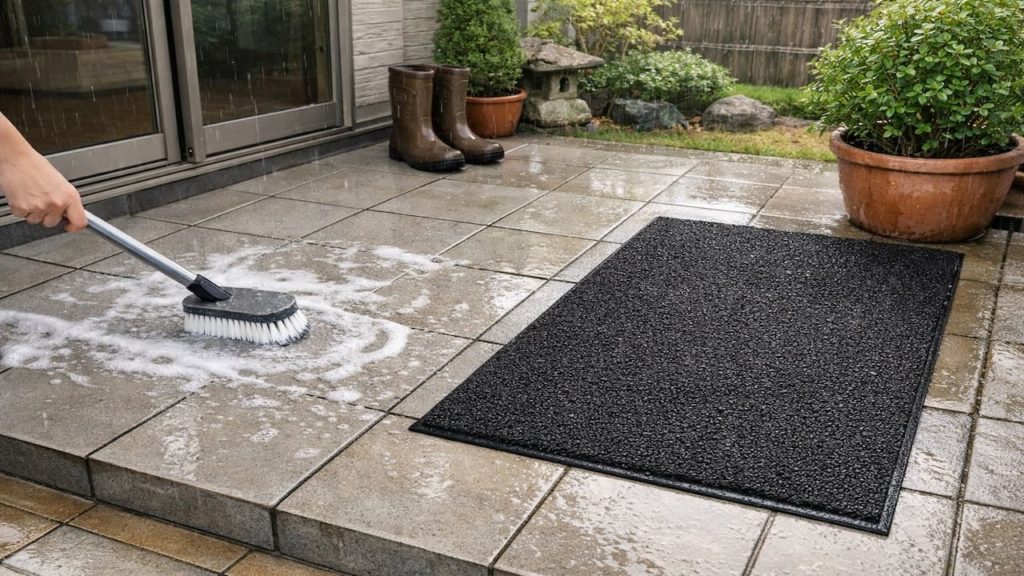
- Scrub with detergent then rinse until clear
- Spot test peroxide on one line and wait
- Use bleach only on hard grout not plants
- Dry fully then apply penetrating grout sealer
- Redirect drip sources so joints can dry
People rush to seal while grout is still damp. That locks in discoloration and traps moisture under the surface—then it looks worse later. Dry first, then seal, and only after you fixed the water source. Simple order.
5. FAQs
Q1. How can I tell mold from dirt without lab tests?
If it fades after drying and brushing it is usually dirt rather than active growth. If it comes back fast in the same damp spots, treat it as moisture-driven growth and fix drying.
Q2. Is pressure washing safe for grout lines?
It can blast out weak grout and open pores, so be careful with high pressure. If you use it, keep distance and angle shallow, then rinse and dry fully.
Q3. Why do the lines look darker right after cleaning?
Wet grout looks darker by nature—and it can hold dirty water until it dries. If it stays dark after full drying, residue or staining is still in the pores.
Q4. Should I use vinegar on patio grout?
Vinegar can help with some stains, but it can also affect certain stone and cement surfaces. Spot test first, rinse well, and never leave it sitting.
Q5. When should I reseal the grout?
Reseal only after the grout is clean and fully dry, and after you fixed the wet source. If water beads on the line and stays on top, your sealer is still doing its job.
Pro's Tough Talk

I’ve spent 20+ years working around Japanese homes, so I’ve seen what tends to work—and what tends to go wrong—in everyday use. You see dark grout lines and suddenly the patio looks like it belongs to someone who gave up. In the humid rainy season, grout turns into a sponge and starts collecting “memories.”
Here’s the cold truth: dirt sticks because pores stay wet, and growth shows up because the line never gets to dry. Three drivers run the show: water source, slow drying, and residue left behind after cleaning. Grout is like a kitchen sponge on the floor, and you keep feeding it. You scrub, it looks better, then the next morning the lines are back like a bad rumor.
Right now, remove anything blocking airflow and sunlight. Today, scrub with detergent, rinse until clear, then towel-dry the joints. This weekend, fix the drip path and seal only after full drying.
Do that and you stop the cycle instead of chasing it. If the line returns in the exact same damp strip you do not need a stronger cleaner, you need a water fix. If the stain stays even when bone dry, then you are dealing with deep staining or damaged grout.
Nice try.
You know the funniest part? People blame “mold” while a downspout is literally pouring onto the same two joints. Fix the water, and the grout magically behaves.
Summary
Check pattern, texture, and color transfer to tell dirt from growth, then clean without destroying the grout. Rinse until clear and dry hard before you judge the result.
If dark lines return fast in the same damp areas, fix the water source and drying first. Seal only after the grout is clean and fully dry, or you lock in the problem.
Do one spot test and a full rinse today and you will know what you are dealing with. Then keep exploring the next patio fix that matches your moisture pattern and finish it properly.