You put an outdoor rug on the patio, and now there’s a moldy smell when you lift it. The surface looks fine until you notice the damp shadow underneath.
Rugs can trap water, block airflow, and hold fine dirt that feeds odor and growth. In Japan, humid summers and sudden rain make “outdoor” rugs stay wet longer than you expect.
In this guide, you’ll learn 5 checks to stop rugs from trapping damp and prevent that musty smell. You’ll also learn how to create a dry gap and airflow so the rug can exist without turning into a sponge.

Hi, I’m Ken — I’m Japanese, and I live in Malaysia long-term, so I explain everyday life in Japan from a practical ‘from abroad’ perspective.
I hold a building design qualification and I’ve been on site for 20+ years across hundreds of jobs. I turn Japan’s unspoken rules into simple checks, so you can avoid costly mistakes and take the next step with clear actions that feel safe.
1. Patio outdoor rug traps damp: 5 checks to prevent mold smell
If it smells musty the rug is blocking drying.
Do the checks before you wash everything, because the pattern shows where water is entering and where it gets stuck. Most rug damp issues come from rainwater that cannot escape, plus dirt that holds moisture. In Japanese patios, shade from walls and fences can keep a rug damp overnight even after a sunny day. Your goal is not perfect dryness, just faster drying than the mold cycle.
- Lift rug and check underside for wet film
- Look for darker patch matching rug footprint
- Smell the corner edges where airflow is worst
- Check if rug curls and blocks drainage at edges
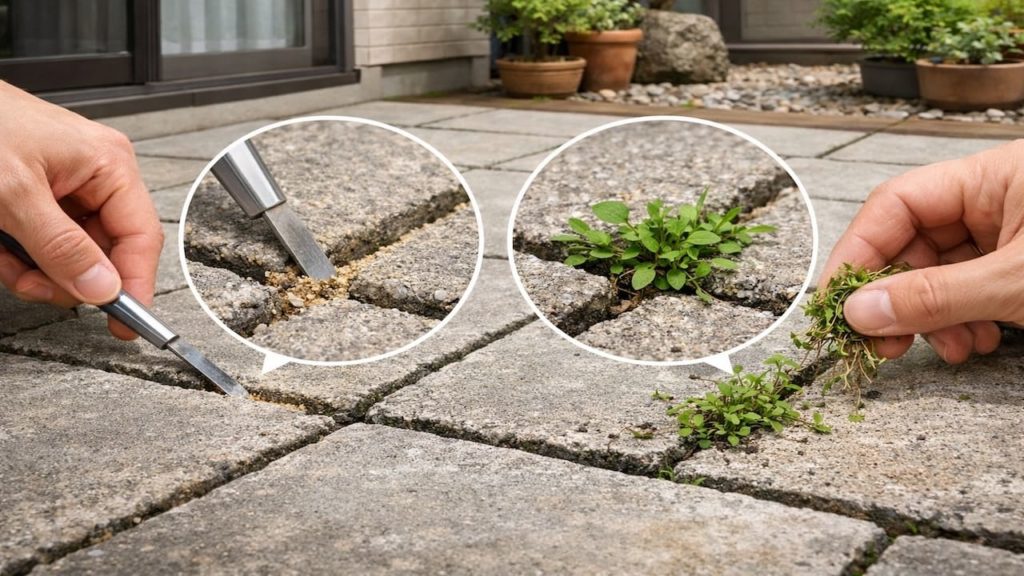
- Inspect grout lines for green slick in shade
Some people think “outdoor rug” means it cannot cause mold. Wrong. Outdoor just means it tolerates weather, not that it dries fast. If water cannot leave, it will stink.
2. Dry gap and airflow
A small air gap prevents most rug damp problems—because water needs an exit path.
When a rug sits flat on tile or concrete, it acts like a lid on a wet pot. Adding a breathable pad or raised grid lets air move and lets water drain instead of trapping it. Basic supplies are usually ¥1000–5000 depending on pad type and size. In Japan’s rainy season, the difference between “touching” and “vented” is the difference between neutral smell and swamp smell.
- Use a breathable rug pad not solid rubber
- Leave a small border gap at rug edges
- Raise corners slightly to avoid water sealing
- Rotate rug weekly to change drying exposure
- Stand rug upright after storms to dry fully
People try to solve it by buying a thicker rug. That often traps more water. What you want is ventilation, not cushion. Give water a way out and the smell stops forming.
3. Why rugs create mold smell on patios
Smell forms when moisture and organic dirt stay trapped.
Rainwater carries dust, pollen, and tiny organic bits that lodge in the rug fibers and underlayer. Once that damp layer stays for hours, microbes start producing odor. If the patio is shaded or has poor slope, the damp time stretches longer. In Japan, quick showers followed by warm humidity are perfect conditions for “wet towel” odor under rugs.
- Rug fibers trap fine dirt that holds water
- Flat backing blocks evaporation from the surface
- Shade slows drying and extends damp time
- Poor slope keeps water under the rug footprint
- Biofilm forms and makes odor return faster
Some say you just need stronger cleaner. Cleaner helps once, but the smell returns if the rug keeps sealing moisture. Fix the drying cycle and you fix the odor cycle. Simple.
4. How to prevent odor and clean without damaging the patio
Clean both sides then dry hard before you put it back.
Start by sweeping and vacuuming the patio area so you remove the dirt that holds moisture. Wash the rug with mild detergent and rinse well, then dry it fully in sun or airflow before placing it back. Cost is mostly time/effort if you already have detergent and a brush. If you suspect moldy growth, avoid mixing chemicals and keep exposure low. According to cdc.gov.
- Vacuum patio surface to remove fine dirt
- Scrub rug underside with mild soap and rinse
- Rinse patio until runoff is clear and not slick
- Dry patio and rug fully before reinstalling
- Add breathable pad to create an air gap
Some people put the rug back while “almost dry.” That is how you restart the smell within two days. Dry means fully dry, especially around corners and backing. Then reinstall with ventilation.
5. FAQs
Q1. How often should I lift the rug to prevent damp?
At least once a week in humid seasons, and after any heavy rain. If you smell mustiness when lifting it, you are already waiting too long.
Q2. Are rubber-backed rugs a bad idea outdoors?
Solid rubber backing can trap water because it seals against the patio. If you use one, you need a breathable layer or frequent drying to avoid odor.
Q3. Why is the smell worse at the edges and corners?
Edges collect runoff and corners often have the weakest airflow. That creates a damp pocket where microbes get comfortable.
Q4. Can I seal the patio to stop damp under the rug?
Sealing can reduce absorption, but it does not fix trapped water under a flat rug. Airflow and drainage still matter more than any sealer.
Q5. What is the fastest fix if I need the rug there?
Stand the rug up to dry after rain and use a breathable pad to create a dry gap. If the patio stays wet underneath, reduce rug size or move it away from the damp corner.
Pro's Tough Talk

I’ve spent 20+ years working around Japanese homes, so I’ve seen what tends to work—and what tends to go wrong—in everyday use. In Japan’s humid seasons, an outdoor rug can turn your patio into a hidden wet towel factory.
Three things cause the stink loop: the rug seals the surface, fine dirt holds water, and shade keeps it damp for hours. The rug is a lid on a steaming pot, and you keep wondering why it smells like a locker room. You lift it and get hit with that musty punch, then you pretend you didn’t smell it.
Right now, lift the rug and let both surfaces breathe. Today, clean and rinse both sides, then dry them fully in sun or wind. This weekend, add a breathable pad and leave a border gap for airflow.
Do that and the smell usually disappears and stays gone. If the patio stays damp under the rug even after drying you have a slope or drip problem and the rug is just revealing it. If it only happens after storms, change the drying routine and reduce trapped edges.
Nope.
Calling it an “outdoor rug” doesn’t give it magic powers. Give it airflow or it’ll keep cooking that mold smell for you like a free service.
Summary
Rugs trap damp when they seal the patio surface and block airflow, especially in shaded corners. Check for wet film, dark footprint marks, and edge curl that traps water.
Prevent odor by creating a dry gap with breathable padding, lifting and drying after storms, and keeping the area clean of fine dirt. If damp persists, fix slope or drip sources instead of blaming the rug.
Lift and dry the rug today and you’ll break the musty cycle fast. Then keep exploring the next patio moisture fix that matches your layout and keep the space smelling neutral.