You cleaned your patio and now you see orange rust stains that won’t budge. The worst part is they look louder after they dry.
Rust can sit on the surface, or it can lock into tiny pores and grout texture. In Japan, rain bursts and humid air keep surfaces damp and make stains “set” fast.
In this guide, you’ll learn 5 checks to remove rust without bleaching and keep the color even. You’ll also learn how to test oxalic safely, then rinse hard so residue does not ghost back.

Hi, I’m Ken — I’m Japanese, and I live in Malaysia long-term, so I explain everyday life in Japan from a practical ‘from abroad’ perspective.
I hold a building design qualification and I’ve been on site for 20+ years across hundreds of jobs. I turn Japan’s unspoken rules into simple checks, so you can avoid costly mistakes and take the next step with clear actions that feel safe.
1. Patio rust stains: 5 checks to remove without bleaching
Rust comes off cleaner when you diagnose the source first.
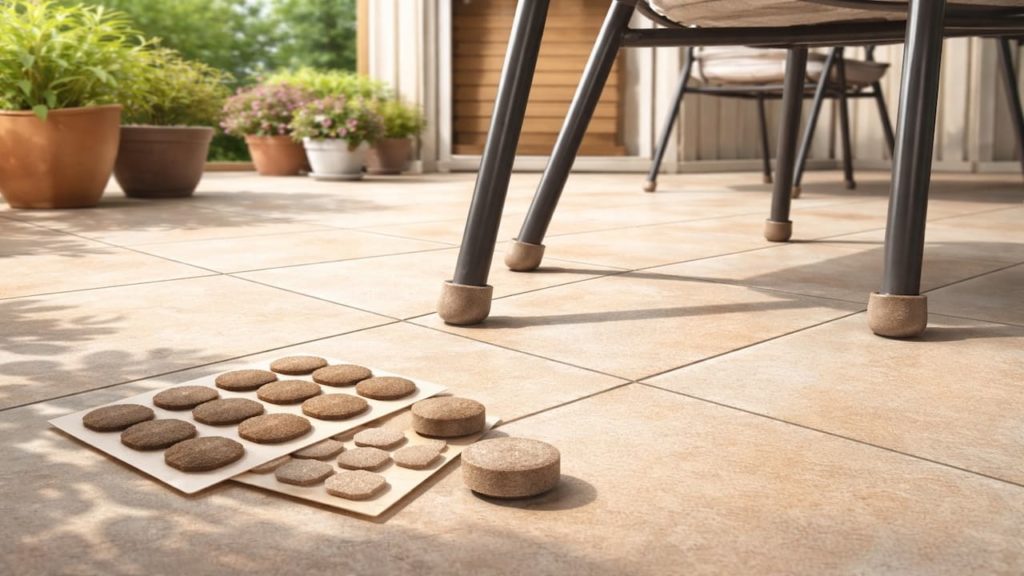
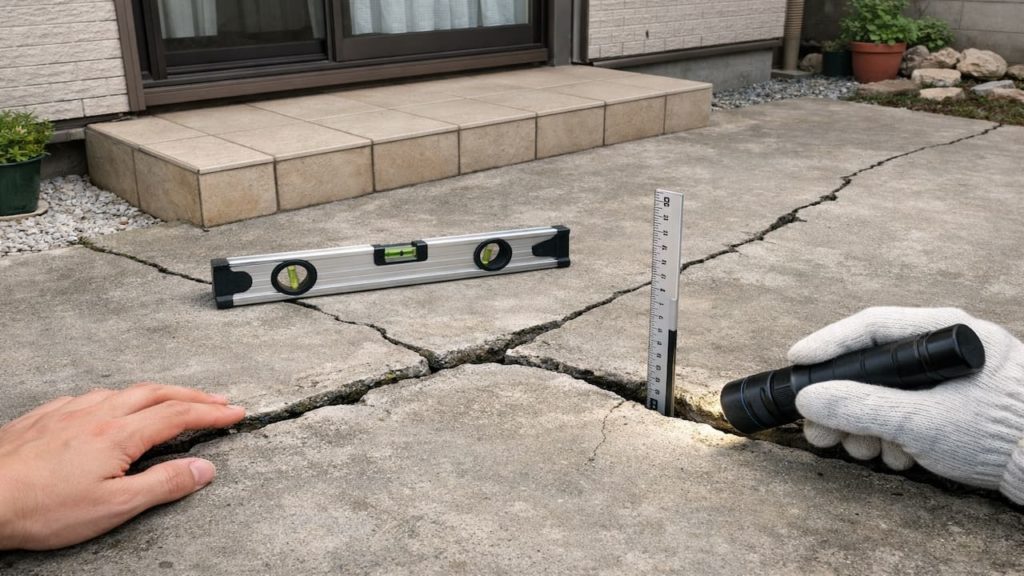
Before chemicals, confirm whether the stain is from metal runoff, fertilizer, or hard water deposits that look rusty. Check where water drips, where tools sit, and where planters bleed. In Japan’s rainy season, a single steel chair leg can drip orange lines for weeks. If you remove the stain but leave the source, it will reprint itself.
- Trace stain upstream to a drip point
- Check for metal furniture feet leaving wet marks
- Inspect planters for rusty water leaking below
- Test if stain lightens with plain water rinse
- Look for grout lines acting like stain highways
Some people reach for bleach because it feels powerful. Bleach can lighten nearby color and still not dissolve rust well. Rust is iron chemistry, not “germs,” so you win by using the right reaction and a serious rinse.
2. Oxalic test and rinse
Oxalic works when you spot test and control contact time.
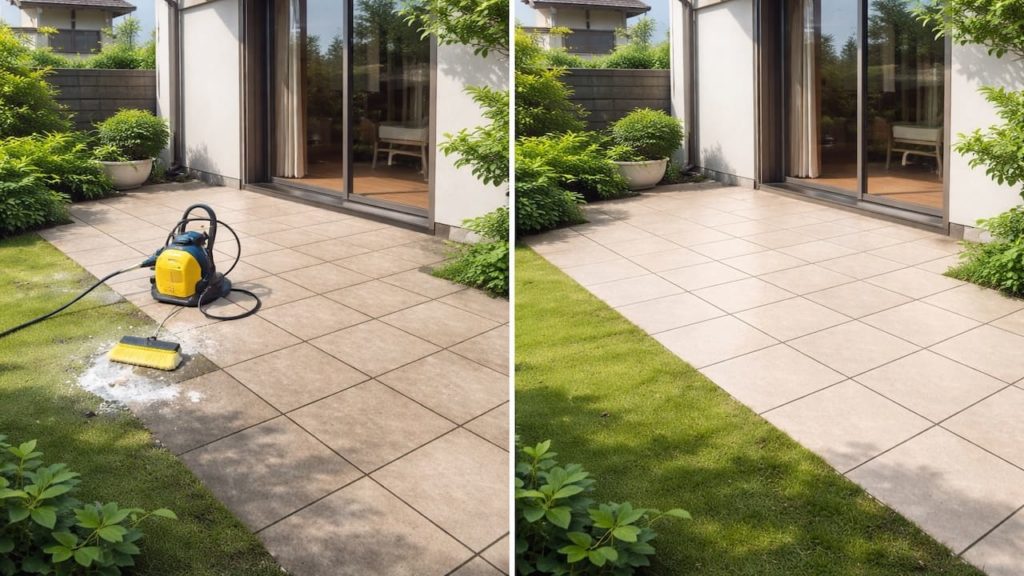
Oxalic acid is a classic rust-lifter, but you treat it like a scalpel, not a bucket dump. Start with a tiny test patch so you don’t create a light halo on stone or textured concrete. For basic supplies like oxalic cleaner, gloves, and a nylon brush, plan about ¥800–3000 depending on what you already have. A technical rust-stain procedure uses oxalic solution contact time and thorough rinsing as the core mechanic. According to gsa.gov.
- Wet the area lightly to slow absorption
- Apply oxalic to a small corner test first
- Brush gently with nylon not metal bristles
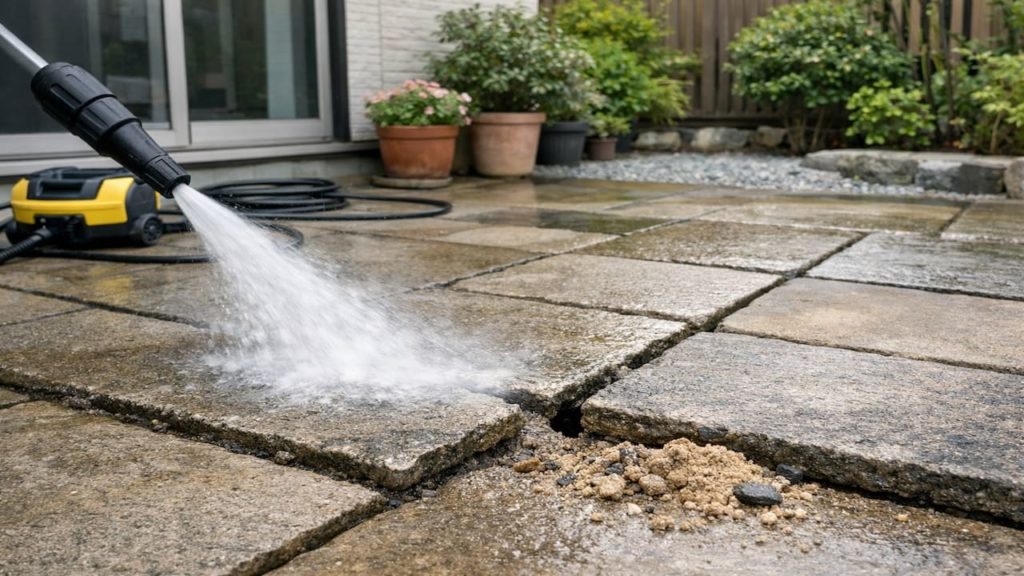
- Rinse longer than you think you need
- Dry fully before judging the true color
People assume stronger mix equals faster removal. That can backfire by etching or shifting tone, especially on older patios. If the stain fades but returns after drying, you likely left residue or didn’t rinse deep enough—repeat a mild cycle instead of going harsh.
3. Why rust stains cling after rain and metal runoff
Rust locks in when iron-rich water dries in pores.
When iron drips onto concrete or grout, it soaks into micro texture and then oxidizes as it dries. Rain can spread the iron wider, then the sun “bakes” it in as the surface warms. In Japan, humid air slows drying, so the stain has more time to migrate into pores before it sets. That is why old stains look deeper and newer stains look like a thin orange wash.
- Iron dissolves then redeposits as water evaporates
- Porous grout absorbs stain faster than tile
- Rain spreads droplets into wider orange veils
- Humidity slows drying and extends stain penetration
- Surface texture traps residue and darkens edges
Some people keep scrubbing with soap forever and blame the patio. Soap helps remove grime on top, but it doesn’t break iron bonds well. Once you understand the chemistry, you stop wasting effort and start doing targeted cycles with full rinse and dry checks.
4. How to remove rust without bleaching and avoid halos
Do mild cycles with full rinse and neutral drying.
Work from the outside edge of the stain inward so you don’t spread it, and keep runoff controlled so it doesn’t streak into clean zones. Never mix bleach with acids or other cleaners because dangerous vapors can form, so keep products separated and rinse between steps. According to CDC. If you need a poultice for deep stains, a basic setup with absorbent powder and cleaner is often ¥1000–4000, but cost is mostly time/effort if you already have towels and a bucket. In Japanese homes where patios sit close to walls, airflow is weaker, so drying takes longer and you must wait before judging results.
- Mask the area to keep runoff contained
- Apply cleaner evenly and avoid puddling edges
- Brush lightly then rinse until water runs clear
- Repeat short passes instead of one long soak
- Finish with plain water rinse and full dry
Some people bleach first, then try rust remover after. That can create patchy tone and still leave iron behind in pores. If you see a pale ring, stop escalating and switch to wider blending rinses, then let it dry fully before deciding the next pass.
5. FAQs
Q1. Is bleach actually bad for rust stains?
Bleach can lighten surrounding color without removing iron. Rust removers that target iron usually work better, and bleaching can leave you with a brighter patch.
Q2. How do I know if oxalic is safe on my patio?
Do a small test in a hidden corner, rinse hard, and let it dry fully. If the tone shifts or roughness appears, stop and switch methods—test before committing.
Q3. Why does the stain look gone when wet but returns dry?
Water can mask contrast, and residue can dry back into pores. If it returns, rinse longer and repeat a mild cycle rather than scrubbing harder.
Q4. Can I use a wire brush to speed it up?
A wire brush can scratch and trap more residue, making the area look darker later. Use nylon bristles and let chemistry do the lifting.
Q5. When should I call a pro for rust stains?
If stains are deep, widespread, or keep returning from a hidden metal source. A pro can identify the source and treat without creating new discoloration.
Pro's Tough Talk

I’ve spent 20+ years working around Japanese homes, so I’ve seen what tends to work—and what tends to go wrong—in everyday use. In wet seasons, rust stains spread like gossip and stick around longer than your guests.
Three reasons you keep losing: you scrub the wrong chemical, you skip the rinse, and you ignore the source drip. Rust is a tattoo, not a sticker, and pores hold it like a clenched fist. You set a metal tool down for “one minute,” then come back to an orange signature.
Right now, find the metal source and move it off the patio. Today, spot test oxalic, brush lightly, then rinse until you are bored. This weekend, repeat a short cycle and dry-check in daylight.
Do it and you stop the stain from ghosting back. If the stain returns from the same drip line you fix the source or you’ll clean forever, no matter what product you buy. If the surface tone shifts, widen the rinse and blend instead of attacking one spot.
Nope.
Keep bleaching like you’re fighting a monster, and you’ll just end up with a bright patch that still has rust. Clean smart, rinse hard, and make the metal stop bleeding.
Summary
Rust stains stick when iron-rich water dries into pores and grout texture. Check the drip source, the stain pattern, and whether residue is returning after drying.
Use oxalic with a spot test, short contact time, and long rinses, then judge only after full dry. Avoid bleach mixing and avoid harsh scrubbing that creates halos.
Do one small oxalic spot test and one long rinse today to see if the stain is surface-level or deep. Then keep going with the patio cleanup topic that matches your surface and lock in an even finish.