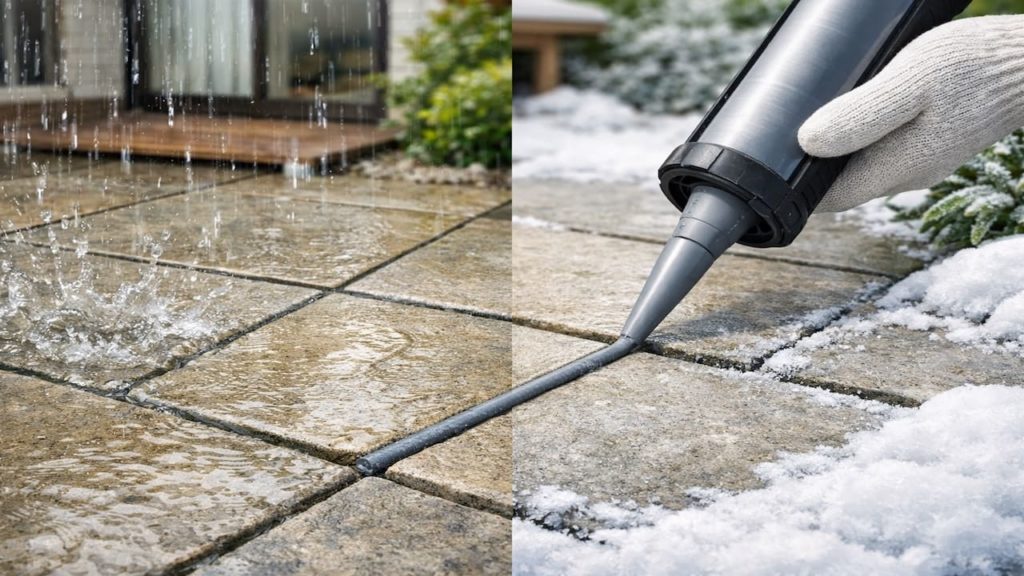
You sealed your patio, felt proud, and then it started peeling like sunburn. Now flakes show up after rain, and the surface looks worse than before.
Peeling usually means moisture, bad timing, or a bond problem under the film. In Japan, humid air and shaded patios make “dry enough” hard to judge.
In this guide, you’ll learn why patio sealer peels fast and how to stop it without wrecking the color. You’ll learn what to check before resealing so the next coat actually grips.

Hi, I’m Ken — I’m Japanese, and I live in Malaysia long-term, so I explain everyday life in Japan from a practical ‘from abroad’ perspective.
I hold a building design qualification and I’ve been on site for 20+ years across hundreds of jobs. I turn Japan’s unspoken rules into simple checks, so you can avoid costly mistakes and take the next step with clear actions that feel safe.
1. Patio sealer peeling: 5 mistakes that cause flaking fast
Peeling is almost always a prep and timing failure.
The sealer did not bond, or it bonded and then got pushed off by moisture—either way it is not “random.” Mistake one is sealing on damp concrete, mistake two is trapping moisture under a thick coat, and mistake three is skipping proper cleaning. In Japan, patios near walls stay shaded and hold damp longer. Fix the cause and the flakes stop multiplying.
- Seal while slab still damp from rain
- Apply too thick and trap moisture below
- Skip degreasing and leave invisible film residue
- Seal in shade where drying slows dramatically
- Recoat too soon before first coat hardens
It is tempting to blame the product and buy a different brand. That rarely works if the slab was wet or dirty. A better tube cannot bond to moisture and grime. Get the surface right, then choose the right sealer.
2. Moisture timing and cure
If the slab is damp the sealer is gambling.
High humidity and low airflow can make a concrete sealer take much longer to dry or cure. According to ASCC. In Japan, that means a coat that feels dry can still be soft underneath, especially in shaded patios and narrow outdoor corridors. Budget ¥2000–8000 for cleaner, tape, and a moisture-safe reseal setup, because you will redo work if you rush it.
- Check slab dryness using taped plastic overnight
- Plan sealing window with no rain forecast
- Seal early day so cure avoids night dew
- Keep airflow moving across the coated surface
- Stop sprinklers and drip sources before sealing
Some people try to “help” by sealing right after washing. That is the fastest route to flaking. Let the slab dry longer than your impatience wants. If the patio stays damp daily, fix drainage first.
3. Why sealers peel so quickly on patios
Moisture pressure and thick coats break adhesion.
Too many coats or a heavy application can trap moisture under the film and make it lose adhesion from the concrete. According to Euclid Chemical. Once adhesion is weak, rainwater sneaks under edges and lifts the film in sheets. Freeze cycles make the lift faster because water expands at the edge and pries it up. In Japan, wet winters and repeated dew can keep feeding that edge lift.
- Moisture pushes upward and releases the film
- Thick coats skin over and stay soft beneath
- Dirt film blocks bonding even on clean-looking slabs
- Edge gaps let water creep under the layer
- Freeze expansion pries loose edges wider
People think peeling means the slab is “too old.” Nope. New slabs peel too when sealed too soon or too heavy. The fix is to remove the weak film, dry the slab, and reseal thin. Film strength starts with adhesion, not gloss.
4. How to strip and reseal so it does not peel again
Strip the failing film fully then reseal in thin coats.
Start by removing all loose sealer, not just the obvious flakes—partial patching leaves weak edges that lift again. Use a cleaner or stripper suited to the product type, then rinse until water runs clear, then wait for true dryness. Plan ¥3000–12000 if you buy stripper, neutral cleaner, and a quality exterior sealer, because the real cost is repeating work. In Japan, cover the patio from surprise showers and keep airflow moving so cure stays stable.
- Scrape loose film and remove all weak edges
- Clean with degreaser and rinse until clear
- Let slab dry fully before any reseal
- Apply thin coat and avoid puddling low spots
- Wait full cure before furniture and washing
Some people rush and recoat the same day. That stacks softness and locks in moisture, and you get flaking again. Thin coats win because they cure through, not just on top. If the slab still shows damp under plastic, do not reseal yet.
5. FAQs
Q1. Can I just reseal over peeling areas?
No because the new coat bonds to failure and will lift with it. Strip back to a solid edge, then reseal the section so the film has a real base.
Q2. How long should I wait after rain before sealing?
Wait until the slab is dry through, not just dry to touch. In Japan’s humid seasons, shaded patios can need extra days, especially near walls and planters.
Q3. Why did it turn white and then peel?
Whitening often means trapped moisture or early water exposure—then adhesion weakens and flakes follow. Let it dry fully, then strip and reseal thin once conditions are stable.
Q4. Should I use a glossy sealer for better protection?
Gloss does not guarantee durability, and thick glossy films can show peeling more dramatically. Choose by exterior rating, joint movement, and your patio’s drying speed.
Q5. Do freeze cycles change what sealer I should use?
Yes, because edge lift and cracking accelerate when water freezes under weak film. Focus on thin coats, solid adhesion, and keeping water from sitting on the surface.
Pro's Tough Talk

I’ve spent 20+ years working around Japanese homes, so I’ve seen what tends to work—and what tends to go wrong—in everyday use. In humid weather, a sealer can look dry and still be soft enough to fail. One cold wet week and the film starts peeling, and that’s your warning.
Three ugly truths: you sealed on damp concrete, you laid it on too thick, or you left a dirty film the sealer can’t grab. A thick coat is like putting cling wrap on wet rice, it looks neat until it slides off. And peeling sealer is a cheap sticker, it always lifts at the edge first. You drag a chair once and the flakes scatter like confetti, then you stare at the mess during morning coffee.
Stop washing and sealing on the same day. Strip the weak film and rinse until clean. Let it dry hard before you touch a new coat.
Do it right and the surface stays stable. If the slab fails the plastic test you do not seal because you are just trapping water and buying future peeling. If the slab is truly dry, thin coats and proper cure timing solve most of it.
Yeah.
Keep “one more coat” thinking, and your patio will keep shedding like a snake that hates you.
Summary
Fast flaking usually comes from sealing on damp concrete, applying too thick, or sealing over residue. Check dryness, airflow, and whether water sits on the surface.
Strip weak film, clean and rinse fully, then wait for real dryness before resealing thin. If peeling returns at the same edge, fix the water path and cure timing first.
Do the plastic dryness test today and stop sealing on guesses so your next coat can actually grip. Then move to the next patio moisture fix that matches your layout and keep the finish looking even.