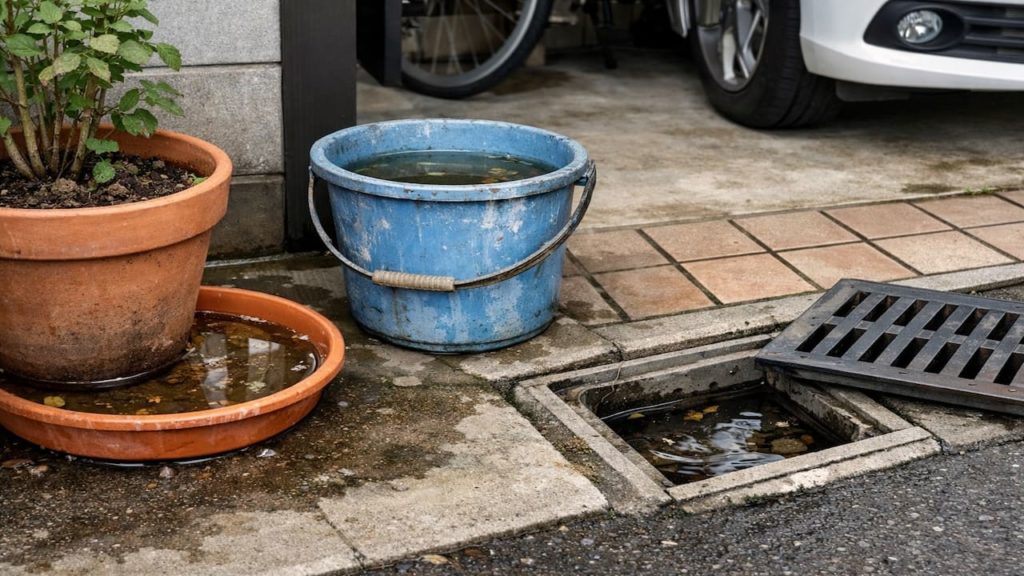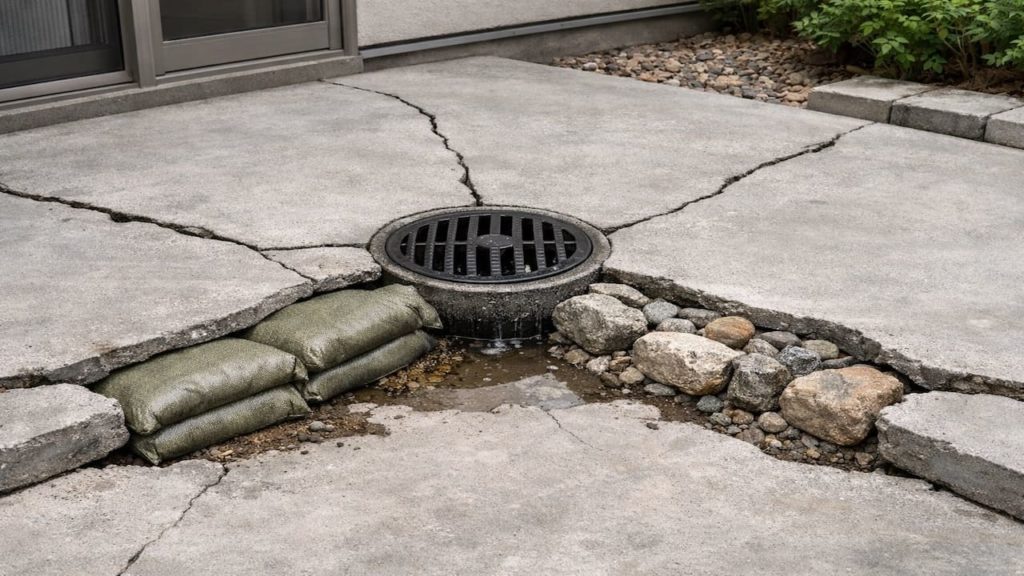
You see cracks forming right by the patio drain, and it feels like the worst place for damage. If water is already heading there, a crack can turn into undermining fast.
This usually comes from water flow concentrating, soil washing out, or a drain connection that leaks under the slab. In Japan, sudden heavy rain can turn a small void into a bigger drop before you notice.
In this guide, you’ll learn 5 checks to stop water undermining near a patio drain before the crack spreads. You’ll also learn how to spot soil voids and flow issues without ripping everything up.

Hi, I’m Ken — I’m Japanese, and I live in Malaysia long-term, so I explain everyday life in Japan from a practical ‘from abroad’ perspective.
I hold a building design qualification and I’ve been on site for 20+ years across hundreds of jobs. I turn Japan’s unspoken rules into simple checks, so you can avoid costly mistakes and take the next step with clear actions that feel safe.
1. Patio cracks by drain: 5 checks to stop water undermining
Cracks at drains often mean the base is losing support.
Drains attract water, and water can steal fine soil if there’s any leak path. The goal is to determine if the crack is surface-only or if the slab is starting to bridge over a void. In Japanese patios, narrow channels and hard rainfall can create strong flow lines right at the drain edge. If you find void signs early, you can stabilize without a full rebuild.
- Check if the drain grate rocks or sinks
- Look for a height lip across the crack line
- Probe edge gap for hollow space under tile
- Run hose test to watch flow speed and swirl
- Check for muddy water exiting the drain line
Some people patch the crack right away. That is backwards if the base is voiding. A patch hides the symptom while undermining continues. Confirm base stability first, then repair the surface.
2. Soil void and flow
Voids form when water has a path and fines have an exit.
Void signs include hollow sounds, new rocking, and cracks that widen after storms. Flow signs include water swirling at the drain instead of entering cleanly, which can erode the drain collar area. If you need supplies for basic inspection and small fixes, plan ¥1000–6000 for a flashlight, small probe, marking tape, and joint sealant—cost is mostly time/effort if you already have tools. In Japan’s humid seasons, wet soil stays soft longer, so void growth can speed up.
- Tap tile with handle and listen for hollow tone
- Check drain collar for gaps and missing seal
- Look for fine sand collecting at drain edges
- Watch if water pulls joint sand toward drain
- Inspect nearby soil edge for sudden settlement
People assume drains “solve water.” A drain can also create concentrated flow that erodes if the collar is not stable. The drain area needs confinement and sealed transitions, not just a hole in the ground. Control the flow and the void stops growing.
3. Why drains become cracking hot spots
Drain areas mix high flow with weaker support zones.
The slab is often cut or thinner around a drain, and base compaction can be disturbed during drain installation. If the drain line leaks below, it can carry fines away every time water runs. Even without leaks, fast inflow can scour around the drain collar if there are gaps. In Japan, heavy rain bursts can drive high velocity flow that turns small gaps into erosion lanes quickly.
- Cutouts reduce slab strength near drain openings
- Backfill around drains is often less compacted
- Leaks in drain connection wash soil under slab
- Swirling inflow scours collar gaps repeatedly
- Wet soil cycles soften base and increase movement
Some people think the crack is just shrinkage. Shrinkage cracks don’t usually form only at a drain and grow after storms. If cracks show up at the flow point, treat water as the driver. Fix the driver and you stop the crack from becoming a sinkhole story.
4. How to stabilize the drain area and prevent further undermining
Seal gaps and rebuild support around the drain collar.
Start by fixing flow: remove debris, improve surface slope to drain, and stop water from swirling violently. Then address support: if you suspect voids, lift a small section if possible and rebuild the base with compacted material and proper collar support. If you buy materials like base aggregate, collar repair mortar, and sealant, expect about ¥3000–20000 depending on how much you open up. In Japan’s rainy periods, cover exposed base and avoid rebuilding on saturated soil.
- Clear drain and remove silt that blocks entry
- Seal drain collar gaps to stop fines escaping
- Stabilize joint sand so it does not migrate
- Add support fill under edges if void is present
- Monitor crack growth after the next storm
Some people try to inject random foam without knowing the void shape. That can lift unevenly and trap water. If the void is small, you can stabilize carefully. If it is large or the drain is sinking, open it and rebuild properly. The goal is a solid collar and stable base, not a cosmetic patch.
5. FAQs
Q1. How can I tell if there is a void under the drain area?
Hollow sound and rocking are the biggest clues. If the tile sounds hollow near the crack and the drain collar feels loose, suspect undermining and confirm with probing.
Q2. Is it safe to keep using the patio if it is cracking near the drain?
It depends on movement and lips. If there is a height difference or the drain is sinking, treat it as a trip hazard and reduce traffic until stabilized.
Q3. Could this be caused by tree roots?
Roots can crack slabs, but drain-area cracking is more commonly flow and washout. Look for fine soil loss and muddy water signs to separate causes.
Q4. Should I seal the crack right away to keep water out?
Sealing can help reduce inflow, but it will not stop undermining if water is escaping below the drain collar. Fix the collar and base first, then seal as a finish step.
Q5. When should I call a pro?
If the drain is sinking, the crack grows after every storm, or the area feels hollow over a wide zone. Undermining can spread, and a pro can verify drain connections and base stability.
Pro's Tough Talk

I’ve spent 20+ years working around Japanese homes, so I’ve seen what tends to work—and what tends to go wrong—in everyday use. A crack by a drain is not “normal aging,” it’s the patio telling you water is stealing the ground.
Three causes: the drain collar has gaps, the base around it was never compacted right, or the drain line leaks and carries fines away. Water is a thief with a schedule, and every storm is payday. It’s like a tiny sinkhole training camp right under your feet. You hear a little crunch near the drain, you feel a soft spot, and suddenly you’re walking around it like it’s cursed.
Right now, hose test and watch if water swirls and scours at the collar. Today, clear the drain and seal visible gaps so sand stops migrating. This weekend, confirm voids and rebuild support around the drain so the slab stops bridging air.
Do that and the crack stops being a warning siren. If the drain rocks or the slab sounds hollow you treat it as undermining and you fix support, not just the surface. If everything is solid and the crack is hairline, seal it after you correct the flow pattern.
Nope.
Ignore a drain crack and one day the patio will hand you a surprise dip like it’s proud of itself. Stop the water thief now.
Summary
Cracks by a patio drain often mean water is undermining the base or the drain collar is leaking fines. Check for rocking, hollow sounds, muddy discharge, and flow swirl that scours edges.
Fix it by controlling flow, sealing collar gaps, and rebuilding support if a void is present. Patch the crack only after the base is stable, or it will reopen.
Do a hose flow test and tap for hollow sounds today so you know if this is surface cracking or active undermining. Then move to the next patio drainage and base stability fix that matches what you find.