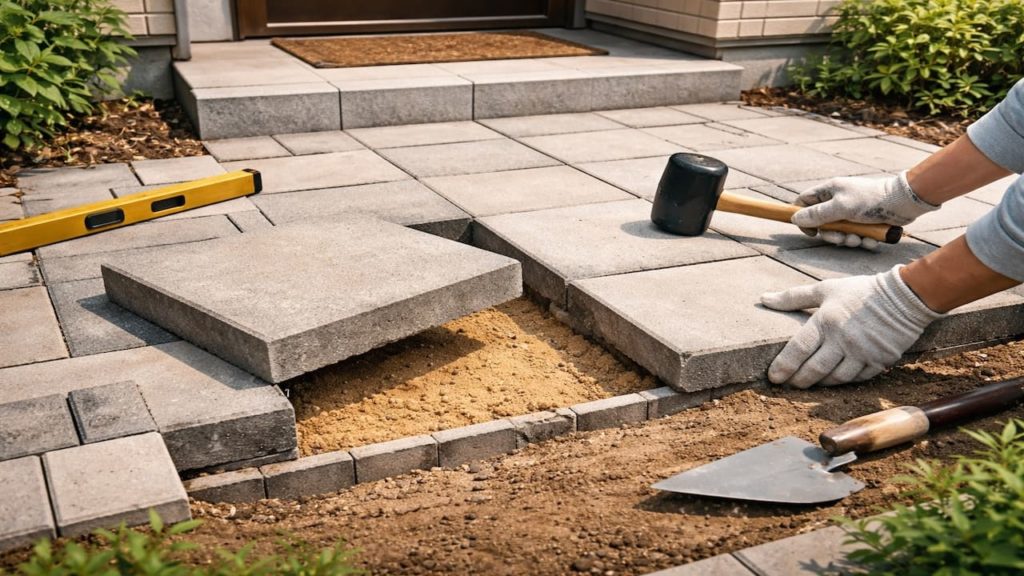
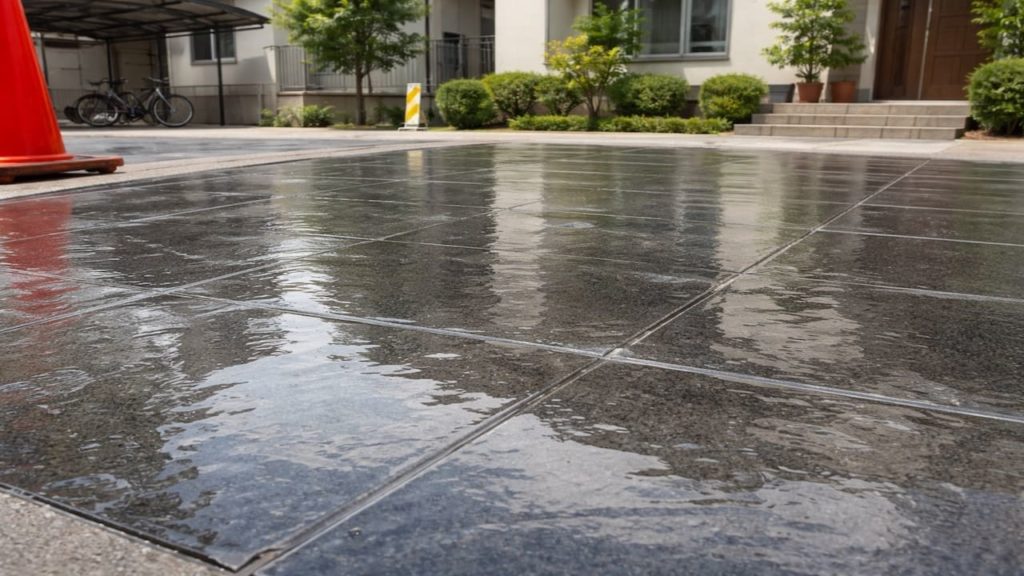
You clean tile pavement, then a dusty film shows up again like it never left. It makes even a nice entry look dull and tired.
That dust can be pollen, soot, or gritty road fines, and each one sticks differently. In Japan, windy spring pollen and humid rainy months help dust cling and clump.
In this guide, you’ll learn 5 checks to keep tile pavement clean by stopping dust at the source. You will also learn how pollen, soot, and grit behave so your cleaning actually lasts.

Hi, I’m Ken — I’m Japanese, and I live in Malaysia long-term, so I explain everyday life in Japan from a practical ‘from abroad’ perspective.
I hold a building design qualification and I’ve been on site for 20+ years across hundreds of jobs. I turn Japan’s unspoken rules into simple checks, so you can avoid costly mistakes and take the next step with clear actions that feel safe.
1. Pavement dust on tiles 5 checks to keep it clean
Find out what the dust is before you rinse it.
Tile faces look smooth, but grout lines and surface texture still trap fine particles. If you rinse the wrong dust, it turns into gray paste and settles into joints. Japan’s tight entry paths also reduce airflow, so dust sits longer and absorbs moisture. First step is identification.
- Wipe with white tissue to see color
- Rub between fingers to feel gritty or soft
- Check if dust returns after windy days
- Look for streaks under eaves and vents
- Compare sheltered tiles versus open tiles areas
You might assume it is just “dirt” and hose everything down. That can spread soot, pack grit into grout, and leave a film that looks worse once it dries. Dry checks first, then choose the method. Control wins.
2. Pollen soot and grit
Pollen clumps, soot smears, and grit scratches.
Pollen is light and sticky when damp, so it glues to tiles and collects in corners. Soot is fine carbon dust that leaves gray streaks if you over-wet it. Grit is heavier and acts like sandpaper on the surface and in grout lines. In Japan, humid air keeps pollen tacky longer, so sweeping alone may not lift it. You need the right sequence.
- Sweep dry to remove grit before rinsing
- Blow out corners where pollen piles up
- Use damp mop for soot to avoid smears
- Rinse lightly then squeegee runoff away
- Clean grout lines last so dust does not resettle
People rinse first because it feels quick. But with soot and pollen, water can turn dust into stains that sink into grout. Do dry removal first, then controlled damp cleaning. Less mess.
3. Why tile pavement gets dusty so fast
Air paths decide where dust lands and stays.
Dust accumulates where wind funnels, where shoes track grit, and where roof runoff drips fine sediment. Tiles near roads catch soot and brake dust, while sheltered entries trap pollen that never gets washed off by rain. In Japan, narrow alleys and high fences reduce wind, so dust settles and stays. The pattern is predictable if you look.
- Track shoe paths that drag grit inward
- Check nearby road exposure for soot deposits
- Inspect eaves drip lines for sediment streaks
- Notice planter soil that becomes airborne dust
- Find corners where wind eddies leave piles
You may think you need stronger cleaners. Usually you need better dust control and a better routine timing. Stop the inputs and the cleaning gets easy. That is the real win.
4. How to keep tiles clean with a simple routine
Use a dry-first routine and avoid grinding grit.
Do a quick dry sweep or blower pass before any water touches the surface. Cost is mostly time/effort because the tools are basic, and the sequence is the upgrade. If you use cleaners, keep them mild and rinse well so they do not leave a sticky film that grabs pollen. Japan’s humid seasons make residue feel tacky longer, so removing rinse water matters. Dry clean beats wet smear.
- Sweep twice weekly to prevent grit compaction
- Shake mats so they trap dust not tiles
- Wipe soot zones with damp cloth not hose
- Rinse lightly and squeegee to prevent film
- Clean grout lines monthly to reset appearance
You might want to pressure wash often. That can drive dirty water into grout and leave haze if you do not remove runoff. Use it only for occasional deep resets, and always finish by pushing water off the tiles. Keep it tidy.
5. FAQs
Q1. Should I rinse tiles every day in dusty season?
No. Daily rinsing can spread soot and push grit into grout. A quick dry sweep and mat shake does more for day-to-day cleanliness.
Q2. Why do tiles look cloudy after cleaning?
That is often residue from dirty rinse water or soap film. Squeegee the runoff and rinse once more with clean water. Then let it dry fully before judging.
Q3. What is the safest first step for dusty tiles?
Remove dry grit before adding water. That prevents scratches and stops dust from turning into paste. Then do controlled damp wiping where needed.
Q4. Can a leaf blower replace sweeping?
It works well for loose dust and pollen, especially in corners. But it will not lift sticky soot film or grit lodged in grout. Use it as a first pass, not the only step.
Q5. How do I stop pollen dust from sticking?
Clean during a dry window and remove rinse water so no tacky residue stays. Also keep nearby plant debris off the entry so pollen does not keep feeding the surface.
Pro's Tough Talk

I’ve spent 20+ years working around Japanese homes, so I’ve seen what tends to work—and what tends to go wrong—in everyday use. In Japan’s spring, pollen dust hits tiles like flour on a wet countertop: it clumps, sticks, and mocks your broom.
Here is the cold breakdown. Pollen is sticky when damp, so it glues to corners. Soot is fine ink dust, so it smears if you flood it. Grit is tiny rocks, so if you rub it around, you are basically sanding your own tiles, like polishing with gravel.
Do it now: sweep the grit out dry. Do it today: wipe soot zones with a damp cloth and rinse light. Do it this weekend: reset grout lines so dust has fewer places to hide.
If you rinse first you turn dust into paste. When the surface stays dry and you remove runoff, the dust stops bonding and cleanup gets easy. If dust returns daily, your entry is an air funnel and you need mats and routine timing.
You know the scene: you rinse, the water turns gray, then it dries and the tiles look worse. Congrats, you just painted the floor with dirt.
Summary
Keep tile pavement clean by checking whether the dust is pollen, soot, or grit. Each one needs a different sequence, and dry removal is usually step one.
Stop dust from settling by controlling inputs like shoe grit, road soot, and corner piles under eaves. Avoid flooding the surface and always remove dirty runoff so it cannot dry into film.
Sweep dry first and squeegee after any rinse. Do that routine and your tiles stay cleaner for longer without constant scrubbing.