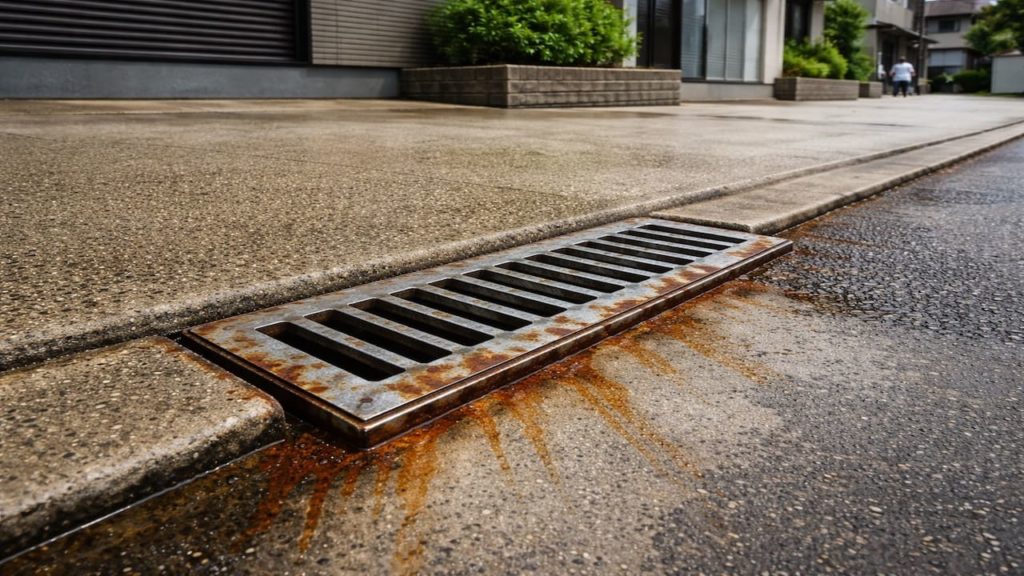
You notice black streaks on granite pavement and it makes the stone look dirty even when the rest is clean. The lines usually run the same direction, like something is dripping or flowing.
Black streaks can be algae film, dirty runoff, or drip stains from metal and roof grime. In Japan, humid air and rainy season runoff make wet streaks stay wet and turn dark fast.
In this guide, you’ll learn 5 checks to find why granite gets black streaks and how to clear them. You will also learn how drips, algae, and runoff patterns decide the right cleanup order.

Hi, I’m Ken — I’m Japanese, and I live in Malaysia long-term, so I explain everyday life in Japan from a practical ‘from abroad’ perspective.
I hold a building design qualification and I’ve been on site for 20+ years across hundreds of jobs. I turn Japan’s unspoken rules into simple checks, so you can avoid costly mistakes and take the next step with clear actions that feel safe.
1. Pavement black streaks on granite 5 checks
Black streaks usually follow a water path you can trace.
Granite is dense, but it still holds surface film and fine dirt, especially in textured finishes. If you can trace a streak to an edge, downspout, planter, or wall line, you are already close to the cause. Japan’s rainy season turns tiny drip habits into weekly stains. Start by mapping the streak path.
- Trace streak to the highest starting point
- Check if streak aligns with slope direction
- Look for drip marks under eaves and caps
- Compare sunny zones versus shaded streak zones
- Feel surface for slippery film along streak
You might think granite is “non-staining” so this must be permanent. Most of the time it is surface film plus runoff dirt, not deep penetration. If you clean the streak but ignore the drip source, it returns. Fix flow first.
2. Drips algae and runoff
Drips feed algae and runoff paints dirt lines.
Drips keep one strip wet longer, and wet strips grow algae film that looks black or dark green. Runoff carries roof dust, soot, and soil fines, then drops them when the water slows, leaving a dark line. In Japan’s humid months, algae grows faster and the film holds more dirt, so the streak thickens over time. Wet plus dirty equals dark.
- Check if streak feels slimy when wet
- Look for green tint under the black layer
- Inspect gutters for overflow onto the same strip
- Find planter runoff washing soil onto granite
- See if streak widens after every heavy rain
People try to scrub the line hard with a rough brush. That can scratch some finishes and open micro texture that traps even more grime later. Lift the film with the right cleaner, then address the water path. Do not sand your stone.
3. Why granite shows streaks even when it is dense
Surface texture and biofilm hold dirt like glue.
Granite itself is hard, but many pavers have a flamed or bush-hammered texture that catches fine particles. Once algae or mildew biofilm forms, it acts like a sticky layer that traps soot and dust. In Japan, shaded alleys and tight side yards stay damp longer, so biofilm gets a head start. The stone is fine, the surface layer is not.
- Check finish type for rough texture trap
- Look for persistent shade where drying is slow
- Inspect joints for damp moss feeding moisture
- Notice soot exposure if near a busy road
- Find spots where water splashes and never dries
You may assume you need a harsh acid because it is “stone.” But black streaks are often organic film, and acids can etch nearby concrete or damage joints. Treat organic film with oxygen cleaner or mild detergent first. Save acids for mineral scale only.
4. How to clean without damaging granite
Lift the film gently then rinse and remove runoff.
Start with a wetting rinse, apply a mild cleaner or oxygen-based cleaner, then let it dwell before light brushing. ¥500–3,500 can cover basic supplies like a soft brush, oxygen cleaner, and a squeegee, depending on what you already have. Avoid metal brushes and avoid leaving bleach residue on joints, because it can discolor and also make surfaces slick. Japan’s humid air makes residue cling, so rinse and squeegee matter.
- Pre-wet granite so cleaner spreads evenly
- Apply oxygen cleaner and keep it damp
- Brush lightly along streak direction not across
- Rinse with clean water from high to low
- Squeegee runoff away so dirt cannot redeposit
You might want to pressure wash at max power. That can blast joint sand out and drive dirty water into seams, making new streaks later. If you pressure wash, keep it moderate and finish with a clean rinse and runoff removal. Control beats force.
5. FAQs
Q1. Are black streaks on granite always algae?
No. They can be algae, but also dirty runoff lines from roof dust, soot, or planter soil. The key is whether it feels slimy when wet and whether it tracks a drip path.
Q2. Can I use bleach to remove black streaks?
It can kill algae, but it can also leave residue and affect joints. If you use it, dilute, limit to the streak area, and rinse very thoroughly. Oxygen cleaners are often safer for routine work.
Q3. What is the most important check before cleaning?
Find the drip or runoff source above the streak. If water keeps feeding the same line, cleaning is temporary. Stop the source and the streak fades longer.
Q4. Why do streaks come back after a week?
The water path is still active or algae film is still present in pores and texture. Also, if dirty runoff dried on the surface, it can redeposit when you rinse without squeegeeing. Remove runoff fully.
Q5. Should I seal granite to prevent streaks?
Sealers can reduce staining in some cases, but they do not stop algae if the surface stays wet. Fix drainage and drips first, then consider sealing if streaks are mostly dirt film.
Pro's Tough Talk

I’ve spent 20+ years working around Japanese homes, so I’ve seen what tends to work—and what tends to go wrong—in everyday use. In Japan’s rainy season, granite streaks are basically a map of where water keeps misbehaving.
Here is the cold breakdown. Drips keep one strip wet, algae builds a sticky film, and that film traps soot like a lint roller. Runoff carries dirt, then paints a line when it slows down, like a dirty brush stroke you did not ask for. If you scrub hard, you rough up the texture and the next streak sticks even faster.
Do it now: trace the streak to the drip start point. Do it today: clean with dwell time and light brushing. Do it this weekend: fix the gutter splash or planter runoff so the line stops being fed.
If the streak always starts at the same spot the water path is still active. When the surface dries fast and runoff is redirected, granite stays clean longer. If it never dries, you will keep feeding algae no matter what you spray.
You know the scene: you clean it spotless, then the next rain redraws the same line like it is signing its name. Yeah, water always leaves a signature.
Summary
Black streaks on granite usually follow a drip or runoff path, often mixed with algae film. Trace the streak to its start point and check slope, shade, and wetness patterns.
Clean by lifting organic film with mild or oxygen cleaners, then rinse and remove runoff so dirt does not redeposit. Fix drips, gutter overflow, and planter runoff so the streak is not constantly fed.
Find the water path then clean with dwell and thorough runoff removal. Do that and granite stops showing the same black signature after every rain.