You spot dark marks on your pavers and they refuse to blend in, even after a quick rinse. You came here because you want them lifted without turning the surface patchy.
The stain might be oil that soaked in, muddy silt that dried into pores, or both stacked together. In Japan, rainy season downpours and humid nights keep pavers damp longer, so stains set faster.
In this guide, you’ll learn how to lift paver stains with the right timing and a simple order of moves that won’t wreck the finish. You’ll also learn when to stop scrubbing and switch tactics.

Hi, I’m Ken — I’m Japanese, and I live in Malaysia long-term, so I explain everyday life in Japan from a practical ‘from abroad’ perspective.
I hold a building design qualification and I’ve been on site for 20+ years across hundreds of jobs. I turn Japan’s unspoken rules into simple checks, so you can avoid costly mistakes and take the next step with clear actions that feel safe.
1. Pavement stains on pavers 5 tips that lift marks
Lift stains by matching the method to the stain type.
Pavers hold stains because they have texture and tiny pores, so “one cleaner” rarely works on everything. If you rush and go aggressive, you can fade the area and make a clean halo that looks worse than the stain. Start light, stay consistent, and work small—control beats chaos in Japanese entry paths that people see daily.
- Sweep dry grit before any wet cleaning
- Blot fresh oil fast with paper towels
- Pre-wet pavers so cleaner spreads evenly
- Brush with nylon not wire bristles
- Rinse until runoff is totally clear
Some folks say “just pressure wash it and done.” That can blow joint sand out and drive dirty water deeper, so the stain returns in a new shape. If the mark is old, you also need repeats, not brute force. Keep it boring and repeatable.
2. Oil mud and timing
Oil needs absorb then pull-out while mud needs flush.
Fresh oil is about speed, because it keeps soaking while you stare at it. Old oil is about pulling it back out of the pores, and mud is about flushing fine silt out of texture so it stops re-darkening. For oil and grease stains, products made for pavers often lift embedded oil as they dry and can reduce heavy scrubbing. According to techniseal.com.
- Blot oil then cover with absorbent powder
- Let it sit then sweep up completely
- For mud pre-soak then brush lightly
- Flush joints so silt stops sitting
- Clean on a cool day not hot sun
You might think “more cleaner fixes faster,” but timing is the real lever. If you clean in direct sun, the product dries before it works and leaves streaks. If you rinse too early, you just smear the stain around. Slow it down, then rinse hard.
3. Why paver stains keep coming back after cleaning
Stains return when pores stay open and joints stay dirty.
Even if the surface looks clean while wet, dried-in residue can show again once everything dries. Oil can resurface from below, and muddy silt hides in joints, then wicks back to the top after the next rain. In tight Japanese walkways, shade and weak airflow keep the surface damp longer—so the cycle repeats.
- Porous faces hold pigment below the surface
- Dirty joints wick grime back onto edges
- Runoff re-feeds the same stain path
- Partial cleaning leaves a visible clean halo
- Fast drying causes cleaner residue streaking
People blame the paver color like it’s cursed. Most of the time it’s cleanup order and leftover residue, not the material itself. If the same spot darkens after rain, track the water path first. Fix the path, then the cleaning finally sticks.
4. How to remove paver stains without damaging the surface
Do a staged clean then reset joints so dirt stops reloading.
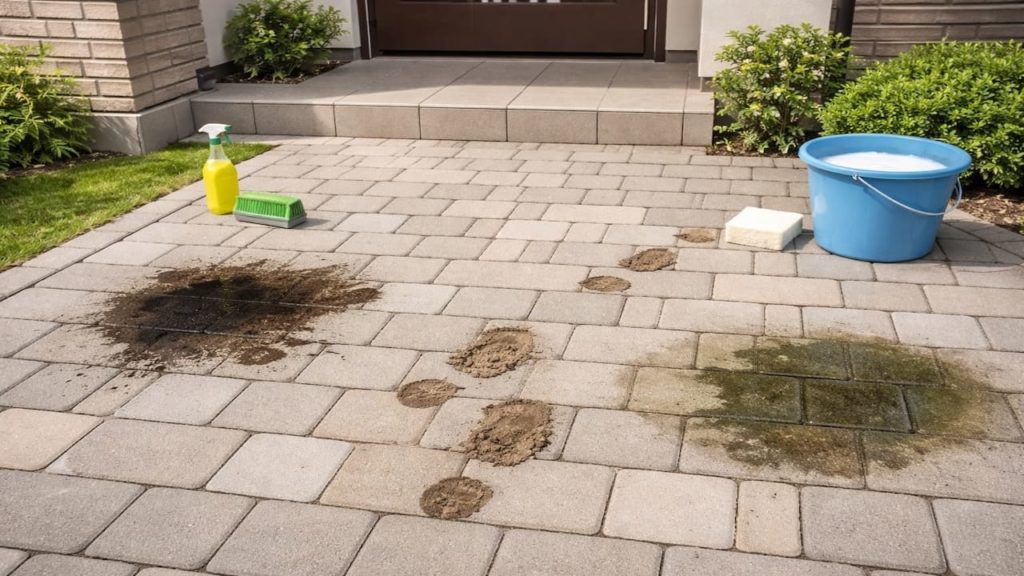
Start dry, then pre-wet, then spot treat, then rinse until the water runs clear, and only then judge the result after full dry. Basic supplies like a nylon brush, mild cleaner, and a small stain remover usually land around ¥800–2,500, and you’ll reuse them for future touch-ups. Interlocking concrete paver guides commonly stress testing cleaners first and rinsing thoroughly to avoid damage and discoloration. According to buildsite.com.
- Test cleaner in a hidden corner first
- Work a small zone then rinse immediately
- Repeat short cycles instead of long scrubbing
- Let dry fully before deciding next step
- Top up joint sand after cleaning finishes
“I cleaned it and it still looks dark” is common because you judged it while wet. Let it dry, then decide if you need another cycle. If the stain is deep oil, switch to a pull-out style product instead of endless brushing. If it’s mud, focus on flushing joints so the border stops bleeding grime.
5. FAQs
Q1. Should I pressure wash pavers to remove stains?
It can work, but it can also strip joint sand and spread dirty water into pores. Try staged cleaning first, and only pressure wash gently if you know your joints can handle it.
Q2. Why does the stain look worse after rinsing?
Wet pavers hide contrast, then drying reveals what is still in the pores. If residue dried on the surface, it can also leave a streaky film that needs another rinse.
Q3. What is the fastest fix for fresh oil spots?
Blot then absorb right away so it stops soaking in—waiting is what makes it “forever.” After that, use a paver-safe oil remover if a shadow remains.
Q4. How do I avoid making a clean halo around the stain?
Feather your cleaning zone wider than the mark and keep the surface evenly damp. Rinse the whole area the same way so you don’t create a sharp edge line.
Q5. When should I stop DIY and call someone?
If stains are widespread, the surface is sealed and reacting weirdly, or joints are washing out, get help. A pro can clean without blowing out joints or leaving patchy discoloration.
Pro's Tough Talk

I’ve spent 20+ years working around Japanese homes, so I’ve seen what tends to work—and what tends to go wrong—in everyday use. In humid rainy weeks, pavers don’t “dry out,” they marinate.
Here’s the brutal breakdown: oil is like ink in a paper towel, it soaks in and laughs at your quick rinse. Mud is like flour paste, it dries in pores and then rehydrates and spreads. If you scrub like a maniac, you just sand the surface into a bigger dirt magnet.
Blot the oil right now. Flush the muddy seams today until runoff is clean. Do the pull-out treatment on the weekend and let it dry.
If the stain is still visible after a full dry, stop changing products and change strategy: pull oil out, or flush silt out, then reset the joints. If it still returns after that, your runoff path is feeding it and you need to redirect water.
Nice try.
Summary
Paver stains lift best when you match the method to the stain and work in clean stages. Oil needs fast blotting and pull-out, while mud needs flushing and joint cleanup.
Let the surface dry before judging, and repeat mild cycles instead of brutal scrubbing. If the same spot darkens after rain, fix the runoff path so the stain stops reloading.
Do one staged clean today on a small test area and copy what works across the rest. Then reset the joints so the pavers stay cleaner between storms.