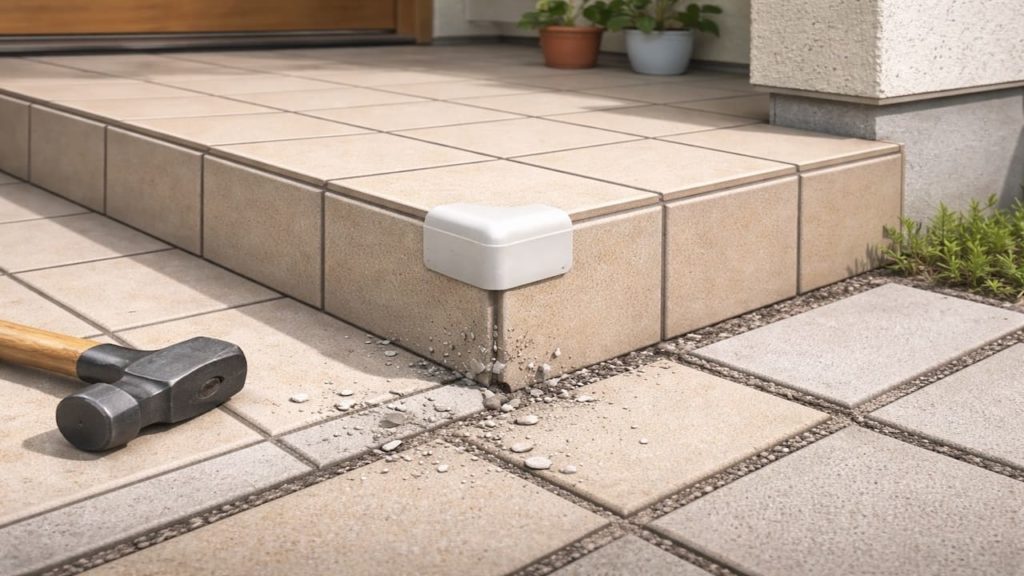
You clean porcelain pavement tiles and the stains fade, but a cloudy haze shows up when it dries. You searched because you want the tiles clean without that dull film.
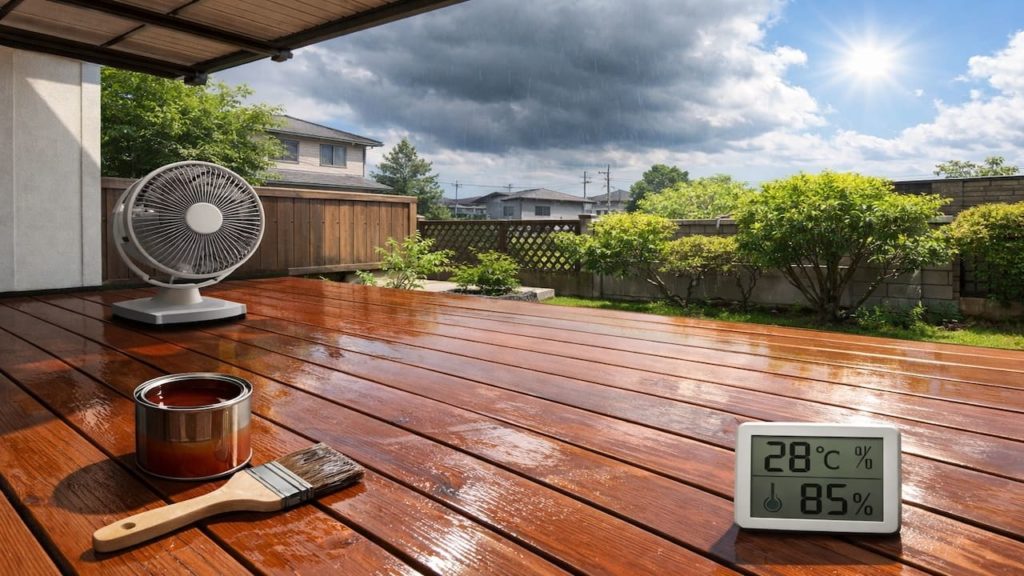
Haze is often soap residue, minerals from hard water, or dirty rinse water drying back onto the surface. In Japan, rainy season humidity slows drying, so leftover film has more time to settle and show.
In this guide, you’ll learn how to clean porcelain tile without haze by controlling soap film, rinsing correctly, and drying at the right time. You’ll also learn how to fix existing haze without scratching the glaze.

Hi, I’m Ken — I’m Japanese, and I live in Malaysia long-term, so I explain everyday life in Japan from a practical ‘from abroad’ perspective.
I hold a building design qualification and I’ve been on site for 20+ years across hundreds of jobs. I turn Japan’s unspoken rules into simple checks, so you can avoid costly mistakes and take the next step with clear actions that feel safe.
1. Pavement stains on porcelain tile 5 tips to avoid haze
Haze happens when cleaner stays on the tile after you finish.
Porcelain is less porous than stone, so the dirt usually sits on top, but so does the residue. If you mop with too much soap, you create a film that dries into a cloudy layer. In Japanese entry paths, tight airflow and shaded sides keep tiles wet longer, so film becomes more visible. Annoying cloud.
- Use less detergent than you think you need
- Pre-rinse dust so soap does not bind grit
- Clean small sections before anything dries
- Rinse with clean water not dirty bucket water
- Dry the surface so film cannot settle
Some people keep adding more cleaner when haze appears. That just stacks more film on top of film. The fix is usually simpler: reduce soap and improve the rinse. Less product, better finish.
2. Soap film and rinse
Soap film is the main cause so rinsing is the real skill.
Soap grabs fine dirt and leaves it behind as a thin layer when water evaporates. Japan’s humid days slow evaporation, so the layer has more time to level out and turn cloudy. Many tile care guides emphasize pH-neutral cleaners and thorough rinsing to prevent residue and streaks.
- Switch to pH-neutral cleaner for porcelain
- Rinse twice using fresh water each time
- Use a squeegee to pull water off fast
- Change rinse water as soon as it looks cloudy
- Finish with a clean microfiber wipe pass
You might think one rinse is enough because porcelain is “non-porous.” But residue sits on top, and top residue is exactly what you see as haze. If you can draw a finger line in the dull film, it’s residue. Rinse is not optional.
3. Why stains and haze stick on outdoor porcelain tile
Outdoor grime plus minerals create a film that dries unevenly.
Outdoor tiles collect dust, pollen, and soot, and that mixes with cleaner into a thin slurry. When it dries, minerals and soap bind together and leave dull patches. In Japan, rain splash and fine street dust can reload the tile fast, especially near entrances and car areas.
- Dust mixes with soap and forms cloudy slurry
- Hard water minerals leave white residue rings
- Dirty rinse water re-deposits grime immediately
- Shade keeps water sitting so film levels out
- Too much scrubbing spreads residue across tiles
People think haze means the tile is scratched. Most haze is residue, not damage, and it can be removed with the right rinse and a mild reset. If you attack with abrasive pads, you can actually cause real dulling. Treat haze as film until proven otherwise.
4. How to remove stains and prevent haze on porcelain pavement
Clean with neutral product then rinse and dry like you mean it.
Do a dry sweep first, wash with a pH-neutral porcelain-safe cleaner, then rinse twice and pull water off with a squeegee so nothing dries on the tile. For basic supplies like a neutral cleaner, microfiber mop, and squeegee, expect around ¥800–3,000 depending on what you already have. Cost is mostly time/effort, and it pays back because you stop re-cleaning haze every week.
- Sweep grit so you do not grind it around
- Wash with diluted neutral cleaner in small zones
- Rinse once then rinse again with fresh water
- Squeegee water off before it air-dries
- Buff with microfiber if a dull cast remains
You might want to blast it with a pressure washer and walk away. That can still leave mineral spots and soap streaks if you used detergent, plus it can force dirty water into grout lines. The simple workflow is better: small zones, clean rinse, dry finish. Repeatable and safe.
5. FAQs
Q1. Can I use dish soap to clean porcelain outdoor tile?
It works short-term, but it often leaves film that turns into haze. If you use it, keep it very diluted and rinse more than once.
Q2. How do I tell haze from mineral deposits?
Soap haze looks like an even cloudy layer and often smears when wet. Mineral spots often look like rings or specks and feel slightly rough.
Q3. What is the best way to fix haze that already formed?
Rinse with clean water and buff with microfiber before you try stronger products. If it persists, use a porcelain-safe haze remover and rinse thoroughly.
Q4. Why does haze appear more in shaded areas?
Shade slows drying, so residue has more time to settle and stick. Shaded zones also hold more dust and moisture, which makes film build faster.
Q5. How often should I deep clean outdoor porcelain tile?
Usually seasonal, with quick rinses after heavy dust or storms. If you rinse well and dry, you can keep it looking clean with light maintenance.
Pro's Tough Talk

I’ve spent 20+ years working around Japanese homes, so I’ve seen what tends to work—and what tends to go wrong—in everyday use. Porcelain tile haze is usually not “stubborn dirt,” it’s your own soap coming back to haunt you.
Cold truth: too much detergent makes a film, film grabs dust, and then it dries into a cloudy layer that screams “I cleaned wrong.” It’s like washing your hair and never rinsing the shampoo, then wondering why it feels weird. And Japan humidity makes that weird layer stick around like an uninvited guest.
Dump the soapy bucket right now and rinse with clean water. Clean in small sections today and change rinse water often. Finish this weekend with a squeegee and microfiber so nothing dries on the tile.
If haze returns right after a careful double rinse, you may have hard water mineral residue or a product that is not porcelain-safe. If haze clears when wet but returns on drying, it is almost always leftover film and not a stain.
Keep using more soap, and congrats, you’ve invented outdoor “matte finish” for free.
Summary
Haze on porcelain pavement usually comes from soap film or dirty rinse water drying on the tile. Use less cleaner, rinse twice with fresh water, and dry the surface instead of letting it air-dry.
If haze keeps coming back, check for minerals and avoid products that leave residue. Shade and humidity make the film show more, so drying matters even more.
Rinse with clean water today and squeegee it dry so the tile dries clear. Then keep your routine simple: small zones, clean rinse, dry finish.