You walk across slate pavement and the green moss keeps coming back, making the surface look dirty and feel risky. You searched because you want a clean path that stays grippy.
Moss usually means shade plus lingering moisture, not “bad slate.” In Japan, rainy season humidity and tight side-yard airflow can keep slate damp long after the rain stops.
In this guide, you’ll learn how to stop moss on slate pavement with simple checks and a reset routine. You’ll focus on shade, airflow, and gentle scrubbing so the slate stays sharp and safe.

Hi, I’m Ken — I’m Japanese, and I live in Malaysia long-term, so I explain everyday life in Japan from a practical ‘from abroad’ perspective.
I hold a building design qualification and I’ve been on site for 20+ years across hundreds of jobs. I turn Japan’s unspoken rules into simple checks, so you can avoid costly mistakes and take the next step with clear actions that feel safe.
1. Pavement moss on slate 5 tips to stop it
Moss stops when the slate dries faster than it can grow.
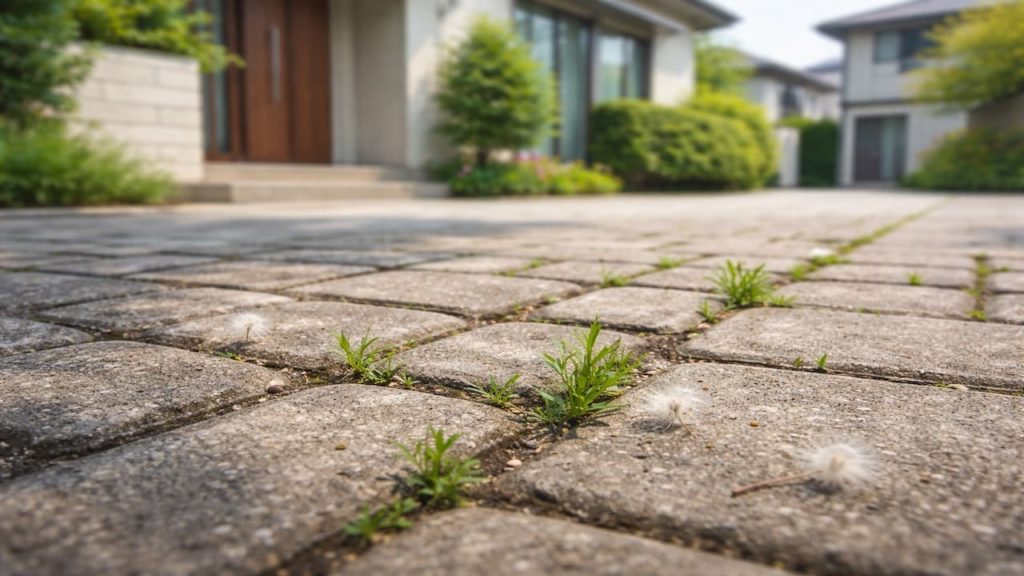
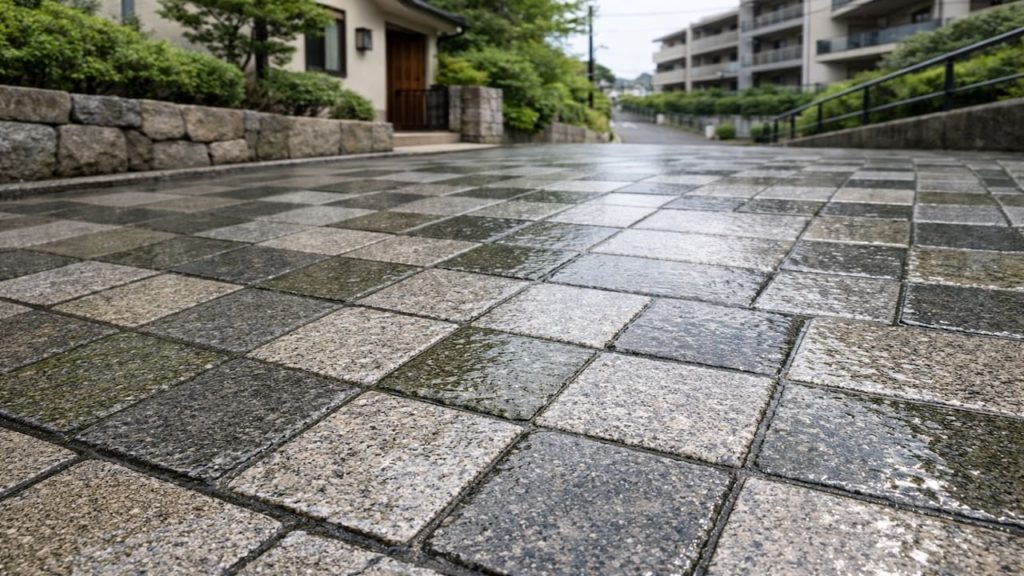
Moss loves long damp hours more than it loves “dirt,” so drying time is the real battlefield—scrubbing is just the cleanup. Slate’s texture gives moss tiny footholds, especially in shaded entry paths. In Japan, a north-facing walkway can stay wet from morning dew and evening mist even without rain. Short dry windows.
- Brush moss off dry before you add water
- Clear leaf litter that keeps edges constantly damp
- Rinse from high side to low side
- Scrub along slate grain not across sharp edges
- Dry the area by opening sunlight exposure
Some people say moss is “just cosmetic” and ignore it. Then one wet morning turns it into a slip trap and a stain factory. If you stop the wet time, moss loses its advantage. Make the slate dry, and the green quits.
2. Shade airflow and scrub
Shade plus weak airflow makes moss return fast.
If you only scrub, you remove the moss but keep the habitat—so it grows back like nothing happened. Look for the spot that stays wet the longest, usually where a wall, fence, or shrubs block breeze. In Japan’s humid summers, even a small shaded strip can stay damp until afternoon, and that’s enough for moss to re-seed.
- Track the last place to dry after rain
- Trim plants so air can pass through
- Move pots away from the damp edge strip
- Scrub with a stiff nylon brush not metal
- Rinse twice so green film does not stay
You might think the slate “needs stronger chemicals.” Often it just needs the wet zone to stop acting like a greenhouse. Scrub, rinse, then change the drying conditions. If airflow improves, your cleaning effort lasts longer.
3. Why moss keeps growing on slate pavement
Moss returns because moisture and fines keep reloading.
Fine soil, pollen, and silt settle into slate texture and joints, then hold water like a sponge—perfect moss bed. If runoff brings that fine dirt from a garden edge or roof splash, you’re feeding the moss nonstop. In Japan, frequent light rain and overnight condensation can re-wet the surface even when you think it is “dry season.” Same loop, same patch.
- Silt builds in texture and holds water longer
- Runoff from beds keeps feeding organic dust
- Joints stay damp and seed new growth
- Shade blocks sun and slows evaporation daily
- Surface film forms and makes scrubbing harder
People blame the slate color or the stone type. But the pattern usually maps to water flow, shade lines, and dirt sources, not to “bad material.” If the same patch always grows first, the cause is local. Fix the local cause, and the patch loses power.
4. How to stop moss on slate and keep it from returning
Remove the film then reduce wet time with small changes.
Start dry: sweep and brush off loose moss, then do a wet scrub with a slate-safe cleaner, and finish with a full rinse so residue does not stay—expect ¥800–2,500 for a brush, cleaner, and gloves. After that, shorten wet time by trimming plants, clearing silt traps, and redirecting splash water. In Japanese homes, narrow paths beside walls need airflow help more than they need “stronger soap.”
- Sweep and dry brush before wet scrubbing
- Scrub with neutral cleaner and stiff nylon brush
- Flush joints and edges until water runs clear
- Improve airflow by thinning shrubs near the path
- Redirect splash with a simple edge barrier
You might want to pressure wash it and be done. That can blast grit into joints, roughen the surface, and make it hold more moisture next week. Gentle scrubbing plus better drying is the safer win. If you keep the slate drying faster, moss can’t keep a foothold.
5. FAQs
Q1. Is moss on slate a sign the stone is damaged?
No, moss usually means the surface stays damp and shaded, not that the slate is failing. If the stone feels flaky or delaminates, that is a separate issue from moss.
Q2. Can I use a wire brush on slate to remove moss?
A wire brush can scratch and roughen the surface, which can make moss return faster. Use a stiff nylon brush and repeat short cycles instead.
Q3. Should I use bleach to kill moss on a walkway?
Use bleach only if you can rinse fully and protect plants—many times a neutral cleaner and better drying works fine. If you use any strong product, test a small corner first to avoid patchy tone.
Q4. Why does moss come back in the same strip every time?
That strip is usually the last to dry because of shade, runoff, or silt buildup. Fix the drying condition and the strip stops acting like a moss nursery.
Q5. How often should I maintain slate to prevent moss?
A quick dry brush and sweep after storms helps a lot. Do a deeper scrub only when the surface starts to feel slick again.
Pro's Tough Talk

I’ve spent 20+ years working around Japanese homes, so I’ve seen what tends to work—and what tends to go wrong—in everyday use. In Japan’s rainy season, that moss isn’t “growing,” it’s moving in and paying rent.
Here’s the cold math: shade keeps it wet, wet keeps the slime film alive, and silt feeds it like free buffet. Moss is like a clingy roommate, and your damp slate is the spare key. It’s also like wet sushi rice on a cutting board, it sticks harder the longer you wait.
Scrub the slick strip right now. Flush the edges today until the water runs clear. Thin the shrubs this weekend so air actually moves.
If the slate stays wet for hours after rain, you don’t have a cleaning problem, you have a drying problem. If it dries fast but still turns green, your silt source is still dumping food onto the stone.
Yeah, keep calling it “just a little green,” and enjoy your free slip-and-slide.
Summary
Moss on slate keeps coming back because the surface stays damp, shaded, and loaded with fine dirt. Check the last-to-dry strip, the silt traps, and the runoff path before you scrub.
Remove the film with gentle brushing and full rinsing, then shorten wet time with airflow and small layout changes. If the same patch always returns, fix the local cause instead of escalating cleaners.
Brush it dry today and improve drying time so moss can’t keep its grip. Once the slate dries faster, your next cleanup becomes quick maintenance, not a weekly battle.