You step out in the rain and the pavement suddenly feels slick under your shoes. You searched because you want to stay safe now, not after someone slips.
Rain can activate algae film, soap residue, or fine grit that turns into a skating layer. In Japan, long humid stretches and shaded walkways make slick patches show up fast after just one shower.
In this guide, you’ll learn how to stay safe on slippery pavement in rain by checking algae film, grit, and footwear. You’ll also learn quick fixes you can do today to cut slip risk.

Hi, I’m Ken — I’m Japanese, and I live in Malaysia long-term, so I explain everyday life in Japan from a practical ‘from abroad’ perspective.
I hold a building design qualification and I’ve been on site for 20+ years across hundreds of jobs. I turn Japan’s unspoken rules into simple checks, so you can avoid costly mistakes and take the next step with clear actions that feel safe.
1. Pavement feels slippery in rain 5 checks to stay safe
Most rain slip comes from a thin film and poor traction contact.
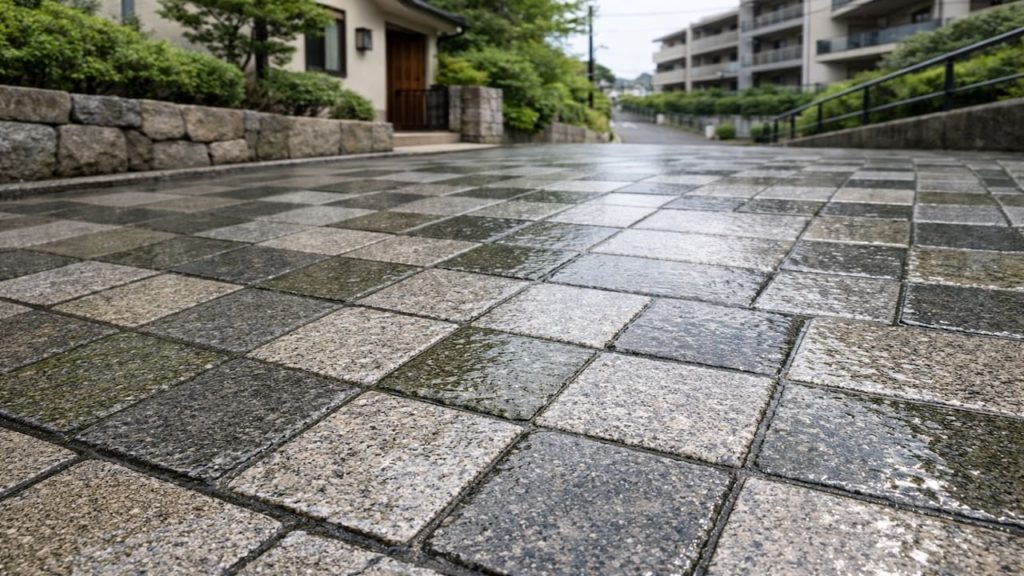
Even if the pavement looks clean, a microscopic layer can turn it slick the moment it gets wet. In Japanese entry paths, pollen, soot, and damp dust build quietly, then rain makes it slippery. Treat it like a safety issue first, a cleaning issue second.
- Find the exact spot where slipping starts
- Check if surface feels slimy when wet
- Look for green tint in shaded corners
- Notice if water beads like oil on top
- Test traction with slow steps and hand support
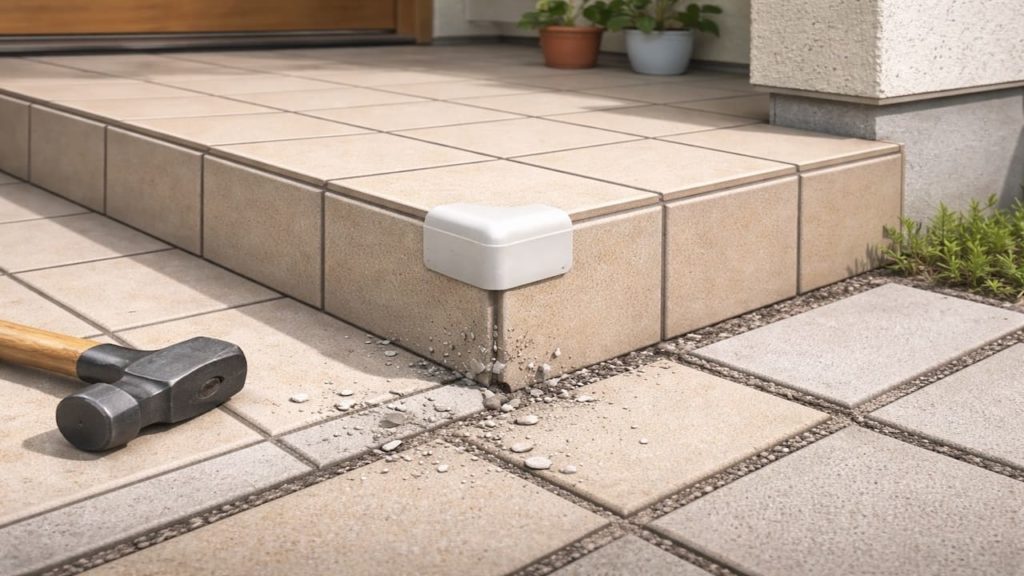
Some people assume the stone “became slippery” permanently. Usually it’s a top-layer film or residue, and it can be reduced fast. First locate the worst strip so you target the real hazard. Then you fix it.
2. Algae film grit and shoes
Algae film plus fine grit is the worst mix in rain.
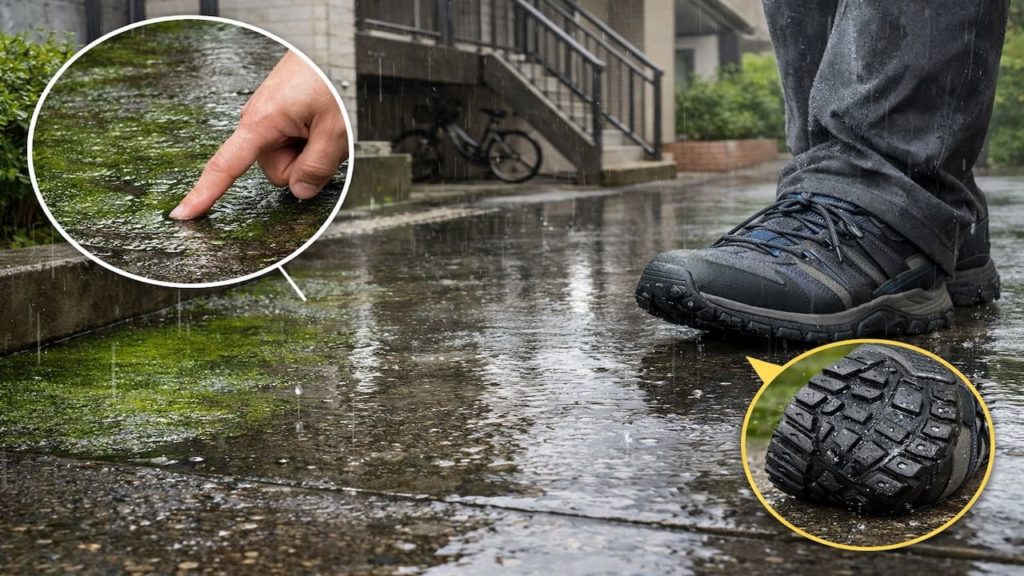
Algae film creates a slick surface, and fine grit acts like tiny ball bearings when wet. Shoes matter too: worn soles and flat patterns hydroplane easier. In Japan’s rainy season, damp shade and frequent showers keep algae active, so your walkway can stay risky for weeks.
- Rub with a finger and feel slippery biofilm
- Check for gritty sand rolling under your step
- Inspect shoe soles for worn flat tread
- Spot pooled water that hides slick patches
- Look for leaf dust that turns into wet paste
You might think “new shoes fix it.” Better shoes help, but you still need to remove the film and grit or everyone slips, not just you. Also, grit often comes from edges and garden beds, so cleaning just the center won’t last. Fix the feed sources.
3. Why rain makes safe pavement suddenly slippery
Water turns dry residue into a lubricating layer.
Dry dust gives some friction, but once it’s wet it becomes a paste that reduces grip. Oil drips, soap residue, and algae get reactivated by water and spread across the surface. In Japan, humid nights can keep surfaces damp even after rain stops, so the slick condition lasts longer than you expect.
- Wet dust forms a smooth paste on top
- Algae biofilm becomes slick when hydrated
- Oil residue floats and spreads under rainwater
- Worn texture loses bite and grip quickly
- Shade slows drying and keeps film active
People blame the material, but it’s usually what’s on it. Once you remove film and reduce wet time, the same pavement feels safer. If one strip is always slick, it’s a local condition problem, not a whole-surface curse.
4. How to reduce slip risk fast during rainy days
Clear grit, remove film, and add temporary traction.
Start with a dry sweep before rain if possible, then scrub slick areas with a stiff nylon brush and a mild cleaner, and rinse thoroughly so residue doesn’t stay. For supplies like a stiff broom, nylon brush, and anti-slip tape or a small traction mat, expect around ¥800–3,500, and cost is mostly time/effort. In Japan, put traction help near the genkan and steps first, because that’s where slips hurt the most.
- Sweep grit and leaf dust before it gets wet
- Scrub slimy spots with nylon brush and soap
- Rinse until water runs clean and clear
- Add a traction mat on the worst strip
- Slow down and use handhold near steps
You might want to scatter sand everywhere. That works short term but becomes messy and clogs drains, so use it only as an emergency option. A targeted mat and better cleaning lasts longer and stays cleaner. Make the hazard zone safe first.
5. FAQs
Q1. How do I tell algae film from just wet dirt?
Algae film feels slimy and stays slick even after a quick rinse. Wet dirt feels gritty and usually improves right after you sweep and flush it away.
Q2. Is pressure washing a good fix for slippery pavement?
It can help remove film, but it can also roughen surfaces unevenly or blow debris into joints. Try brushing and rinsing first, then escalate carefully.
Q3. What is the safest shoe choice for rainy walkways?
Shoes with deep tread and soft rubber grip better and hydroplane less. Avoid worn flat soles, especially on smooth stone or sealed surfaces.
Q4. Why is it always worse in shaded areas?
Shade stays damp longer, so algae and film stay active and slippery. Shade also slows drying, so the risk lasts longer after rain.
Q5. When should I add a permanent anti-slip solution?
If you slip more than once or the hazard zone is near steps, do it. Anti-slip strips, textured coatings, or replacing a smooth finish can be worth it.
Pro's Tough Talk

I’ve spent 20+ years working around Japanese homes, so I’ve seen what tends to work—and what tends to go wrong—in everyday use. A slippery rainy walkway is a knee-injury factory, and it doesn’t care how “careful” you are.
Cold breakdown: algae film is invisible grease, wet dust turns into paste, and grit turns into tiny wheels under your foot. It’s like walking on a wet frying pan sprinkled with sand. Add worn shoes and you’re basically auditioning for a slapstick clip.
Sweep the grit now and clear leaf dust. Scrub the slimy strip today and rinse until clean. Put a mat down this weekend where the slip starts.
If it stays slick even after thorough cleaning, the surface finish is too smooth or sealed wrong and you need a traction upgrade. If it’s only slick in one shaded strip, improve airflow and drying there or you’ll keep fighting the same patch.
Keep rushing across it in the rain, and the pavement will collect “donations” from your butt.
Summary
Rain slipperiness usually comes from algae film, wet dust paste, and fine grit, not the pavement material itself. Find the worst strip, check for slimy film, and inspect your shoe tread.
Reduce risk by sweeping grit, scrubbing film, and adding targeted traction where people step most. If the surface stays slick after cleaning, the finish may need a permanent anti-slip solution.
Clean the hazard strip today and use better tread so rainy walks stay safe. Then add traction where it slips so you stop gambling with your knees.