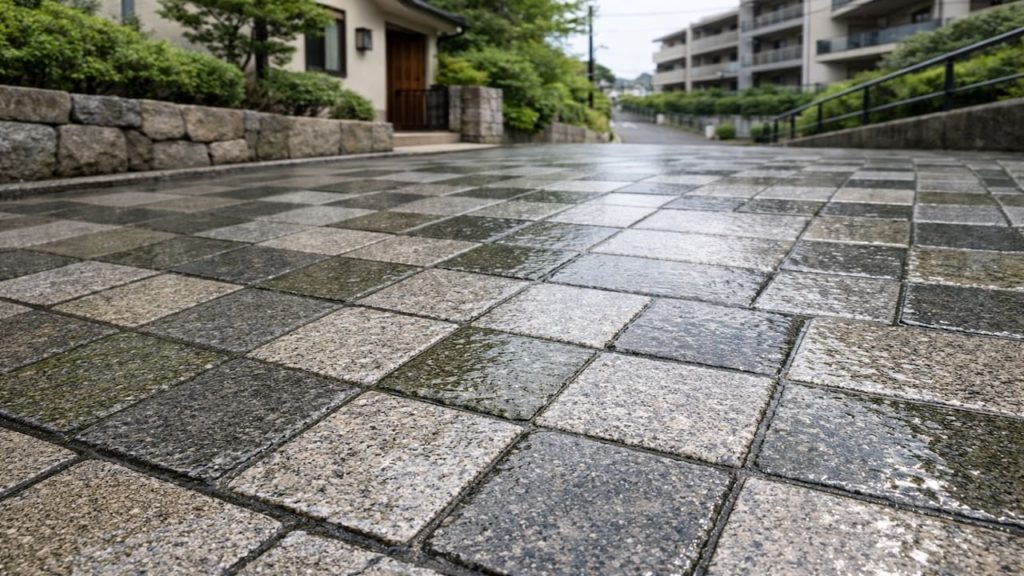
You walk on a smooth-finish pavement and it feels sketchy the moment it rains. You searched because you want to reduce slip risk without turning the surface into an ugly patchwork.
Smooth finishes lose bite when wet, and tiny grit or film can act like lubrication. In Japan, humid seasons and sudden showers keep surfaces wet longer, so a “small risk” becomes a daily hazard.
In this guide, you’ll learn how to reduce slip risk on smooth pavement by checking rain conditions, shoes, and grit buildup. You’ll also learn quick safety steps you can do before you commit to bigger changes.

Hi, I’m Ken — I’m Japanese, and I live in Malaysia long-term, so I explain everyday life in Japan from a practical ‘from abroad’ perspective.
I hold a building design qualification and I’ve been on site for 20+ years across hundreds of jobs. I turn Japan’s unspoken rules into simple checks, so you can avoid costly mistakes and take the next step with clear actions that feel safe.
1. Pavement slip risk on smooth finish 5 checks
Smooth surfaces slip when water and grit remove friction.
When the finish is too slick, even good walking habits can fail on wet days. In Japanese entry paths, pollen and road dust build quietly, then rain turns it into a thin paste. You want to identify where and why it slips so you can target fixes instead of guessing.
- Identify the exact zone where footing fails
- Check if it slips only when fully wet
- Look for glossy reflections on the finish
- Rub with finger and feel slick surface film
- Compare grip on dry day versus rainy day
Some people think “I’ll just walk slower” and call it solved. Slower helps, but a smooth finish can still surprise you, especially on slopes. Treat it as a system: surface plus contamination plus footwear. Fix the system.
2. Rain shoes and grit
Rain plus worn shoes plus fine grit is the slip triangle.
Worn shoe tread hydroplanes, grit rolls underfoot, and water reduces friction on smooth finishes. Japan’s rainy season makes grit stick to wet soles and move around like tiny bearings. If you clean the surface but keep wearing flat soles, you’ll still slip. If you change shoes but leave grit, you’ll still slip.
- Inspect shoe tread depth and worn flat areas
- Sweep fine grit before rain when possible
- Check if grit collects at the same edge strip
- Watch water sheet smoothly across the finish
- Test grip with a wet shoe in one spot
You might think “grit adds traction” like sandpaper. Not when it’s loose and wet, it behaves more like ball bearings. Remove loose grit, then add controlled traction like a mat or textured strip. Controlled beats random.
3. Why smooth finishes become slippery even if they look clean
Water creates a sliding layer on low-texture surfaces.
When a surface has little microtexture, water can form a continuous sheet that reduces friction. Any thin film, like soap residue or algae, makes it worse by acting like lubricant. In Japan, humid nights keep surfaces damp longer, so film stays active and does not dry out between showers.
- Low texture gives shoes nothing to bite into
- Water sheets and reduces direct rubber contact
- Thin film acts like grease when hydrated
- Repeated rain keeps the surface slick for hours
- Polishing from traffic makes finishes smoother over time
People blame the material, but the finish and surface condition decide traction. If the surface looks shiny and feels slick when wet, it needs either cleaning or texture. You can’t negotiate with physics.
4. How to reduce slip risk on smooth pavement quickly
Remove film and add targeted traction where you step.
Deep clean the area with a stiff nylon brush and a mild cleaner, rinse thoroughly, then add a traction mat or anti-slip strip on the main walking line. For supplies like a broom, nylon brush, and anti-slip tape or mat, expect around ¥800–4,000, and cost is mostly time/effort. In Japanese homes, prioritize the genkan approach, steps, and any sloped strip first.
- Sweep grit off before it turns into wet paste
- Scrub surface film and rinse until clear
- Dry then retest grip with wet shoe
- Place traction mat on the highest risk line
- Replace worn shoes with deeper tread patterns
You might want to scatter sand as a shortcut. It works in emergencies but clogs drains and becomes a mess, so use it only short-term. A targeted traction strip is cleaner and more reliable. Make the main path safe first.
5. FAQs
Q1. Is a smooth finish always unsafe in rain?
Not always, but it is higher risk, especially on slopes and near steps. If you feel any skid, treat it as a safety problem and add traction.
Q2. Do new shoes really matter that much?
Yes, tread depth and rubber softness affect wet grip a lot. Worn flat soles are a common reason people slip even on “normal” surfaces.
Q3. What is the fastest fix I can do today?
Sweep grit and scrub off surface film. Then add a mat or anti-slip strip on the exact slip zone.
Q4. Why does it slip more after light rain than heavy rain?
Light rain can create a thin film without flushing grit away, so it becomes slicker. Heavy rain sometimes washes loose grit off, at least temporarily.
Q5. When should I change the surface finish?
If you keep slipping after cleaning and adding traction, the finish is too smooth for that location. A textured recoat or a different finish is the long-term fix.
Pro's Tough Talk

I’ve spent 20+ years working around Japanese homes, so I’ve seen what tends to work—and what tends to go wrong—in everyday use. Smooth finish plus rain is basically the pavement asking for a slip story.
Cold breakdown: water sheets on smooth surfaces, grit turns into tiny rolling pellets, and worn shoes turn you into a curling stone. It’s like walking on a wet phone screen with sand sprinkled on top. Your balance won’t save you every time.
Sweep the grit right now. Scrub the main strip today and rinse until clear. Put traction down this weekend exactly where your foot loses grip.
If it still slips after deep cleaning and better shoes, the finish is simply too smooth and you need texture, not more effort. If only one area slips, you have a local film or grit feed source and that’s what you must stop.
Keep trusting that smooth shine, and the pavement will teach you the split-second lesson.
Summary
Smooth-finish slip risk comes from water sheeting, loose grit, and thin film on the surface. Check where it slips, whether film feels slick, and whether your shoes have enough tread.
Reduce risk by removing grit and film, then adding targeted traction where you walk most. If cleaning and shoe changes don’t help, the finish needs texture or a different coating.
Clean the slip zone today and add traction so rainy steps stay predictable. Then keep grit from building up so the smooth finish stops behaving like ice.