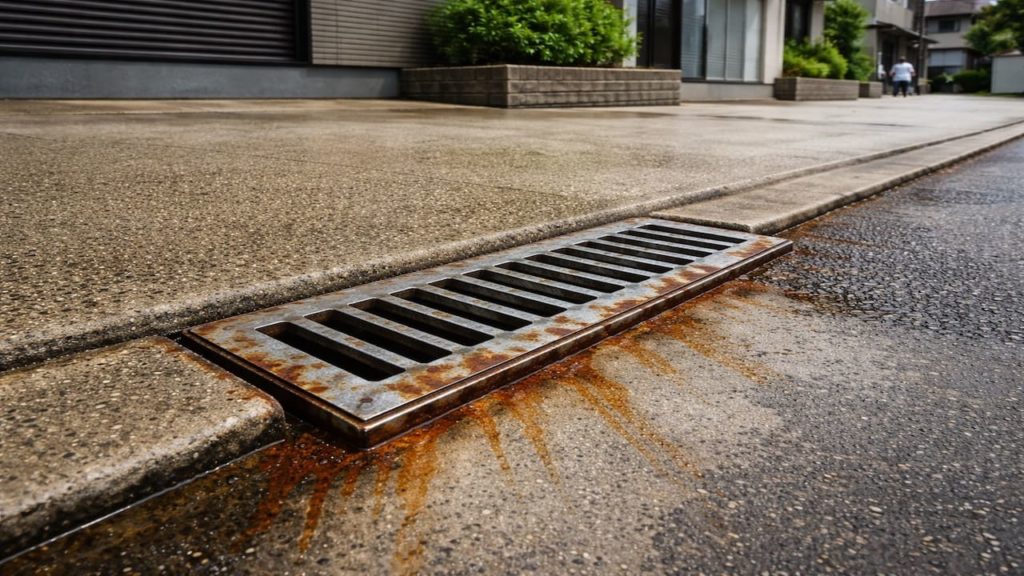
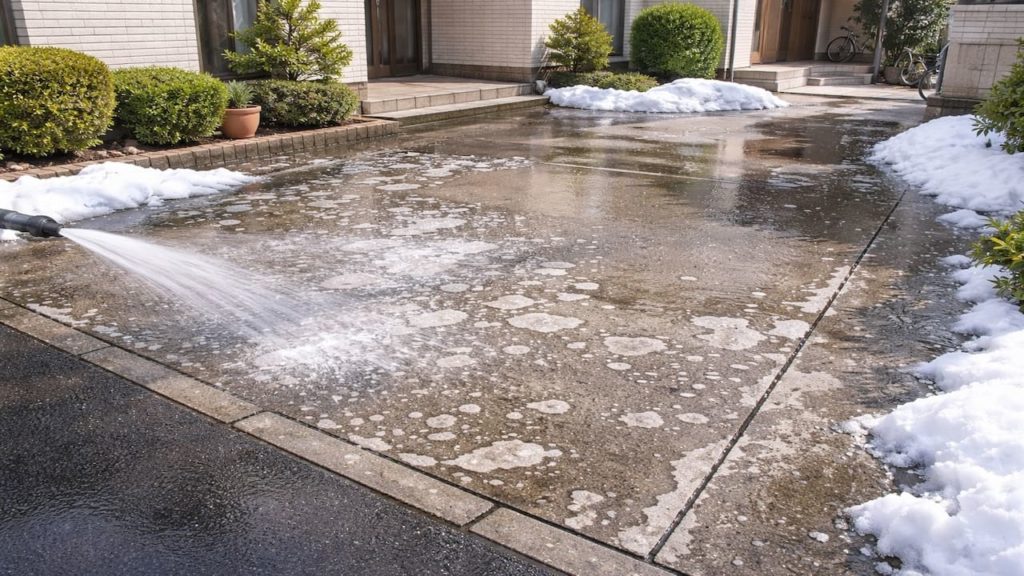
You look down and see weeds sprouting right out of the pavement joints. It makes the whole path look messy, even if everything else is clean.
Some are just tiny seedlings sitting in dust, but others are rooted deep in joint grime. In Japan, rain season growth plus warm sun can pop weeds in a week if joints stay damp.
In this guide, you’ll learn how to clear joint weeds fast and stop quick regrowth. You’ll follow a simple scrape-brush-rinse routine that works without overthinking it.

Hi, I’m Ken — I’m Japanese, and I live in Malaysia long-term, so I explain everyday life in Japan from a practical ‘from abroad’ perspective.
I hold a building design qualification and I’ve been on site for 20+ years across hundreds of jobs. I turn Japan’s unspoken rules into simple checks, so you can avoid costly mistakes and take the next step with clear actions that feel safe.
1. Pavement weeds in joints 5 steps to clear them fast
Fast clearing works when you remove both tops and joint dirt.
Pulling weeds alone feels satisfying, but the joint still holds dust and seeds, so new sprouts show up fast. The quickest win is a repeatable routine you can do in short bursts. In Japan, narrow paths beside walls stay humid and shaded, so joint grime stays soft and weed-friendly. The goal is speed, not perfection.
- Pick a dry day and clear the walking line
- Scrape joints and lift roots with a hook tool
- Brush hard to eject dust and loose seeds
- Rinse lightly and push debris toward a drain
- Repeat once more after drying for a clean reset
You might think you need chemicals to be “serious.” Not always, because most joint weeds are living in dust, not in the base. If you remove the dust and roots, regrowth slows a lot. Do it fast, then decide if you need the next level.
2. Scrape brush rinse repeat
The order matters because brushing before scraping wastes time.
Scraping breaks the root grip and lifts the packed joint dirt so brushing can actually remove it. Brushing then ejects seeds and grit, which is what keeps feeding weeds. Rinsing is last, and it should be gentle, because blasting water can wash joint sand away. In Japan’s rainy season, joints refill with silt fast, so doing a second dry pass after drying is the cheat code.
- Scrape first to break roots and packed debris
- Brush next to remove loosened joint material
- Rinse lightly to flush remaining fine grit
- Let it dry fully so hidden seedlings show
- Repeat dry scrape and brush for finish
Some people rinse first because it looks cleaner faster. That makes mud and hides roots, then you work slower. Keep it dry at the start, and you’ll clear joints in less time with less mess.
3. Why weeds keep growing in pavement joints
Weeds are not growing in stone they are growing in trapped dirt.
Joints collect dust, pollen, and broken organic bits, and that becomes mini soil. Add moisture and shade, and seeds germinate right on top, even without deep roots. In Japan, summer humidity keeps joints damp overnight, so seedlings survive instead of drying out. Then each rain brings more silt and more seeds.
- Dust and pollen create a thin soil layer
- Moist joints protect seedlings from drying out
- Open joints catch windblown seeds easily
- Shaded paths stay wet longer after rain
- Loose joint sand lets roots anchor quickly
You may think your installation was bad. Sometimes it is, but most of the time it is just normal joint behavior plus weather. The fix is not endless pulling, it is removing the joint dirt that feeds the cycle.
4. How to keep joint weeds from coming back fast
Refill joints tight and reduce soil feed and moisture.
After clearing, sweep fresh joint sand in and compact it so there is less space for dirt to settle. Edge control matters too, because soil spill from beds feeds the joints. Basic supplies are cheap, around ¥500–2,000 for a joint scraper, stiff brush, and a bag of joint sand—cost is mostly time/effort if you already own tools. In Japan, do the work on a dry morning so you get a full day of drying before evening damp.
- Sweep in joint sand and pack it tight
- Trim bed edges to stop soil spilling
- Improve drainage so joints dry faster
- Spot remove seedlings weekly before roots deepen
- Use a joint sealer only after full drying
You might want to seal right away after cleaning. If you seal while moisture or fine silt remains, you trap the problem and it grows under the seal. Dry first, refill joints, then seal only if you really need lower maintenance.
5. FAQs
Q1. Is pulling weeds by hand enough?
It helps, but it usually leaves joint dirt behind, which feeds new sprouts. If you also scrape and brush out the dust, your results last longer.
Q2. Should I use boiling water on joint weeds?
It can knock back tops, but it does not remove the soil layer in the joint. Use it as a quick reset, then still scrape and brush after.
Q3. What is the fastest tool for joint weeds?
A hook-style joint scraper is the fastest because it grabs roots and lifts packed debris. Scraping beats pulling because it clears the joint, not just the plant.
Q4. Why do weeds come back in just a week?
Because seeds were already sitting in the joint dust, and moisture stayed high. In Japan’s humid months, seedlings survive nights that would dry them out elsewhere.
Q5. Do I need polymeric sand to stop weeds?
It can help reduce gaps, but it still needs clean, dry joints to work. If joints are full of dirt, even polymeric sand will fail early.
Pro's Tough Talk

I’ve spent 20+ years working around Japanese homes, so I’ve seen what tends to work—and what tends to go wrong—in everyday use. In rainy season humidity, joint weeds grow like they got a paycheck.
Here’s the brutal truth: weeds aren’t “strong,” your joints are just full of snack crumbs for plants. Dust turns into soil, moisture turns it into a nursery, and your path becomes a tiny farm. Think of it like glitter at a party: once it gets into cracks, it never leaves unless you do the boring work.
Scrape the joints dry and lift roots.
Brush hard and eject the dirt.
Rinse lightly, dry, then do one more pass.
If you only pull tops you will be back next week. If joints keep opening or sand keeps washing out, you fix drainage and refill tight, or you accept weeds as your new roommates. Pick one.
Seriously.
You clear the weeds, feel proud, then three days later you spot new green hairs and your soul leaves your body a little. Congrats, you discovered the joint weed subscription plan. Cancel it the right way.
Summary
Clear weeds fast by scraping roots, brushing out joint dirt, and rinsing lightly in the right order. The key is removing the soil layer that feeds regrowth.
Refill joints tight, keep edges from spilling soil, and do quick weekly spot checks so seedlings never root deep. If joints stay wet, fix drainage so the path can dry.
Do the five steps on one walking line today. Once you feel how fast it goes, you can repeat it across the rest of the pavement without turning it into a whole-day chore.