You want a pergola roof that keeps you dry, not a roof that drips at the worst moment. One bad panel choice can turn a cozy spot into a splash zone.
You also don’t want a roof that traps heat or makes rain noise feel like a drumline. In Japan, rainy season bursts and humid air punish weak roof decisions fast.
In this guide, you’ll learn how to choose a pergola roof that stays dry in Japan. You’ll compare panels, fabric, and slope so water exits cleanly and the space still feels comfortable.

Hi, I’m Ken — I’m Japanese, and I live in Malaysia long-term, so I explain everyday life in Japan from a practical ‘from abroad’ perspective.
I hold a building design qualification and I’ve been on site for 20+ years across hundreds of jobs. I turn Japan’s unspoken rules into simple checks, so you can avoid costly mistakes and take the next step with clear actions that feel safe.
1. Pergola roof ideas in Japan: 5 checks to stay dry
Staying dry is about water paths not roof vibes—period.
A pergola roof works when it tells water exactly where to go. If you ignore runoff, water finds the easiest edge and drops right where you sit. In Japan, sudden downpours and wind-driven rain can push water sideways, not just down. Tight lots also mean splashback hits walls and fences, then bounces back into your zone. Messy.
- Check roof pitch so water runs off
- Confirm drip edge directs water away cleanly
- Inspect seams so wind cannot push rain inward
- Plan where water lands so puddles avoid posts
- Keep airflow so humidity does not linger
You might think “any cover is better than none,” but a bad cover creates new problems. Drips, stains, slippery floors, and damp corners show up fast. If you do these checks first, your roof choice becomes obvious.
2. Panels fabric and slope
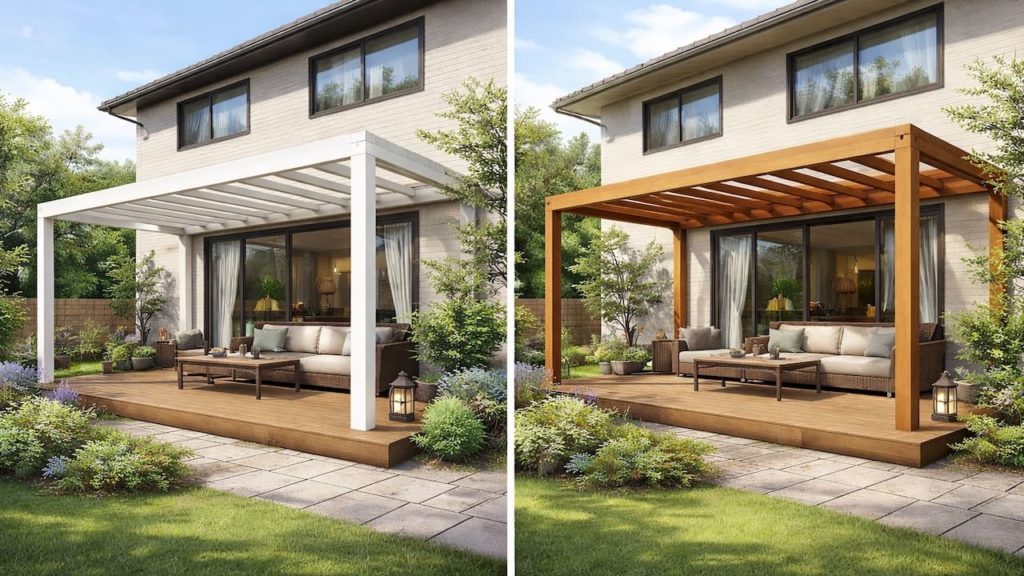
Pick the roof type that matches your rain behavior—not your photo.
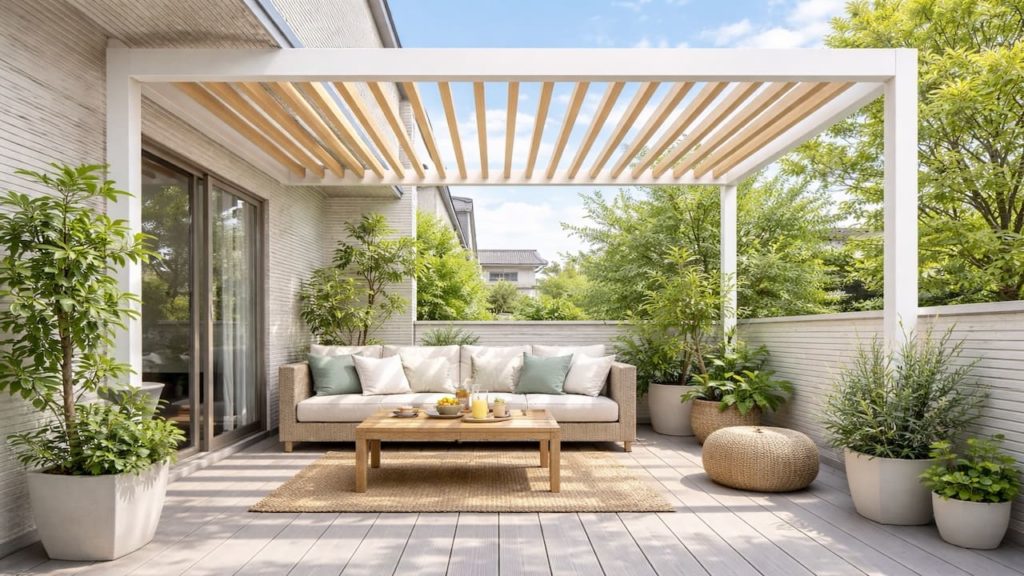
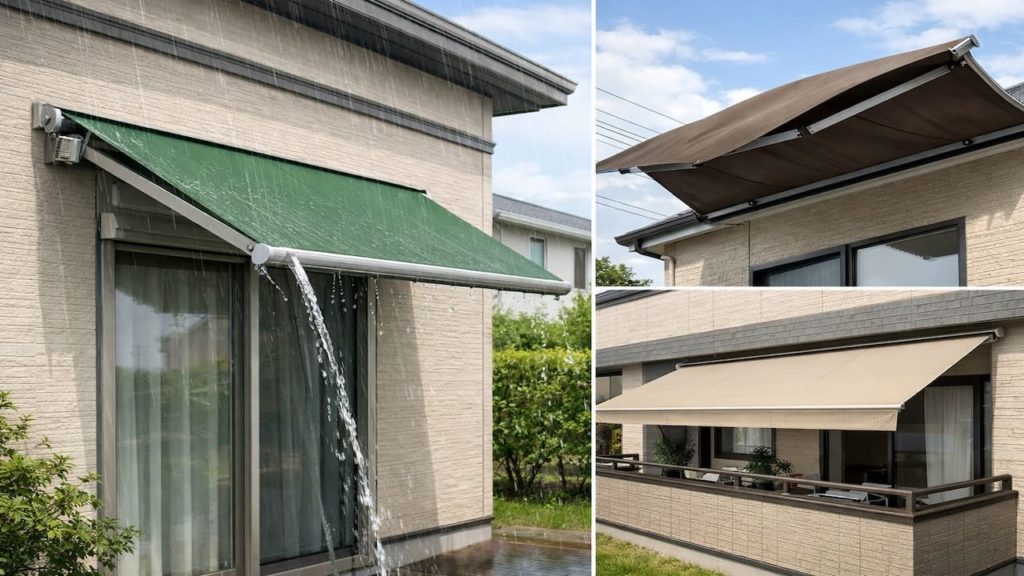
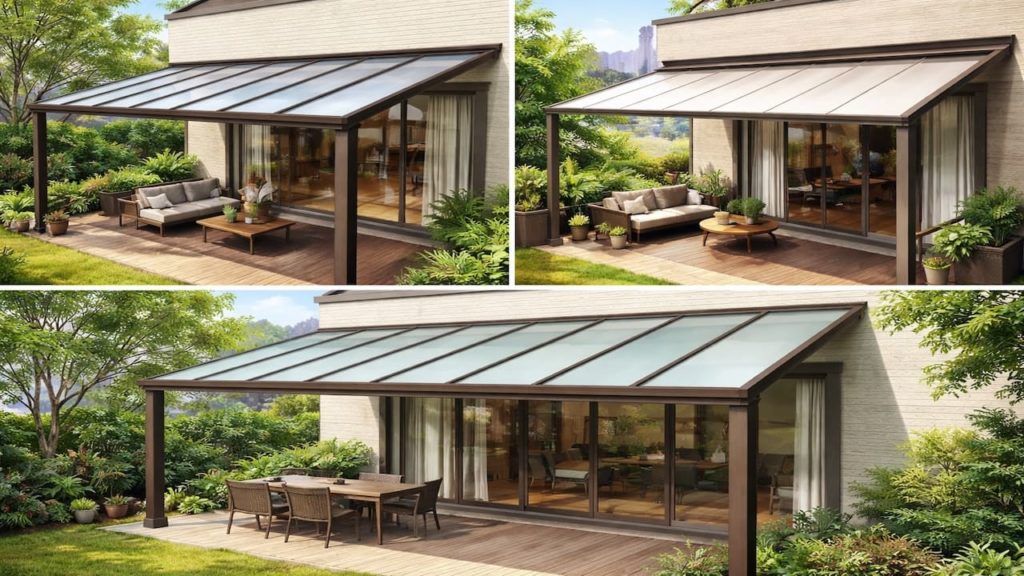
Panels are stable and predictable, but they can get loud and trap heat if airflow is weak. Fabric looks light, but it must be tensioned right or it becomes a saggy water bowl. Slope is the silent boss because it decides whether water drains or hangs around. In Japan’s humid season, trapped water also grows grime faster, especially in shaded yards.
- Choose panels when you want rigid runoff control
- Choose fabric when you can tension it hard
- Set slope so water never pools on top
- Prevent edge lift so wind cannot grab corners
- Leave vent gaps so hot air can escape
Some people chase “maximum coverage” and forget drainage, then wonder why it drips. Coverage without runoff planning is just a bigger mess. Match roof type to your wind, rain, and maintenance tolerance.
3. Why pergola roofs drip and leak in Japan
Most leaks start at edges seams and splash zones—not the middle.
Water problems usually come from details, not from “bad material.” Wind pushes rain under edges, and capillary action can pull water through tiny gaps. In Japan, typhoon season gusts can lift edges and shake fasteners, which opens new paths over time. Rainy season also means everything stays damp longer, so one small leak becomes constant staining. Annoying reality.
- Wind drives rain under low roof edges
- Small gaps pull water by capillary action
- Loose fasteners let panels shift and chatter
- Splashback wets posts and throws moisture upward
- Clogged debris blocks drainage and forces overflow
You might blame “cheap panels,” but even good panels leak if seams are wrong. Fix the water path first, then decide if material needs upgrading. The cause matters more than the product.
4. How to choose a roof setup that stays dry
Design runoff first then choose the roof skin—simple order.
Start by mapping where water will land and how you’ll keep it away from walking lines. Then choose panels or fabric that can hold that plan without sagging or edge lift. If you need basic add-ons like edge trim, fasteners, and tension parts, budget ¥1,000–15,000 for common supplies and small upgrades. In Japan’s rainy season, small details like edge control and clean drainage beat “thicker material.”
- Mark drip line so water lands off walkways
- Add edge trim to stop sideways wind rain
- Seal only where seams actually move and leak
- Tension fabric so it sheds water immediately
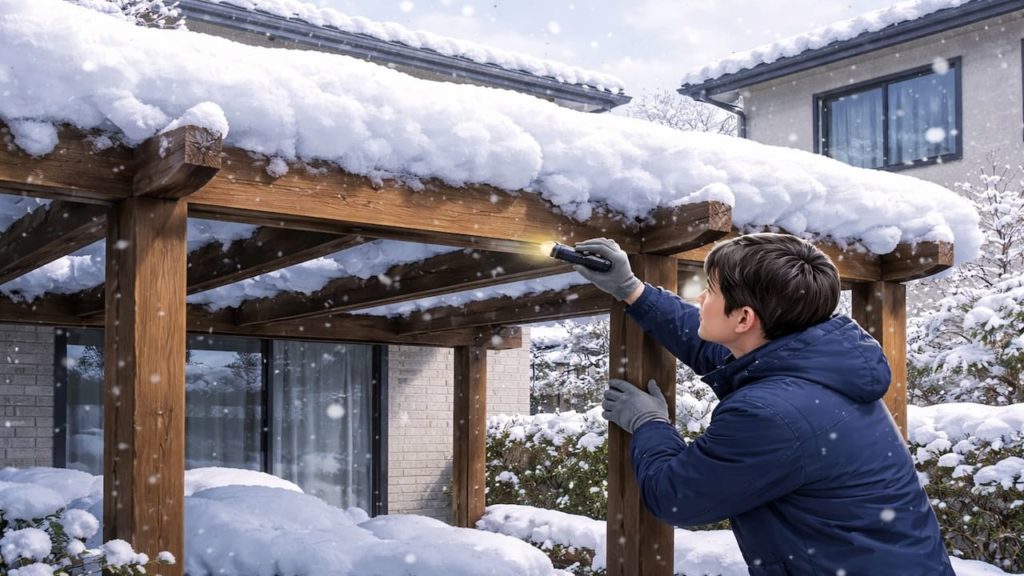
- Recheck after storms and retighten hardware evenly
You might want to copy a nice photo roof, but your rain and wind do not care. Build for your yard conditions, then tune comfort after. If you still get drips after these steps, the next move is improving edge control and slope, not adding random sealant everywhere.
5. FAQs
Q1. Are clear panels better than fabric in Japan?
Panels usually handle sudden rain better because they do not sag, but they can trap heat if airflow is poor. Fabric can work well if it stays tight and drains fast.
Q2. Why does my pergola roof drip even when it “doesn’t leak”?
It can be condensation or splashback, not a seam leak. Japan’s humid nights can leave moisture that later drips when air warms—super common.
Q3. Do I need a gutter on a pergola roof?
You need controlled runoff more than you need a gutter. If water lands where it causes puddles or stains, add a control method like edge trim, a drip edge, or a small gutter.
Q4. How do I reduce rain noise under the roof?
Stop panels from vibrating by tightening evenly and adding soft contact points at rattling edges. Also keep some vent gap so sound does not get trapped.
Q5. What is the fastest test before committing to a roof?
Watch how water moves during a real rain and mark where it lands. If the landing zone is bad, fix slope and edge control first.
Pro's Tough Talk

I’ve spent 20+ years working around Japanese homes, so I’ve seen what tends to work—and what tends to go wrong—in everyday use.
Most pergola roofs fail because people build a lid, not a water system. Rain turns your “nice cover” into a leaky umbrella with a bad attitude, and the drips hit your chair like it’s targeting you. You’re not clueless, the details are just unforgiving in tsuyu humidity.
Right now: stand under the edge and find the drip line. Today: tighten the loose spots and stop the edge lift. This weekend: adjust slope and add edge control where water misbehaves.
If water still pools or drips after edge control you need a redesign. If it only drips at one seam, fix the seam, but if it drips everywhere, your runoff plan is broken.
Scene one: you set food down, then a drip hits the plate like a prank. Scene two: you hang laundry under it and it stays damp forever. Bruh.
Summary
A pergola roof stays dry when runoff is planned and edges are controlled. Panels and fabric both work if slope and seams are treated seriously.
If you see pooling, repeated drips, or wind-driven leaks, fix water paths before you change materials. If vibration keeps returning, secure edges and reduce movement points.
Map the drip line today and control where water lands. Once that is solid, the pergola becomes a comfort spot again instead of a wet surprise.