You notice a dark spot or a soft patch on your pergola, and your stomach drops. Wood rot feels like it spreads overnight.You want to catch it early, not after the post starts wobbling or the beam looks cracked.
Rot can be surface grime, mold film, or real decay eating strength from the inside. Japan’s humid summers and rainy season make wood stay damp longer, so small wet zones turn into repeat zones.That means you need a fast way to tell “clean it” from “fix it now.” No guessing.
In this guide, you’ll learn how to spot pergola wood rot early before it gets expensive. You’ll use five checks to read soft spots, cracks, and mold without overreacting.You’ll also know when a simple dry-out is enough and when replacement is the smarter call.

Hi, I’m Ken — I’m Japanese, and I live in Malaysia long-term, so I explain everyday life in Japan from a practical ‘from abroad’ perspective.
I hold a building design qualification and I’ve been on site for 20+ years across hundreds of jobs. I turn Japan’s unspoken rules into simple checks, so you can avoid costly mistakes and take the next step with clear actions that feel safe.
1. Pergola wood rot signs: 5 checks to catch early
Early rot shows up as texture changes before big damage.
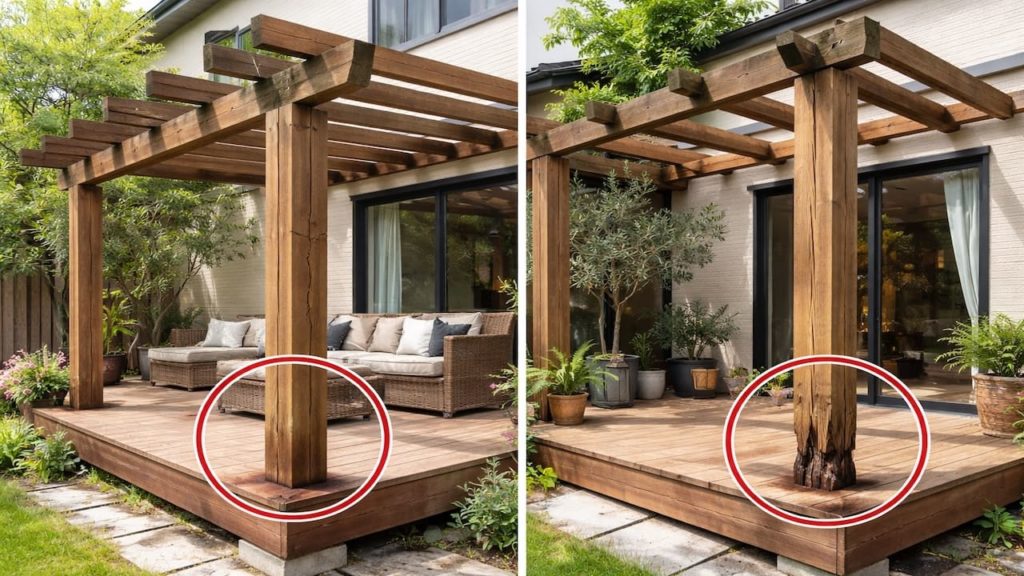
Wood rarely goes from solid to failed in one week—there are warning stages. The trick is checking the right places: beam ends, post bases, screw lines, and shaded corners where drying is slow. In Japanese yards, fences and close walls block wind, so damp lingers even after rain stops. Quick check beats deep worry.
- Press corners and feel for spongy give
- Probe beam ends where water likes to sit
- Watch cracks that widen after wet weather
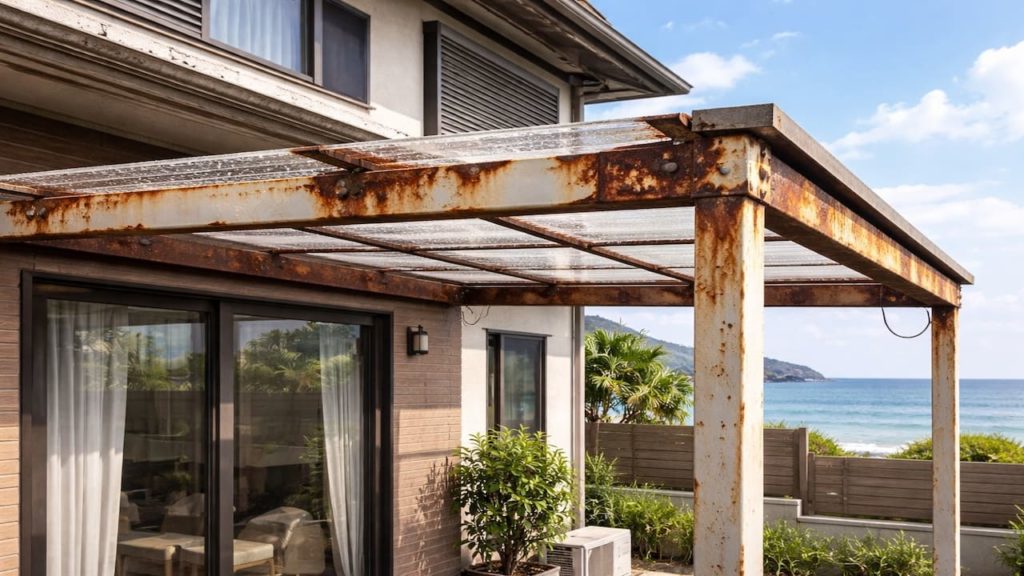
- Check fasteners for rust streaks and softness
- Smell shaded corners for sour musty odor
You might think rot always looks dramatic, but early rot can look “mostly fine.” The real clue is how the wood behaves under light pressure and probing. Do these five checks regularly and you catch it while repairs are still small.
2. Soft spots cracks and mold
Soft wood is the danger sign not surface color.
Mold on the surface can be cleaned, but soft wood means strength is already dropping. Cracks matter when they form near joints and keep changing, because that’s where load concentrates. Japan’s damp season can keep a thin wet film on shaded wood, so mold returns unless you fix drying, not just cleaning. For safe cleanup basics, detergent-and-water plus full drying is the core approach.
- Push with thumb and compare to solid areas
- Probe with screwdriver tip and watch for crumble
- Check cracks at joints not mid span only
- Wipe mold film and see if stain stays
- Look under hardware where water hides easily
It’s tempting to panic at black spots, but black spots can be grime. Softness is the real red flag, because it means fibers are breaking down. Clean the surface, then test firmness again so you know what you’re dealing with.
3. Why pergola wood starts rotting in the first place
Rot starts when wood stays wet long enough to feed fungi.
Wood decay is basically biology plus moisture plus time. Water gets trapped at end grain, under brackets, and at post bases, then drying is blocked by shade and still air. In Japan, long humid stretches make “almost dry” stay almost dry for days, which is enough to keep the cycle alive. Decay fungi generally need wood moisture at or above about 20% to sustain growth.
- End grain drinks water like a sponge
- Hardware traps moisture under plates and washers
- Shade slows drying and keeps damp film
- Clogged debris holds water against the wood
- Loose joints pump moisture deeper with movement
You might blame “bad wood,” but most pergola rot is a moisture path problem. If you keep the same wet zone, rot keeps coming back no matter what you coat it with. Fix the wet zone and the wood suddenly behaves.
4. How to check and stop rot early without overrepairing
Test firmness then improve drying before you rebuild.
Start with a simple routine: press, probe, and mark any soft spots, then track them after the next rain. If you need basic supplies, plan ¥500–3,000 for a screwdriver, small brush, sandpaper, and a simple exterior sealant. Focus on drying: clear debris, open airflow lanes, and stop water from sitting at ends and bases. One calm routine makes rot boring.
- Mark suspect spots with tape and date
- Brush off debris that holds moisture there
- Dry the area and re test firmness next day
- Seal only after wood feels fully dry
- Recheck after rain and compare to your mark
You might think sealing fixes everything, but sealing damp wood can trap moisture and speed decay. If softness grows, or a joint loosens again, that’s a structure problem, not a cleaning problem. Stop the water, confirm the wood is firm, then seal with confidence.
5. FAQs
Q1. Is all black staining on pergola wood rot?
No, black staining can be mold film, dirt, or tannin bleed. Clean and dry it first, then do a firmness check so you do not guess.
Q2. What is the fastest way to check for early rot?
Press with your thumb and probe lightly with a screwdriver tip. If it dents easily or crumbles, treat it as real decay and track the spread.
Q3. Should I replace the whole pergola if I find a soft spot?
No one soft spot does not mean full replacement—but growth does. If the softness expands or shows up at multiple joints, replacement planning becomes smarter than endless patching.
Q4. Can I stop rot by repainting or resealing?
Only if the wood is dry and still structurally firm. Coating over damp or soft wood hides the problem and can trap moisture.
Q5. Where should I check most often?
Post bases, beam ends, and any hardware contact points. Those are the moisture traps that repeat the same damage pattern.
Pro's Tough Talk

I’ve spent 20+ years working around Japanese homes, so I’ve seen what tends to work—and what tends to go wrong—in everyday use.
Rot is never “random,” it’s a slow leak in your routine: water sits, shade blocks drying, and the wood turns into a stale sponge. You don’t deserve blame, and builders aren’t always villains, but the physics is brutal and it keeps receipts. During tsuyu, one damp corner becomes a petri dish with a roof.
Right now: press the suspicious spot and probe it lightly. Today: clear debris, open airflow, and stop water from pooling at the base. This weekend: dry it fully and seal only the confirmed dry areas.
If the soft area grows or joints loosen again plan a rebuild. If it stays firm after drying and the stain cleans off, you’re fine, just keep the routine.
Yeah, no.
Scene one: you step outside with coffee and your finger sinks into the beam like a bad cake. Scene two: you tighten a screw, it bites once, then spins forever because the wood is toast.
Summary
Early pergola rot is best caught by behavior checks: softness, changing cracks, and repeated musty damp zones. Color alone is not enough.
If the wood firms up after drying and the stain cleans, maintain and monitor. If softness spreads or joints keep loosening, stop patching and plan stronger fixes.
Do the press and probe check today and mark what you find. Then keep reading related pergola maintenance topics so moisture never gets a quiet head start.