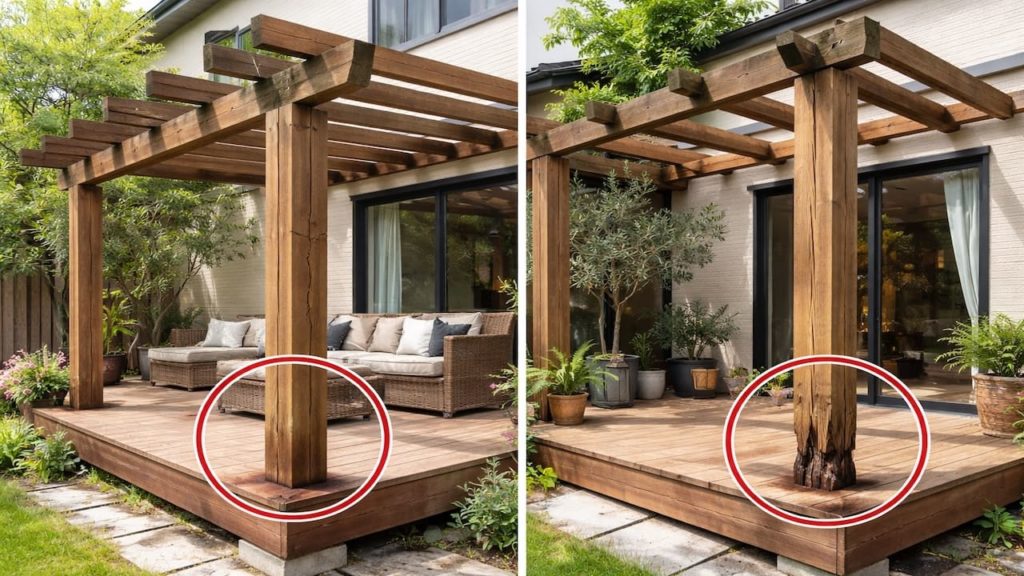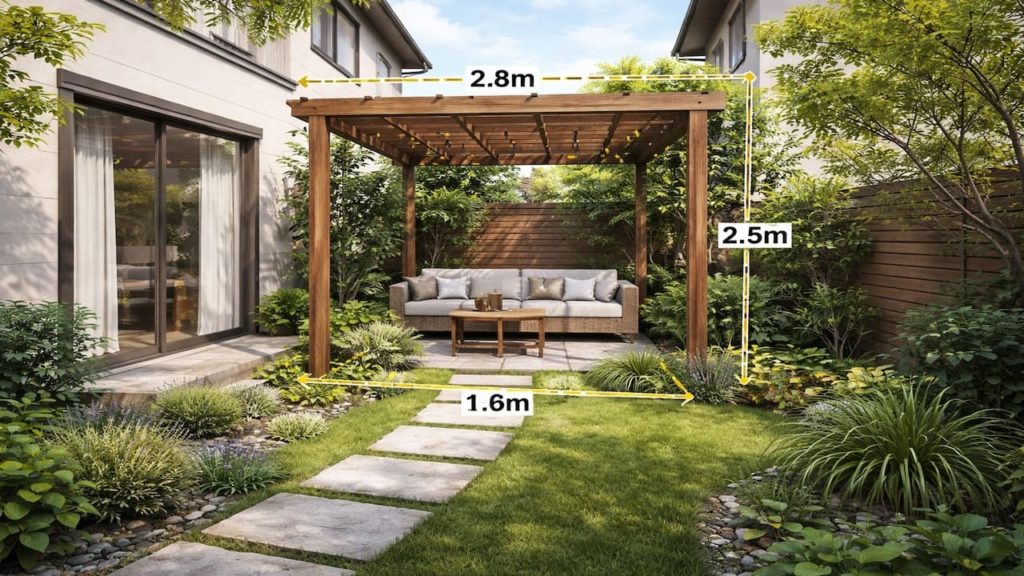
You want a pergola in a small yard, but the space feels unforgiving. One wrong size choice and the whole area looks cramped.You still want a spot that feels calm, not like a frame blocking your path.
On a small yard, the “right” pergola is more about proportions than power tools. In Japan, tight lot lines and humid rainy seasons make bad spacing feel worse fast.Shadows get heavier, airflow slows down, and maintenance becomes annoying.
In this guide, you’ll learn how to make a small-yard pergola feel bigger and work better. You’ll plan scale, lines, and walkways so it looks clean and lives easy.You’ll also avoid the common mistakes that make small yards feel even smaller.

Hi, I’m Ken — I’m Japanese, and I live in Malaysia long-term, so I explain everyday life in Japan from a practical ‘from abroad’ perspective.
I hold a building design qualification and I’ve been on site for 20+ years across hundreds of jobs. I turn Japan’s unspoken rules into simple checks, so you can avoid costly mistakes and take the next step with clear actions that feel safe.
1. Pergola on a small yard: 5 tips
Design for movement first and the yard will feel open.
A small yard does not forgive bulky shapes, but it rewards clean lines and clear walking space—fast. In Japan, narrow side yards and fences make visual clutter feel twice as heavy. If you block the main path, you will hate the pergola even if it looks nice in photos. Priority: flow, sightline, and light.
- Keep the main path clear every day
- Match pergola width to your seating zone
- Align posts with fence lines for calm
- Use lighter roof slats to reduce darkness
- Leave one open side for airflow
Some people say “just go bigger for comfort,” but bigger often eats the yard and kills usability. Small yards need restraint, not bravado. Clean layout. Simple structure. Better living.
2. Scale lines and walkway
Scale is right when the walkway never feels pinched.
Scale problems usually show up at the edges: posts too close to a fence, beams too low, or a walkway that forces shoulder turns—daily stress. In Japan, rainy season runoff and damp corners punish tight gaps because grime builds where you cannot clean. A good pergola leaves breathing room around the furniture and the path, not just under the roof. For basic layout tools and markers, budget ¥500–2,000 and save yourself rework.
- Mark a walkway line and protect it
- Keep posts out of door swing zones
- Line up beams with house and fence edges
- Use slim profiles to reduce visual bulk
- Leave cleaning access along the fence side
People will tell you “you’ll get used to it,” but you should not need to adapt to bad planning. Pinched paths make the yard feel like storage. Tight. Annoying. Plan scale around daily movement and the pergola will disappear in a good way.
3. Why small-yard pergolas feel cramped
Cramped happens when lines fight each other.
When roof slats, fence rails, and house edges point in different directions, your eye reads chaos, and the yard feels smaller—instant. Posts placed without a visual rhythm create “obstacles” instead of structure. Japan’s dense housing also means you see more boundary lines at once, so misalignment stands out. Add humidity, and dark corners stay damp, making the space feel heavy. For simple anti-clutter upgrades like slim hooks, small storage, or a tidy cable route, plan ¥1,000–5,000.
- Too many competing lines confuse the eye
- Deep shade makes corners feel closed
- Bulky posts eat space at the perimeter
- Furniture blocks paths when layout is tight
- Clutter multiplies faster in small yards
Some people blame the yard size, but the real issue is line control and layout discipline. Small can feel premium when it is organized. Calm. Intentional. Fix the lines, and the space grows in your head.
4. How to plan a small-yard pergola that feels bigger
Mock it up and lock the walkway before you build.
Start with tape and string to define posts, beam edges, and your main seating zone—then live with it for a day. Confirm your door swing, laundry path, and cleaning access, because those are the routines that decide love or regret. In Japan, summer humidity makes airflow a comfort issue, so keep at least one open side and avoid sealing the perimeter with solid screens. For a simple mock-up kit and small comfort add-ons, budget ¥1,000–8,000 and you will plan faster.
- Tape the footprint and place real furniture
- Walk the route carrying a laundry basket
- Check afternoon sun and adjust slat direction
- Keep one side open for steady breeze
- Plan where runoff lands to avoid puddles
Some people skip mock-ups because they feel slow, but rebuilding is slower. Tape tells the truth. Real life test. No fantasy. If the walkway feels easy, the pergola will feel right even in a small yard.
5. FAQs
Q1. Can a pergola make a small yard feel bigger?
Yes, if it frames a clear seating zone and keeps the main walkway open. If it blocks movement or stacks too many lines, it will do the opposite.
Q2. What is the biggest layout mistake in tight spaces?
Putting posts where people actually walk, then forcing daily detours. In Japan’s narrow yards, one detour can make the whole area feel cramped.
Q3. Should I use a solid roof for more comfort?
Use breathable shade first and keep airflow—solid roofs can trap heat and damp. If you need more cover later, add it in a controlled way without killing the breeze.
Q4. How do I keep neighbor boundaries from feeling close?
Align your pergola lines with fence and house edges so the view feels organized. Use partial screening only where needed, not everywhere.
Q5. How do I keep the space easy to clean?
Leave access along at least one fence side and avoid tight dead zones. If you cannot reach a corner, grime will claim it during rainy season.
Pro's Tough Talk

I’ve spent 20+ years working around Japanese homes, so I’ve seen what tends to work—and what tends to go wrong—in everyday use.
Small-yard pergolas fail when you build a “structure” and forget you still need to live there. It’s like parking a truck in a bicycle lane, then acting surprised when everything feels stuck. In tsuyu humidity, a tight dark corner turns into a damp corner, and damp corners always win if you ignore them.
Right now: tape the walkway and protect it. Today: mock up posts and walk your daily routes. This weekend: lock the lines, then pick the lightest roof plan.
If you keep bumping posts during the mock up change the layout. If the space still feels tight after line cleanup, the next move is slimmer posts and more open sides. Hard truth. Clear fix.
Yeah, no.
Scene one: you carry groceries and do a shoulder twist every time. Scene two: you try to sweep and realize the “cute corner” is a grime trap.
Summary
A small-yard pergola works when it protects movement and organizes lines. Your walkway and sightlines decide comfort more than roof coverage.
If the layout feels pinched in a mock-up, it will feel worse after construction. Change post positions, simplify lines, and keep airflow before you commit.
Tape the footprint today and test your real daily routes. Then keep refining with related pergola shade and maintenance topics so the space stays calm year round.