You want to build a pergola on soil ground, but you feel unsure about what’s under your feet. One rainy week can turn “done” into wobble, weeds, and mud.
You don’t want to pour full concrete if you can avoid it. You just want it stable, clean, and easy to maintain.
In this guide, you’ll learn how to set up a pergola on soil so it stays level and low-maintenance. You’ll check drainage, depth, and weeds in a simple order so the base doesn’t become a yearly headache.

Hi, I’m Ken — I’m Japanese, and I live in Malaysia long-term, so I explain everyday life in Japan from a practical ‘from abroad’ perspective.
I hold a building design qualification and I’ve been on site for 20+ years across hundreds of jobs. I turn Japan’s unspoken rules into simple checks, so you can avoid costly mistakes and take the next step with clear actions that feel safe.
1. Pergola on soil ground: 5 checks
Soil can work if you control water and movement—that’s the whole game.
Soil bases fail when the ground turns into a sponge, then dries, then shifts again. In Japan, rainy season downpours and humid stretches keep the top layer soft longer, so posts slowly sink or lean without you noticing. You also get weeds and muddy splash that make the area feel dirty even when the pergola looks nice. Do these checks before you set posts and you avoid the slow regret.
- Find where rainwater naturally wants to flow
- Confirm soil stays firm after a heavy rain
- Check slope so water leaves the footprint
- Plan weed control before you build anything
- Decide how you will keep it level
You might think soil is “too weak,” but it’s usually just unmanaged. Fix the water path, stop the weed factory, and your base can stay stable. Lazy planning is the real enemy.
2. Drainage depth and weeds
Bad drainage and weeds are the two repeat problems—every single time.
Drainage means where water goes after it hits the roof, not just “the ground is dry today.” Depth matters because shallow work gets eaten by rain, and you end up re-leveling like it’s a hobby. Weeds matter because roots, moisture, and loose soil create a messy base that shifts and grows back fast in warm wet weather. For basic supplies like weed barrier pins, gravel, and a simple tamper, plan ¥1,000–10,000 and save your weekends.
- Look for puddles that stay after rainfall
- Dig a test hole and check soaked soil
- Check runoff from roof edge to ground
- Inspect existing weeds and thick root zones
- Plan a clean border so weeds stop creeping
You might think weeds are “just cosmetic,” but weeds hold moisture and hide soft spots. If water stays and weeds thrive, your base stays weak. Kill the wet zone and the weed problem shrinks with it.
3. Why soil-ground pergolas get wobbly and weedy
They fail when the base becomes a wet mixing bowl—then everything moves.
Soil shifts when moisture changes, and pergolas amplify that because roof runoff concentrates water at edges. In Japan, tight yards between fences often trap airflow, so the ground dries slower and stays soft after rain. Add foot traffic and you compact some areas while others stay loose, which creates uneven settlement. Then the posts start “learning” a lean.
- Roof runoff keeps one strip wet daily
- Soft soil compresses and tilts under load
- Weeds grow where moisture and light balance
- Uneven compaction makes level lines drift
- Poor borders let soil and roots migrate back
You might blame the pergola kit, but the ground is deciding the outcome. If the ground is unmanaged, even good posts will feel shaky. Make the base boring and the pergola stays boring too.
4. How to prep soil ground so a pergola stays stable
Control runoff then build a firm clean base layer—in that order.
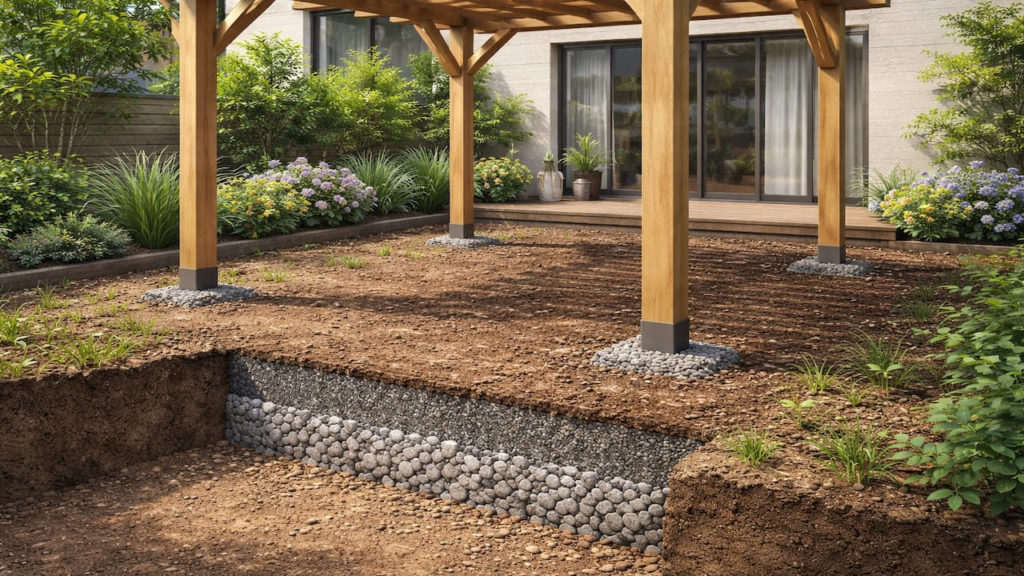
Start by marking the footprint and finding where water will land, then redirect it away from posts and walk lines. Next, remove weeds and roots, compact the soil evenly, and add a base layer that drains and stays clean. In Japan’s humid season, “almost dry” soil still shifts, so compaction and drainage are not optional. For gravel, weed barrier, edging, and small drainage tweaks, budget ¥3,000–30,000 depending on area size.
- Mark footprint and measure diagonal corners for square
- Strip weeds and roots down to clean soil
- Compact in passes so the base feels firm
- Add gravel layer and keep it level
- Install weed barrier and seal edges tight
You might want to skip gravel and just “stamp the soil,” but it usually turns into mud and weeds later. A thin clean base makes maintenance easier and keeps shoes cleaner too. If the site stays wet even after prep, the next move is adding drainage or changing placement.
5. FAQs
Q1. Can a pergola be stable without concrete on soil?
Yes, if you control runoff and build a compacted base that drains. If the ground stays wet and soft, it will slowly lean no matter what.
Q2. Do I need to remove all weeds first?
Yes, remove roots and block regrowth with barrier and borders. If you trap weeds under a layer, they find a way back.
Q3. What is the fastest check for bad drainage?
Look for puddles that remain after rain, especially near edges. If water sits there the base will keep shifting and you’ll chase level forever.
Q4. Should I use gravel under the pergola floor?
Usually yes, because gravel drains and stays cleaner than bare soil. It also reduces splashback and slows weed return.
Q5. What if my yard is always damp?
Then you need drainage help or a different location, not just more barrier. If dampness never leaves, the base will keep moving.
Pro's Tough Talk

I’ve spent 20+ years working around Japanese homes, so I’ve seen what tends to work—and what tends to go wrong—in everyday use.
Building on soil is like setting a table on a mattress: it looks fine until you put weight on it. And weeds are like uninvited relatives, they show up the second you stop watching. Japan’s rainy season turns “pretty gravel” into “mystery mud” if you ignore runoff, and then you act surprised when things lean.
Now: dig one test spot and feel the wet layer. Today: strip weeds, compact the footprint, and decide the runoff exit. This weekend: lay the base layer and lock the edges.
If it still feels soft after compaction you need drainage help. If you did all that and puddles still sit, stop pretending it’ll fix itself and add drainage or move the pergola.
Scene one: you step outside in socks and regret your life choices. Scene two: you sweep “clean gravel” and pull up a weed jungle instead.
Summary
Soil-ground pergolas work when you control water and build a firm base. Check runoff, soil firmness, slope, weeds, and leveling before you set anything.
If the area stays wet or weeds keep returning, fix the wet zone and lock the borders. If softness repeats after compaction, add drainage or change the location.
Do one test dig and map the runoff today. Then keep improving the base so the pergola stays stable and your yard stays clean.