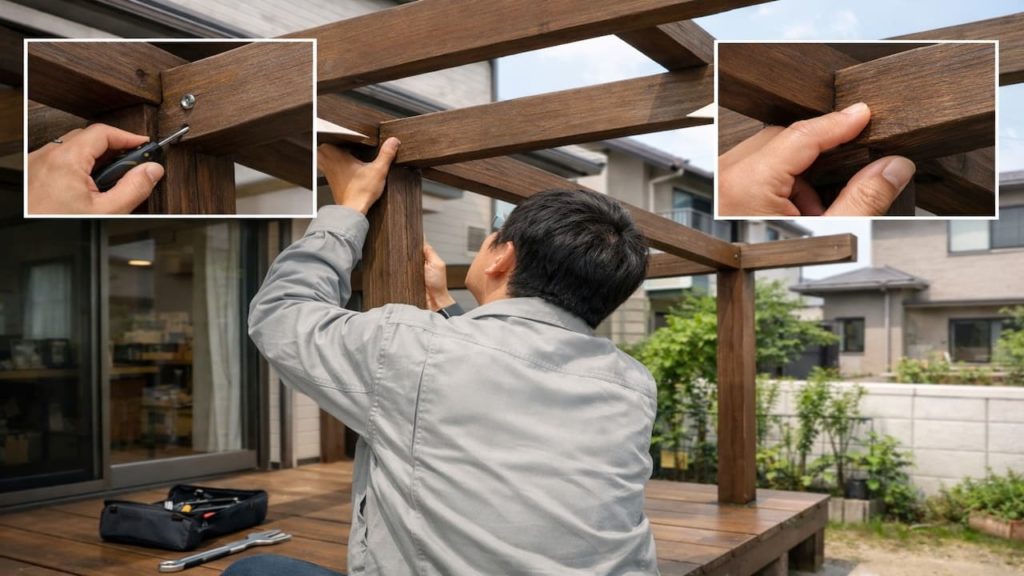
You hear it the moment the wind picks up: that annoying squeak from your pergola. It makes the whole yard feel flimsy, even if the structure looks fine.
In Japan, gusty spring days and typhoon season can turn small movements into loud noise fast. The cause can be as simple as two parts rubbing, or as serious as a joint that is slowly loosening.
In this guide, you’ll learn how to track down and stop pergola squeaks in wind. You’ll pinpoint the exact rub points, tighten what actually matters, and add small buffers so the sound stays gone.

Hi, I’m Ken — I’m Japanese, and I live in Malaysia long-term, so I explain everyday life in Japan from a practical ‘from abroad’ perspective.
I hold a building design qualification and I’ve been on site for 20+ years across hundreds of jobs. I turn Japan’s unspoken rules into simple checks, so you can avoid costly mistakes and take the next step with clear actions that feel safe.
1. Pergola squeaks in wind: 5 checks
Find the exact squeak spot before you tighten anything.
Wind noise is rarely “everywhere” at once, even when it sounds like it. In Japanese homes with narrow side yards, echoes bounce off walls and make one tiny rub point sound huge. Annoying noise. A simple spot check saves you from chasing the wrong bolt.
- Listen close near each corner during gusts
- Hold a post and feel vibration changes
- Push the beam lightly to recreate squeak
- Mark the spot with removable tape
- Check one joint at a time slowly
You might think “just tighten everything” and be done—good luck. Over-tightening can crush wood fibers or distort thin metal brackets, so the squeak returns in a new place. Fix the one spot, then re-test in wind, then move on. That’s how you win.
2. Loose joints and rub points
Most squeaks come from tiny gaps that open and close.
A joint can look tight but still slip under wind load, especially after humid summers and winter drying cycles in Japan. That micro-movement makes metal-on-metal chirps or wood-on-metal squeals. Friction factory. The loudest rub point is often where two parts barely touch, not where they fully clamp.
- Check bolt holes for oval wear and play
- Look for shiny rub marks on brackets
- Inspect beam ends where caps touch metal
- Check cross braces for contact at midspan
- Test slats for rubbing against side rails
“But it only squeaks sometimes, so it’s fine”—nah. Intermittent noise is classic gap movement, and those gaps usually grow with each windy week. Deal with the contact points first, then the loose joints, and the whole frame calms down. Quiet feels expensive, but it’s usually just precision.
3. Why wind makes pergolas squeak
Wind turns small flex into repeated rubbing.
A pergola is basically a lever system: posts, beams, and a roof frame that wants to sway. In Japan, sudden gusts can hit between houses, then twist the structure in quick pulses. Repeat motion. Wood also swells and shrinks with humidity changes, so clearances that were fine in autumn can bind in the rainy season.
- Wind pushes roof frame then releases instantly
- Posts twist slightly at base connections
- Beams rack and scrape bracket edges
- Fasteners loosen from vibration over time
- Seasonal swelling changes contact pressure points
Some people blame “cheap materials”—sometimes, but not always. Even good pergolas squeak if parts touch without a buffer, or if a washer is missing and the bolt head grinds. Fix the mechanism, not the ego—then you get silence that lasts.
4. How to stop the squeak fast
Tighten the right joints, then add a no-rub buffer.
Start with the joints that move: post-to-base, beam-to-post, and any cross brace plates, because wind loads focus there in typical Japanese lot layouts. Then kill friction with small buffers like nylon washers, thin rubber pads, or a dry lubricant that does not attract dust, usually ¥300–1,500 for basic supplies. No drama. If you’re climbing, use a stable ladder and keep three points of contact.
- Re-tighten corner bolts with even torque pressure
- Add washers under bolt heads and nuts
- Insert rubber pad where metal rubs metal
- Apply dry lube to confirmed rub points
- Re-test in wind after each small change
If you try lubrication first, it might go quiet for a day, then squeak louder when dust sticks. Tighten and buffer first—then lube only where two parts must slide. If the joint keeps shifting after tightening, add a brace or call it structural and get it checked. Quiet is nice, but safe is the real goal.
5. FAQs
Q1. Is a squeak a sign my pergola will collapse?
Usually no, it’s friction or a tiny joint slip making noise. But if you see visible sway, new cracks, or fasteners backing out, treat it as a stability issue and stop using it until checked.
Q2. What’s the quickest check I can do today?
Recreate the squeak by hand and mark the exact contact point. If you can make the sound with a gentle push, you’ve already found the fix target.
Q3. Can I just spray lubricant everywhere?
You can, but it often becomes a dirt magnet and the squeak comes back—sometimes worse. Use lubricant only after tightening and only on confirmed rub points.
Q4. Why does it squeak more in certain seasons?
Humidity and temperature shifts change how wood swells and how metal expands. In rainy months, tight clearances can bind, and in dry months, gaps can open and let parts chatter.
Q5. When should I call a pro instead of DIY?
If posts feel loose at the base, bolts won’t hold torque, or you see bracket deformation, stop and get a proper inspection. Also call for help if the fix requires high ladder work you can’t do safely.
Pro's Tough Talk

I’ve spent 20+ years working around Japanese homes, so I’ve seen what tends to work—and what tends to go wrong—in everyday use. When a pergola squeaks in wind, it’s not “mystical,” it’s parts flirting with each other under stress. Ignore it long enough and it turns into a bigger argument.
Here’s the cold breakdown: first, joints slip because bolts loosen a hair at a time. Second, parts rub because the design has zero buffer, like a shopping cart wheel that screams just to embarrass you. Third, the frame flexes and repeats the motion, like a violin string getting plucked by gusts.
Find the squeak by pushing the frame. Tighten only the joints that move. Add a pad or washer where it rubs.
If the squeak changes into clunking or visible wobble, stop and get it checked. You know the scene: you finally sit down at night, sliding door cracked for air, and the pergola starts chirping like it’s auditioning for a horror movie. Another one: you try to hang laundry outside, wind hits, and the squeak becomes the neighborhood soundtrack.
Seriously? Fix the rub point now, or enjoy your pergola’s new hobby: talking back every time the wind breathes.
Summary
Track the squeak to one joint or one rub point, then fix that spot first. Random tightening wastes time and can create new noise.
Tighten moving joints, add a buffer, and only then use a small amount of dry lube if needed. If you see wobble, bent brackets, or fasteners that won’t hold, treat it as structural.
Do one clean test push and mark the exact squeak source. Then knock out one fix today and use the next windy day as your proof run.