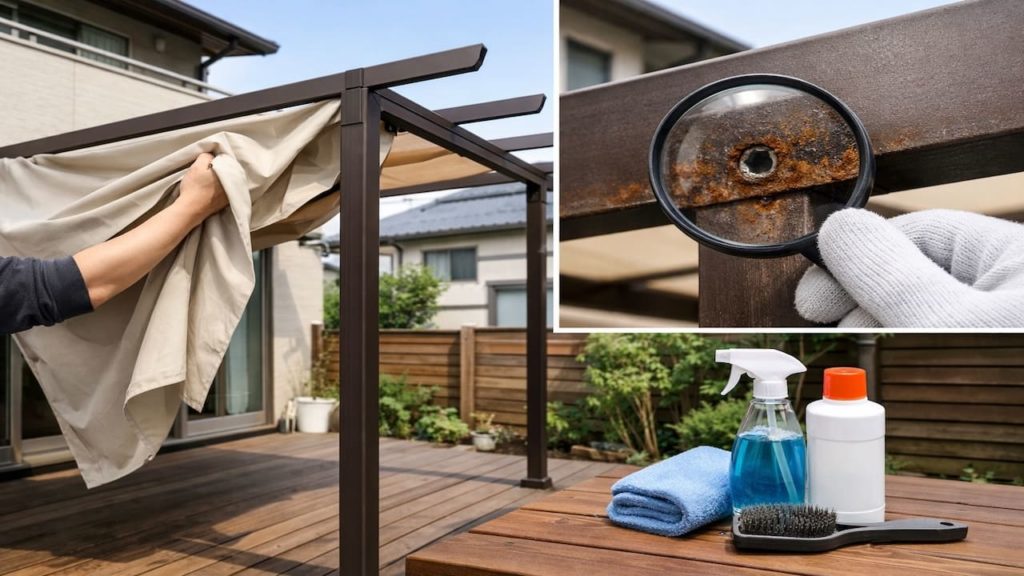
You spot tiny lines of dirt on a pergola post, then you start worrying about termites. That worry is fair, because they do not announce themselves until damage shows up.
In Japan, warm humidity and long wet stretches can keep wood damp near the ground. The risk depends on soil contact, hidden moisture, and small gaps that let them travel unseen.
In this guide, you’ll learn how to check pergola termite risk in Japan fast. You’ll spot the early signs, fix the weak points, and know when it is time to call help.

Hi, I’m Ken — I’m Japanese, and I live in Malaysia long-term, so I explain everyday life in Japan from a practical ‘from abroad’ perspective.
I hold a building design qualification and I’ve been on site for 20+ years across hundreds of jobs. I turn Japan’s unspoken rules into simple checks, so you can avoid costly mistakes and take the next step with clear actions that feel safe.
1. Pergola termite risk: 5 checks in Japan
Most termite problems start at the base and stay quiet.
You do not need a microscope, you need a routine. In Japan, tight yards and wet ground can keep post bases damp longer than you think. Bad sign. Start with the lowest parts, then move up only after the base looks clean.
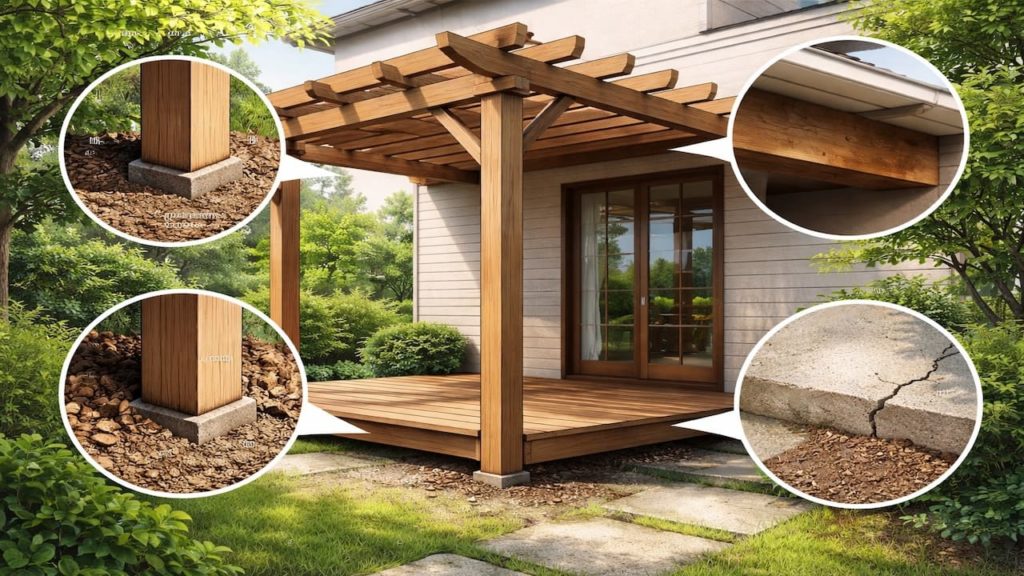
- Check post bases for soil contact or splashback
- Look under decking for damp spots near posts
- Inspect edges for mud tubes or sand-like pellets
- Probe wood with screwdriver for soft crumbly sections
- Track any winged swarms around lights at night
It is easy to say “my pergola is outside so it is safe” and move on. Outside wood still needs a dry break from soil — that is the whole game. If you do these checks monthly, you catch risk before it becomes repair work.
2. Soil contact damp and gaps
Soil contact plus damp gaps is a termite invitation.
Termites love hidden routes, and a wet post base gives them cover. In Japan, rain splash and summer humidity can keep the bottom 10 cm wet even on sunny days. Moist base. Gaps around brackets, caps, and cracked end grain can also hold water and feed staining that masks early damage.
- Measure clearance between wood and ground after rain
- Remove leaves mulch that keep soil wet
- Seal gaps around brackets where water pools
- Check gravel grade so runoff flows away
- Add a drip edge to stop beam runoff
Some folks focus only on chemicals and skip the basics. If wood keeps touching wet soil — the colony does not care what you sprayed last week. Fix contact and drainage first, then treat what is exposed. That order saves money and stress.
3. Why termites target pergola posts
Posts give termites cover and steady moisture paths.
Subterranean termites travel from soil, then move into wood through protected routes. In Japan, many termite prevention methods focus on soil-side entry routes, because that is where the traffic starts. Same logic. If a post base stays damp, the wood stays easier to chew and the risk rises.
Soil and perimeter zones are treated as key entry areas in Japanese termite control standards. According to hakutaikyo.or.jp.
- Understand termites enter from soil not the air
- Spot hidden moisture paths from joints and cracks
- Know sun-shade sides dry at different speeds
- Watch for contact points where vines touch wood
- Check stored lumber or cardboard leaning on posts
You might think termites only hit old houses, not a newer pergola. New wood still loses the fight if moisture stays trapped — age is not protection. Keep the base dry and exposed so you can see changes early. Visibility beats guessing.
4. How to cut termite risk around a pergola
Create a dry break and keep the base visible.
Your best defense is boring and effective: lift wood off soil, drain water away, and remove hiding spots. In Japan’s wet seasons, you want airflow and fast drying around every post. Dry zone. Basic sprays and wood preservatives often sit around ¥1,500–3,500 depending on size and type.
Typical retail prices for anti-termite sprays and wood protection products show up in this range. According to monotaro.com.
- Lift wood off soil using metal base hardware
- Dry the zone by improving drainage and airflow
- Treat vulnerable wood with labeled anti-termite coating
- Remove clutter that hides mud tubes and dampness
- Recheck monthly during warm wet seasons outside
Some people say “I will just watch it” and never touch the base area again. Watching is fine if you also make it inspectable — clear, dry, and reachable. If you find soft wood, mud tubes, or repeated dampness, stop guessing and get it checked. That is not drama, that is smart.
5. FAQs
Q1. Are termites common around pergolas in Japan?
They can be, because pergola posts often sit close to soil and stay damp. The risk is higher where airflow is weak and water splashes the base.
Q2. What is the fastest red flag to check?
Any wood touching soil is the quickest danger sign. Break that contact and the risk drops fast, even before you buy anything.
Q3. Do stains on the post mean termites?
Not always, stains can be runoff dirt or tannins. But stains often mean repeat wetting, and repeat wetting raises termite and rot risk.
Q4. Why do I see tiny dirt lines on wood?
That can be mud tubing or soil trails from insects — it can also be harmless splash marks. If it rebuilds after cleaning, treat it as a warning and inspect deeper.
Q5. When should I stop DIY and call a pro?
If the wood feels soft, the base connection is loose, or you see active tubes that keep returning, call help. Also call if you cannot safely access the joints and post bases.
Pro's Tough Talk

I’ve spent 20+ years working around Japanese homes, so I’ve seen what tends to work—and what tends to go wrong—in everyday use. Soil contact is a red carpet for termites. Moisture is an open bar.
Here’s the cold split: first, hidden damp makes wood easier to eat. Second, tight gaps and brackets create covered tunnels. Third, clutter blocks airflow and hides the early signs.
Break any wood-to-soil contact now.
Clean and dry the base zone today.
Add a metal base or barrier this weekend.
If you find soft wood or rebuilt tubes then stop and escalate. You sweep under the pergola and notice gritty dust piling by one post. You store a cardboard box there “for later,” then forget it until the corner looks suspicious.
Great, free roommates.
Summary
Check soil contact, dampness, and hidden gaps at the post base first. Those three decide most termite risk.
Create a dry break and keep the base area visible so you can inspect it fast. If signs keep returning after cleaning, treat it as active risk.
Do the base check today and break soil contact. Then keep going with drainage and airflow improvements so your pergola stays boring in the best way.