You see the forecast, then you look at your pergola and feel that gut drop. You do not want loose parts turning into flying junk.
In Japan, typhoon wind hits in pulses, and rain finds every tiny gap. A pergola can survive fine, but only if you remove sail-like parts and lock movement.
In this guide, you’ll learn how to prep your pergola for a typhoon step by step. You’ll remove what catches wind, tighten what walks loose, and secure the frame so it stays put.

Hi, I’m Ken — I’m Japanese, and I live in Malaysia long-term, so I explain everyday life in Japan from a practical ‘from abroad’ perspective.
I hold a building design qualification and I’ve been on site for 20+ years across hundreds of jobs. I turn Japan’s unspoken rules into simple checks, so you can avoid costly mistakes and take the next step with clear actions that feel safe.
1. Pergola typhoon prep: 5 steps to secure it
Secure the pergola by removing wind catchers first.
Most typhoon damage starts with one loose part that flaps, then rips something bigger. In Japan, narrow yards can funnel wind and make gusts hit harder than you expect—sudden spikes. Do the simple steps early, then stop going outside when it gets rough. Weather information and warnings update in stages, so do not rely on one screenshot. According to bousai.metro.tokyo.lg.jp.
- Take off shade cloth and store it indoors
- Tighten corner bolts and recheck bracket plates
- Lock moving louvers or panels to stop flapping
- Add temporary straps to reduce frame racking
- Clear loose items nearby that can slam posts
You might think the pergola is heavy, so it cannot move. Wind does not need to lift it, it just needs to shake it until something gives. Do these five steps in order, then recheck once, then quit. The goal is less motion, not perfection.
2. Remove cloth lock bolts
Remove any cloth because it turns your pergola into a sail.
Shade cloth, curtains, and mesh screens catch wind and yank on rails and fasteners. That load spreads into joints, then bolts start to work loose—tiny at first. In Japan’s wet season, damp fabric also stays heavy and flaps harder when gusts snap it. Simple rule: if it can flap, it can break.
- Remove fabric panels and roll them dry
- Unhook bungees so they do not whip
- Pad rub points where rails touch brackets
- Use locking pins so sliders cannot shift
- Tape loose end caps so water cannot enter
People say “it is tied down, so it is fine.” Tied down often means more tension on the frame, and tension plus gusts is how holes get oval and parts crack. Take the cloth off, then lock the rails, then you cut most of the risk. Fast win.
3. Why typhoons loosen pergola hardware
Typhoon vibration makes fasteners walk loose over time.
Wind hits, the frame flexes, then it snaps back, over and over. That repeated movement acts like a tiny wrench on nuts and screws—slow creep. In Japan, humid summers swell wood and change clearances, so joints that felt tight in spring can shift later. Small gaps matter. Once a joint moves, water enters, and the cycle accelerates.
- Wind pulses twist posts and rack the frame
- Vibration loosens nuts when washers are missing
- Water wicks into cracks and swells wood fibers
- Gusts slap panels and enlarge screw holes
- Debris impact chips paint so rot starts
You might blame “cheap hardware” and give up. Hardware quality matters, but most failures are setup issues: missing washers, uneven torque, and no locking method. Fix the movement and the loosening stops. Then the pergola stays quiet and stable.
4. How to secure it before the wind ramps up
Lock bolts and add temporary restraint to stop racking.
Start at the base, because if the base shifts, everything above it gets stressed. Secure it now—before the rain starts, because tools and ladders become dumb ideas in gusts. Basic supplies like straps, extra washers, and threadlocker often cost ¥500–3,500. Bring items that can blow away indoors or fasten them down tight. According to nic-nagoya.or.jp.
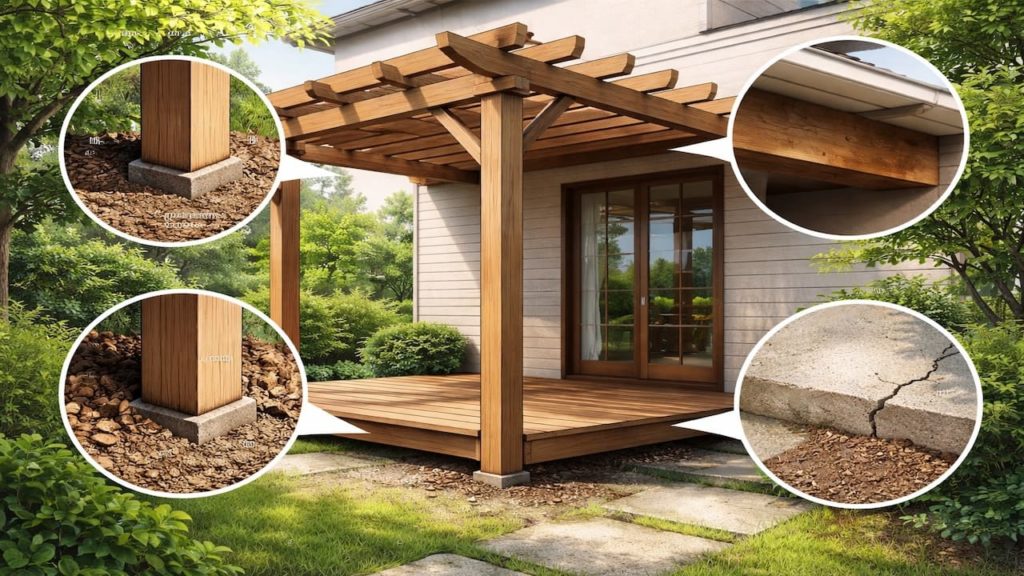
- Inspect base anchors and tighten to firm contact
- Add diagonal bracing strap across two corners
- Lock bolts with threadlocker or double nuts
- Cover exposed end grain and seal small cracks
- Do a final shake test then stop
You might think you have time and wait until the wind “actually starts.” That is how you end up outside in the worst timing, rushing, dropping tools, and skipping steps. Do your prep early, then stay inside when conditions degrade. If the frame still wobbles after bracing and bolt locking, treat it as a structural issue and escalate.
5. FAQs
Q1. Do I really need to remove shade cloth every time?
Yes if a typhoon-level wind is expected, because cloth loads the frame like a sail. If removal is impossible, roll it tight, strap it, and accept higher risk.
Q2. What is the single most important check?
Break the wind catchers and lock the moving parts. That means remove cloth, stop sliding rails, and secure anything that can flap.
Q3. When should I stop working outside?
When gusts start pushing you off balance, stop—no hero moves. Do the prep early in the day, then stay in.
Q4. Are ratchet straps safe on a pergola?
They can be, if you protect edges and do not crush thin members. Use padding at contact points and tighten just enough to reduce sway.
Q5. What signs mean I should call a pro afterward?
If you see shifted bases, new cracks at joints, or bolts that will not hold torque, get it inspected. Also call if the roof frame looks racked or twisted after the storm.
Pro's Tough Talk

I’ve spent 20+ years working around Japanese homes, so I’ve seen what tends to work—and what tends to go wrong—in everyday use. Typhoon prep is boring on purpose. Skip it and the wind will “decorate” your yard for you.
Three ugly causes, every time. First, fabric and loose panels catch wind and multiply the load. Second, vibration loosens hardware and the joint starts sliding like a drawer with broken rails. Third, water gets into cracks and the wood swells, like a sponge that never fully dries.
Remove the cloth right now.
Lock and tighten the bolts today.
Strap the corners this weekend.
If it still sways after bracing then stop and get help. You know the moment: the forecast updates, your phone buzzes, and you suddenly remember the pergola curtain you left out. Another moment: you hear banging at night and realize the “secured” panel is still slapping the frame.
Bro, you trying to gift-wrap your pergola for the wind?
Summary
Remove cloth and lock movement first, because wind load grows fast. Then tighten corners, brace against racking, and stop once it is stable.
Do it early and do it in order, because working outside in gusts is a trap. If the frame still wobbles after prep, treat it as structural and escalate.
Do the cloth removal and bolt lock today. Then keep reading and pick the next maintenance check while the weather is calm.