You hear the wind forecast and suddenly your pergola feels like a question mark. You want it safe before the storm, not after a bolt snaps.
In Japan, gusts can surge between houses and hit harder than you expect. Wet weather also hides problems because everything looks “fine” until joints start moving.
In this guide, you’ll learn how to secure a pergola before storms. You’ll check anchors, braces, and joints in a clear order so you stop wobble and stop worry.

Hi, I’m Ken — I’m Japanese, and I live in Malaysia long-term, so I explain everyday life in Japan from a practical ‘from abroad’ perspective.
I hold a building design qualification and I’ve been on site for 20+ years across hundreds of jobs. I turn Japan’s unspoken rules into simple checks, so you can avoid costly mistakes and take the next step with clear actions that feel safe.
1. Pergola wind safety: 5 checks before storms
Do these checks early while the yard is calm.
Storm prep is not a heroic last-minute sprint—do it before rain makes tools slippery. In Japan, wind often arrives in pulses, so a small looseness becomes a loud shake fast. No guessing. Watch official warnings and act before conditions turn unsafe. According to bousai.go.jp.
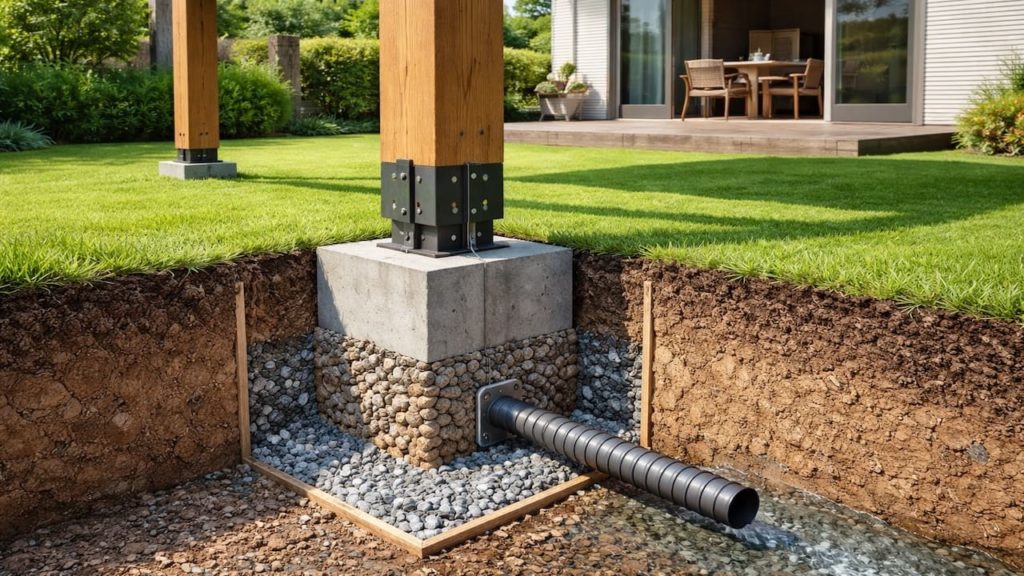
- Check post bases for movement or widened holes
- Check corner joints for gaps and shifting plates
- Check braces for slack and rubbing contact points
- Check roof members for flapping or lift points
- Check nearby loose items that can strike posts
You might think one quick glance is enough, then call it “safe.” Wind finds the weak detail you ignored, like one loose nut hidden behind a vine. Do the five checks in order, then recheck the worst joint once. Calm beats panic.
2. Anchors braces and joints
Anchors and joints fail first when the frame starts racking.
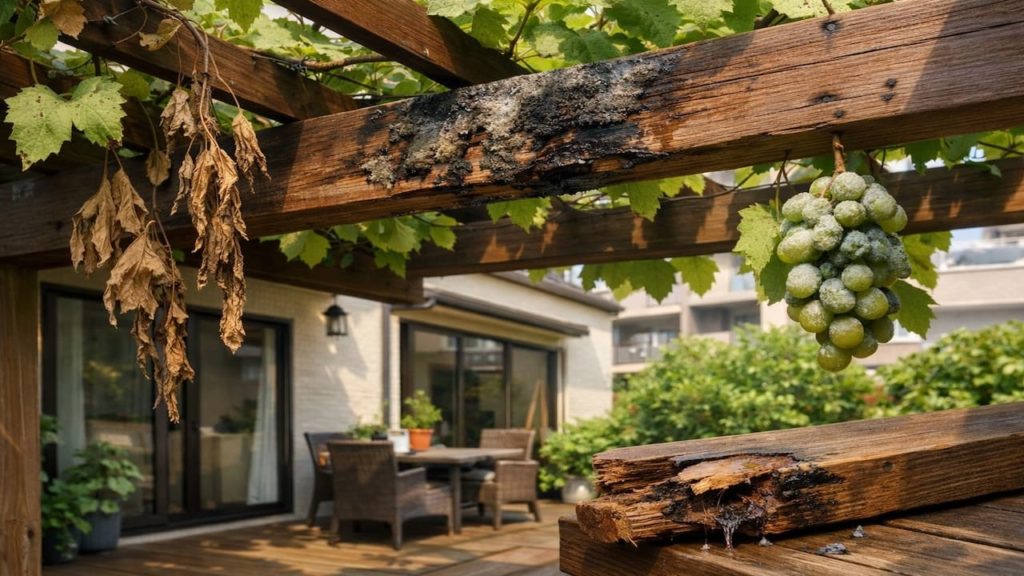
Anchors take the first punch, joints take the twist, and braces decide whether the frame keeps its shape—simple physics. In Japan, narrow side yards can funnel wind, so the pergola gets a sideways shove, not just a top-down push. One loose anchor changes everything. If you see rust, oval holes, or crushed wood fibers, treat it as real movement, not “cosmetic.”
- Inspect anchor bolts for rust and thread damage
- Check washers are present under bolts and nuts
- Check brace ends for tight contact at both sides
- Check brackets are not bent or separating edges
- Check screws are not backing out of members
Some people only tighten the loud joint and ignore the base. That is backwards, because a shifting base makes every joint above it fight harder. Tighten from the ground up, then confirm braces are actually resisting sway. Strong structure is boring, and boring is good.
3. Why storms make pergolas loosen over time
Repeated gusts act like a slow wrench on hardware.
Wind pushes, the frame flexes, then it snaps back, and that cycle repeats until fasteners creep loose—vibration does not need permission. Japan’s humid summers swell wood, then winter dryness shrinks it, so holes and joints change fit across seasons. Movement memory. Once parts start rubbing, coatings wear, moisture enters, and looseness accelerates.
- Gust pulses twist posts and pry joint plates
- Seasonal swelling changes bolt tension and clearances
- Rubbing wears paint and invites water into seams
- Loose panels amplify force like a sail effect
- Small gaps grow when bolts work back and forth
You might blame “cheap materials” and give up. Sometimes it is cheap, but most of the time it is a missing washer, uneven tightening, or no bracing against racking. Fix the mechanism and the loosening slows down. Then the pergola stops talking in the wind.
4. How to secure your pergola before a storm
Lock movement and reduce wind load in one pass.
Start by removing anything that flaps, then tighten anchors, then add temporary restraint where sway starts—do not jump around. In Japan, sudden showers can cut your work window short, so plan a clean sequence and finish early. Basic supplies like straps, washers, and threadlocker often cost ¥500–4,000. Keep footing safe, keep ladder time short, and never work outside once gusts feel unstable. According to jma.go.jp.
- Remove cloth panels and store them indoors
- Tighten base anchors evenly with matching washers
- Add diagonal strap to reduce corner racking
- Lock sliding parts so nothing can flap loose
- Shake test the frame then stop working
You might want to keep tightening until it “feels perfect.” Over-tightening can crush wood fibers or deform thin brackets, and that creates new looseness later. Secure the big movements, confirm the braces bite, then quit while it is still safe outside. If it still wobbles after bracing, treat it as structural and escalate.
5. FAQs
Q1. What should I secure first when a storm is coming?
Remove anything that flaps, like cloth panels, loose screens, or lightweight roof pieces. Then move to base anchors and corner joints, because they carry the main loads.
Q2. How do I know if my pergola is actually unsafe?
Visible wobble at the base or widening joint gaps is a real warning. If bolts will not hold tight or the frame racks with a firm push, stop using it and get it checked.
Q3. Can I do storm prep during the rain?
If the ground is slick or gusts are pushing you off balance—stop. Do prep early, because wet tools and ladders turn small tasks into injury risks.
Q4. Are temporary straps a legit solution?
Yes, if you pad contact points and tighten only enough to reduce racking. Straps are a short-term brace, not a substitute for damaged hardware.
Q5. What should I check right after the storm passes?
Look for shifted bases, new cracks at joints, and bolts that backed out. Also check for bent brackets and fresh rub marks that show new movement.
Pro's Tough Talk

I’ve spent 20+ years working around Japanese homes, so I’ve seen what tends to work—and what tends to go wrong—in everyday use. Wind doesn’t “test” your pergola, it interrogates it. One weak joint and it starts singing.
Here’s the cold breakdown. Loose anchors let the whole frame dance, like a loose tooth that never settles. Braces that are slack are just decoration, and joints that rub will wear through coatings and invite moisture. Nobody’s “bad” here, it’s just physics doing what physics does.
Now remove anything that flaps or catches wind.
Today tighten anchors and corner joints in order.
This weekend add a brace or strap across corners.
If the frame still racks after bracing then stop and call it structural. You know the scene: you hear banging at night and realize one panel is still slapping the beam. Or you step outside after the storm and the post base looks slightly shifted, like it tried to walk.
Seriously.
Summary
Check anchors, braces, and joints before storms, not during them. Remove flappy parts first, then tighten from the base up.
Add bracing to stop racking and do one final shake test, then stop working outside. If wobble stays, treat it as structural and escalate.
Do the five checks today while the yard is calm. Then keep the pergola inspectable so your next storm prep is fast and clean.