Winter hits and your pergola starts aging in slow motion. Fabric gets stiff, metal gets spots, and small issues turn into spring repairs.
In Japan, winter means wet cold air, freeze-thaw in some areas, and long stretches where things stay damp. If you store fabric wrong or ignore early rust, you pay for it later.
In this guide, you’ll learn how to store and protect a pergola for winter. You’ll remove fabric the right way, prevent rust and rot, and set a quick check routine that makes spring easy.

Hi, I’m Ken — I’m Japanese, and I live in Malaysia long-term, so I explain everyday life in Japan from a practical ‘from abroad’ perspective.
I hold a building design qualification and I’ve been on site for 20+ years across hundreds of jobs. I turn Japan’s unspoken rules into simple checks, so you can avoid costly mistakes and take the next step with clear actions that feel safe.
1. Pergola winter storage tips: 5 checks
Do a short winter check now to avoid spring surprises.
Winter storage is mostly about removing wind-catching parts and stopping trapped moisture—Japan’s damp air loves to linger in tight yards. Simple prep. Do it once, then you only need quick rechecks after storms.
- Remove fabric panels and store them fully dry
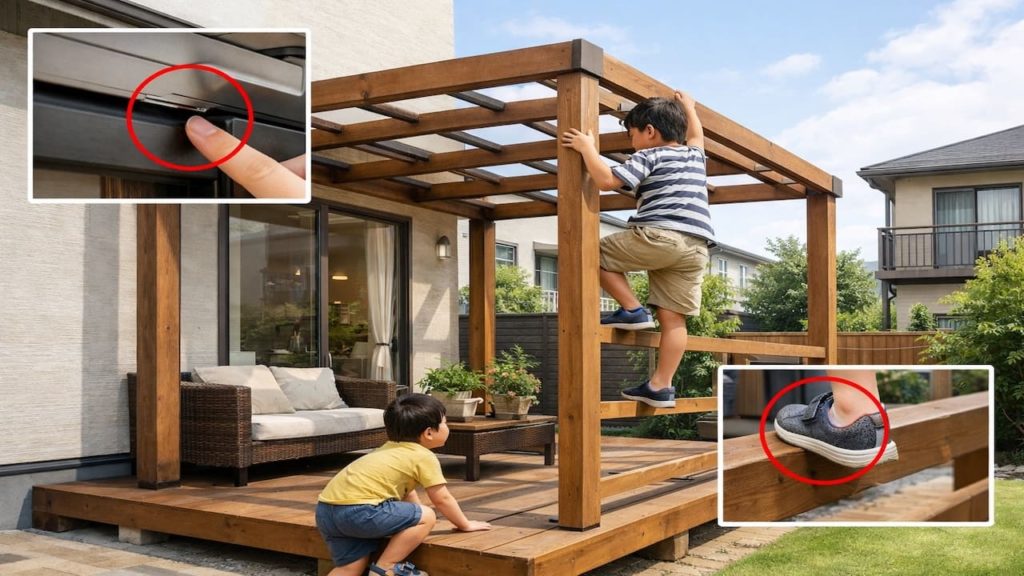
- Check bolts and brackets for looseness and wobble
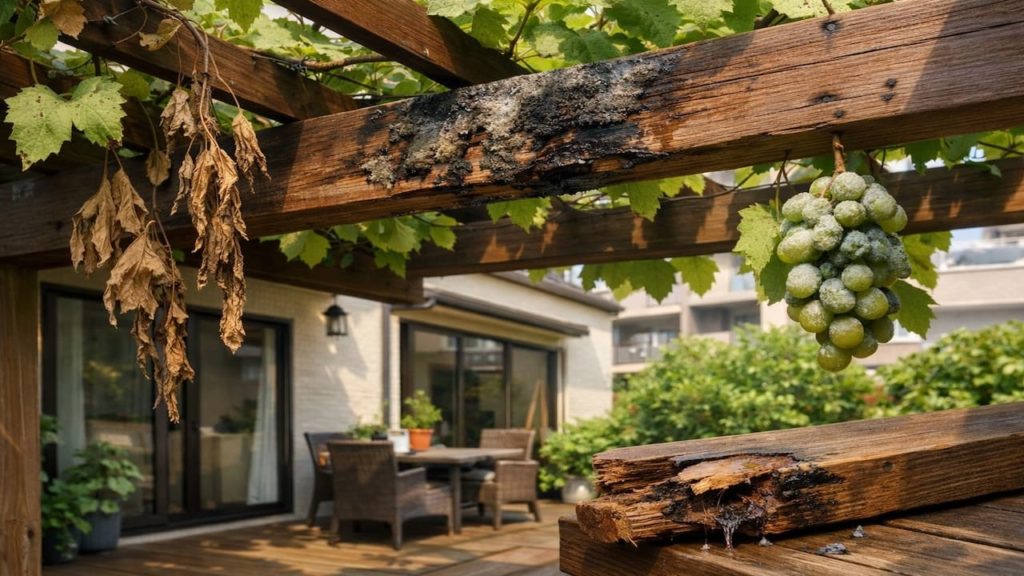
- Check roof members for pooled water and leaf mats
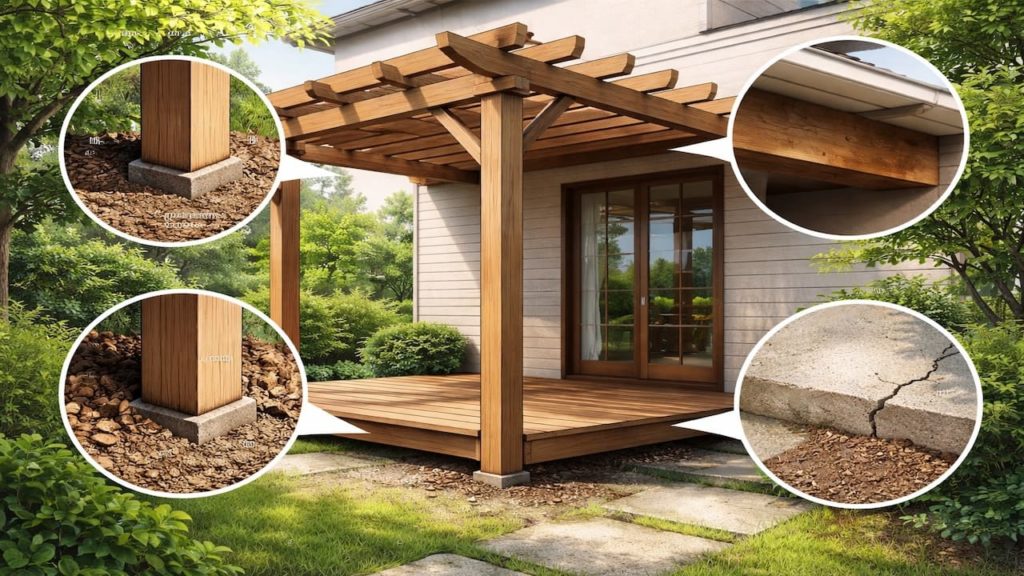
- Check posts for splashback stains and damp bases
- Check metal for early rust spots and scratches
You might think winter is “off season” so you can ignore it. That is how rust blooms under dirt and fabric mildews in storage. Do the five checks and you control the season. Boring wins.
2. Fabric removal and rust
Fabric must come off dry or it will mildew and weaken.
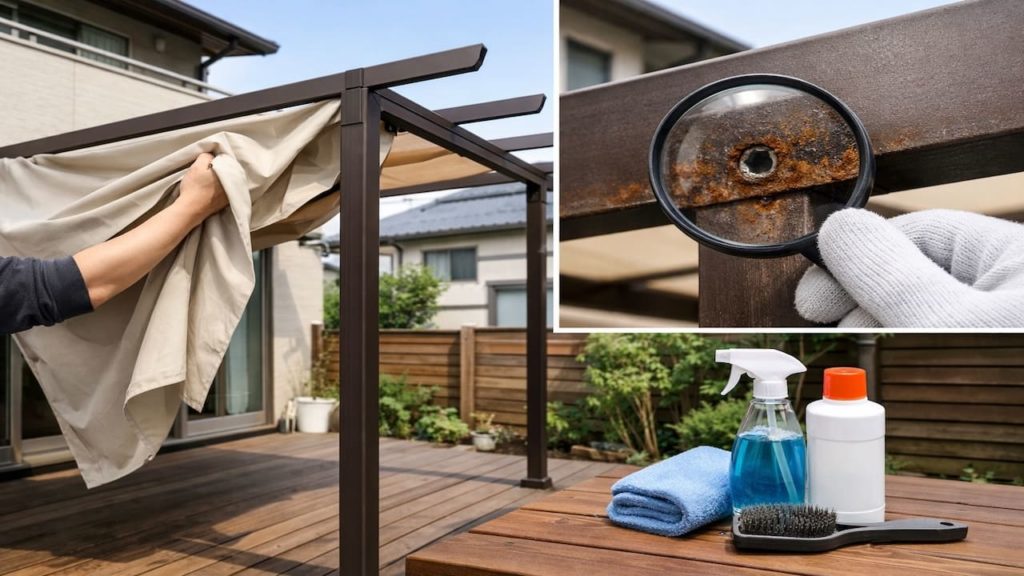
Shade cloth and curtains hold moisture, and Japan’s winter air can keep them damp for days, especially near walls. If you store fabric while even slightly wet, mildew sets in and fibers lose strength. Rust also starts where water sits under hardware, then creeps under paint. Quiet spread.
- Remove fabric before rain and let it dry flat
- Brush off pollen and dust before folding it
- Store fabric in breathable bag not sealed plastic
- Wipe metal dry where fabric touched brackets
- Spot treat rust and seal scratches before winter storms
Some people roll fabric up and leave it on the pergola “tight.” Tight still traps moisture, and the roll becomes a mildew tube. Pull it off, dry it, store it right, and your spring setup stays smooth. Easy prevention.
3. Why winter makes pergolas age faster
Winter damage comes from moisture that never fully dries.
Cold damp air slows drying, so water sits longer in joints and on flat surfaces. In Japan, wind-driven rain can push water into small seams, then it stays there because sun hours are low. Long damp time. Metal corrodes faster where coatings are scratched, and wood fibers stay swollen, then shrink again when dry days hit.
- Moisture sits in bracket seams and bolt pockets
- Leaves trap water and stain roof and beams
- Freeze thaw expands tiny cracks in some areas
- Salt air accelerates corrosion on coastal hardware
- Stored fabric holds damp and grows mildew inside
You might think winter is only a problem in snow regions. Damp is enough, even without snow, and most Japanese yards have shaded corners that never dry fully. Deal with moisture paths and you block most winter wear. Simple physics again.
4. How to store it clean and restart easy
Clean, dry, protect, then schedule one midwinter check.
Start with a rinse and gentle scrub, then dry the structure before you cover anything. Apply a light protective step: touch-up paint on metal scratches, seal end grain on wood, and add a thin lubricant on moving parts if you have them. Basic supplies often cost ¥500–3,500, and the cost is mostly time/effort if you already have tools. If you use any rust remover or paint, ventilate and follow the label for safe handling. According to epa.gov.
- Wash grime off and dry joints and seams
- Clear leaves so water cannot pool on members
- Touch up scratches to block rust spread
- Seal end grain and cracks to reduce soaking
- Recheck after the first big winter storm event
People love to cover everything and forget it. A cover can trap moisture if airflow is blocked, so do not wrap it like a gift. Keep airflow and visibility, and do one quick recheck midwinter. That makes spring a quick wipe, not a rebuild.
5. FAQs
Q1. Should I remove shade cloth every winter?
Yes, removing it prevents mildew and reduces wind load during storms. If you cannot remove it, at least roll it dry and keep it ventilated, but risk stays higher.
Q2. What is the biggest winter rust trigger?
Water sitting in seams and scratches is the main trigger. Drying and touching up small scratches early stops rust from creeping under paint.
Q3. Can I store fabric in a plastic bag?
Only if it is fully dry, and even then it can trap residual moisture. A breathable bag is safer, because it reduces mildew risk during damp months.
Q4. Should I cover the pergola with a tarp?
A tight tarp can trap moisture and rub the finish in wind. If you cover anything, allow airflow and secure it so it cannot flap and wear the surface.
Q5. When should I do the next check after winter prep?
After the first strong winter storm, do a quick look at anchors, joints, and any pooled water spots. Then one midwinter check is usually enough.
Pro's Tough Talk

I’ve spent 20+ years working around Japanese homes, so I’ve seen what tends to work—and what tends to go wrong—in everyday use. Winter storage is not glamorous, it’s just damage prevention. Ignore it and spring will hand you a list.
Cold breakdown: fabric holds moisture and turns into a mildew sandwich. Rust starts at scratches and hides under dirt like it’s sneaking past security. And leaf mats trap water so long that the metal has time to regret its life choices.
Remove and dry the fabric right now.
Wipe metal seams and touch up scratches today.
Do one recheck after the next big storm.
If rust grows or fabric smells musty then reset and dry harder. You pull the cloth out in spring and it has that sour closet smell. You look at a bracket and the rust spot doubled, like it was breeding quietly all winter.
Nice, you raised rust as a pet.
Summary
Remove fabric, clear debris, and dry the structure before winter settles in. Then spot-protect scratches and seams so rust cannot start.
Do one quick recheck after a winter storm and keep airflow around the pergola. If you trap moisture under covers, you create the very damage you fear.
Do the fabric removal and scratch touch-up today. Then keep the routine simple so spring restart feels effortless.