You live in a rental with tatami, and you want to keep your deposit safe.
The tricky part is knowing what counts as normal wear versus avoidable damage, especially in Japan’s humid seasons.
In this guide, you’ll learn rental-safe tatami care that protects your deposit with simple habits that fit small Japanese rooms and rainy-season moisture.

Hi, I’m Ken — I’m Japanese, and I live in Malaysia long-term, so I explain everyday life in Japan from a practical ‘from abroad’ perspective.
I hold a building design qualification and I’ve been on site for 20+ years across hundreds of jobs. I turn Japan’s unspoken rules into simple checks, so you can avoid costly mistakes and take the next step with clear actions that feel safe.
1. Tatami in rental homes: 5 tips
Document condition early and keep daily care gentle so blame stays clear at move-out.
Rental tatami problems usually come from small habits repeated for months—wet wiping, blocked airflow, and leaving futon flat all day. Japan’s rainy season makes floor-level air feel heavy, so odors and damp marks show faster than you expect. Photo proof plus light care keeps you calm.
Normal aging and ordinary wear are generally not treated as tenant-paid restoration in the standard guideline. According to Source.
- Take move-in photos of every tatami seam
- Note existing stains on a dated memo
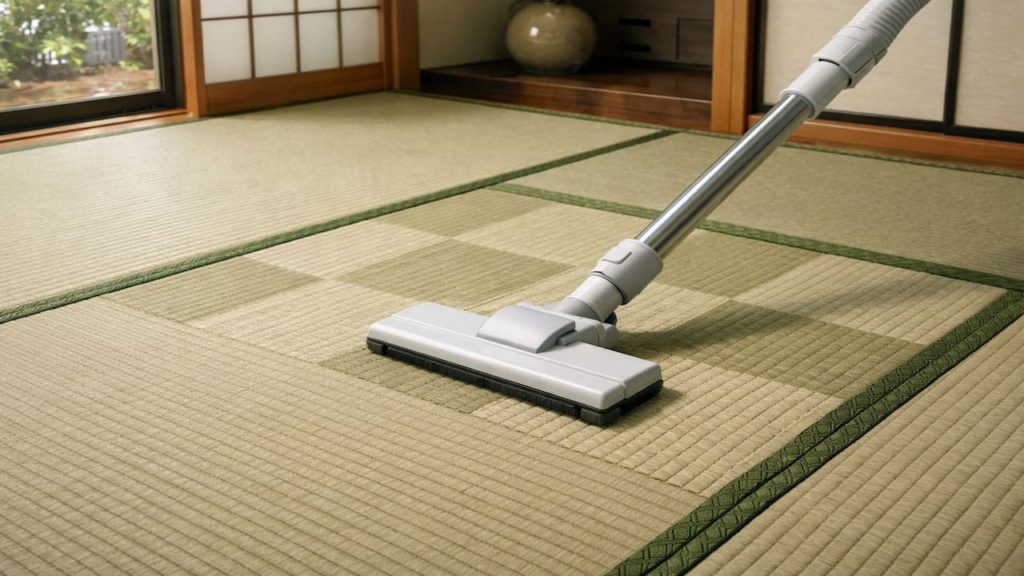
- Vacuum gently along weave once per week
- Stand futon up to air the surface
- Keep rugs off tatami during humid months
You might feel silly taking photos, but it saves arguments later. If you treat tatami like a sponge and keep it dry, you reduce “new damage” risk. Deposit safety.
2. Care that stays safe for your deposit
Avoid water-heavy cleaning that can trigger mold because slow drying looks like damage.
Tatami absorbs water fast, and rentals often have tight airflow near the floor. In Japan, condensation mornings and rainy evenings can slow drying, so a “quick wipe” can turn into a musty patch. Clean dry first, then use minimal moisture only when needed—simple and safe.
Wet wiping is commonly discouraged because tatami retains moisture and can grow mold. According to Source.
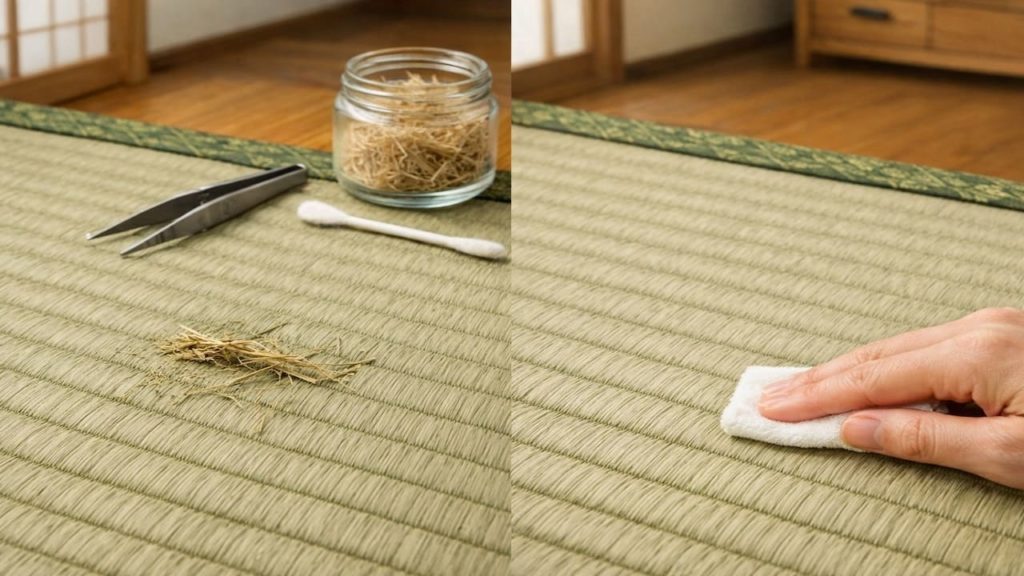
- Dry wipe dust using a soft cloth
- Blot spills fast using paper towels only
- Dab stains using a well wrung cloth
- Dry the area using fan for 20 minutes
- Air closets daily to release trapped damp
It is tempting to scrub hard, but that can raise fibers and make a pale ring. If you keep moisture low and finish with airflow, the room stays neutral and the tatami stays even. Low-risk care.
3. Why deposits get tricky with tatami wear
Tatami hides moisture damage until move-out and then the story gets messy.
Normal wear looks even, while damp trouble looks patchy and smells worse after rainy days in Japan. If a futon blocks airflow, the underside can stay cool and slightly wet, even when the top feels dry. That creates odor, spotting, and edge discoloration that looks “sudden” at the end.
- Compare center color with edge color shift
- Smell near wall line after wet weather
- Check corners for cool clammy surface feel
- Lift one corner and test underside dryness
- Notice odor spikes after indoor laundry dries
You may think one cleaning day will fix it—usually it will not. Moisture patterns build quietly, then show up when you pack and lift furniture. Humidity logic.
4. How to keep tatami rental-safe all year
Use a weekly loop that prevents damp cycles so you avoid surprises at inspection.
Make the room breathe without turning it into a cold box, especially during Japan’s rainy season. Keep bedding off the floor after waking, swap air in short bursts, and dry the floor line with a fan. cost is mostly time/effort. Routine wins.
- Stand futon up right after waking daily
- Vacuum along weave with beater brush off
- Open windows briefly when rain eases outside
- Run fan low across floor for 10 minutes
- Keep one clear lane to reduce grit wear
You might worry this is too strict, but it is lighter than fighting mold later. If the room stays dry to the touch, tatami odor stays mild and inspections go smoother. Quiet prevention.
5. FAQs
Q1. What tatami issues usually risk a deposit deduction?
Stains and damage that look avoidable can be questioned—like deep spills left untreated or pet claw tears. Normal fading from sunlight is different, but always keep your move-in photos.
Q2. Is it safe to use a wet cloth on tatami in a rental?
Use it only when necessary, and wring it hard so it is almost dry. Finish with airflow so Japan’s humid air does not leave a damp patch behind.
Q3. What is the safest daily habit for tatami rooms?
Stand the futon up and let the floor breathe. Even 5 minutes of air swap helps in small Japanese apartments.
Q4. Can I use deodorizer spray to keep the room fresh?
Skip it if you can, because perfume can mix with damp odor and feel heavier. Remove the source, then dry the room gently.
Q5. What should I do before move-out inspection?
Vacuum along the weave, dry the room, and take fresh photos in daylight. Do not do last-minute wet cleaning that might leave rings.
Pro's Tough Talk

I’ve been on site for 20+ years. I’ve worked on hundreds of jobs. Rental tatami is not scary, but Japan’s humid season makes lazy habits look expensive.
Here are the 3 causes. People “clean” with water and leave it behind. People trap air by leaving futon flat and closets sealed. People wait until move-out week and then panic like it’s a quiz.
Now the 3-step fix. Take photos on day one. Keep tatami dry with short airflow and a fan. Blot spills fast and stop rubbing like you’re polishing a car.
Dry beats deep clean for deposit safety because moisture damage grows in silence. Tatami is like a sponge wearing a suit. A closet is like a damp lunchbox.
Yeah, keep wet-wiping tatami and watch your deposit do a disappearing act.
Summary
In rental homes, tatami care is about gentle cleaning, dry habits, and clear proof.
If you control moisture and keep airflow steady in Japan’s humid seasons, you prevent most “sudden” stains and smells—before they become a deposit fight.
Take move-in photos and run the weekly loop and you can enjoy tatami without worrying every time the contract ends.