You vacuum your tatami and suddenly see fuzz, streaks, or loose fibers.
That usually happens when the head moves across the weave, pushes too hard, or drags grit in Japan’s humid seasons.
In this guide, you’ll learn how to vacuum tatami along the weave without damage with simple checks, gentle pace, and a room routine that keeps dust low.

Hi, I’m Ken — I’m Japanese, and I live in Malaysia long-term, so I explain everyday life in Japan from a practical ‘from abroad’ perspective.
I hold a building design qualification and I’ve been on site for 20+ years across hundreds of jobs. I turn Japan’s unspoken rules into simple checks, so you can avoid costly mistakes and take the next step with clear actions that feel safe.
1. Tatami vacuum direction: 5 checks
Vacuum with the weave so the fibers stay calm.
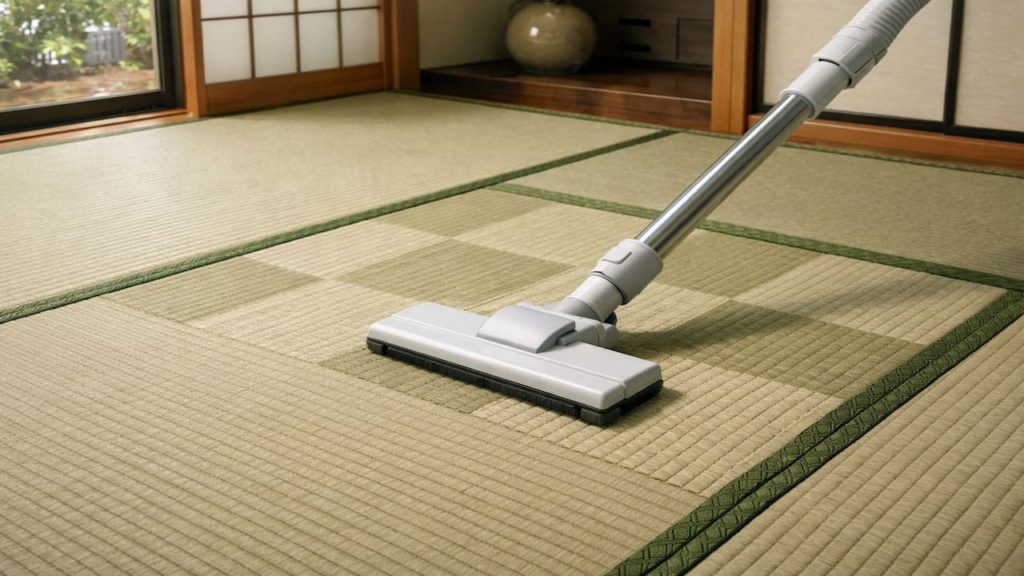
Tatami is woven igusa, so direction matters more than on wood floors. In Japan, summer humidity makes dust stick, while winter dryness makes fibers feel lighter. A fast cross-pass can catch the weave and lift fuzz—then the surface looks tired. Vacuum along the tatami grain with light pressure, and stop brush rotation if you can. According to Source.
- Find the weave lines with your fingertips first
- Vacuum along the weave from long side
- Move the head slowly with light pressure
- Lift the head at seams before turning
- Check each mat because directions can differ
You might think a stronger push cleans better. It often does the opposite, because the head rides over dust and tugs fibers. Do one gentle pass, then a second gentle pass in the same direction. Quiet results.
2. Clean the weave without pulling fibers
Slow repeats beat one aggressive sweep.
On tatami, the point is to lift fine dust from between strands without scratching the surface. Quiet dust. Japan’s small rooms trap lint from futons, clothes, and skin flakes, so the load can be heavier than you expect. Go from long side to long side along the grain, then move back and forth a few times—don’t take it all at once. According to Source.
- Use a non spinning head or gentle mode
- Start near the window and work inward
- Overlap strokes slightly to avoid vacuum stripes
- Vacuum borders lightly to protect the cloth
- Finish with brief ventilation in rainy season
It is tempting to scrub with the nozzle when you see crumbs. That friction can fray the weave and leave shiny tracks. If something is stuck, lift it with tape or fingers, then vacuum gently again. No wrestling.
3. Why vacuuming across the weave causes fuzz?
Cross strokes turn the head into a tiny rake.
The vacuum head has edges and wheels that grip when they move against the weave. Friction. Add grit and you get a sanding effect that lifts micro fibers, and Japan’s dry winter days can make those lifted fibers stand up more. Once fuzz starts, it also catches more dust, so the cycle feeds itself.
- Look for fuzzy spots where you turned fast
- Check seams where the head catches edges
- Notice stripes when you changed direction mid pass
- Feel for roughness near heaters in winter
- Compare under futon areas for dust buildup
Some people blame old tatami, but even new mats can fuzz if the direction is wrong. The weave is the rule, not your mood. If you keep strokes aligned, most surfaces stay smooth for years—no drama. Simple physics.
4. How to vacuum tatami correctly every week
Pick one direction per mat and stay consistent.
Make it a weekly habit, and do a quick lighter pass after humid nights in Japan when futon lint builds up. Short routine—done. If you are not buying anything new, cost is mostly time/effort. Keep the door cracked or a fan on low so dust does not hang in the air.
- Open windows for 5 minutes before vacuuming
- Remove futon and shake it outside first
- Vacuum one mat at a time along weave
- Turn at edges by lifting the head
- Store the nozzle clean so grit stays away
You may try to vacuum faster to save time, then end up doing damage control later. Keep the pace slow and the pressure light, and you will finish sooner overall. If the room is very humid, add one more ventilation step after. Steady habits.
5. FAQs
Q1. Which way is the tatami weave direction?
Follow the visible lines and vacuum parallel to them. Use your hand to feel which way is smoother, then move the head in that same direction. If mats alternate direction, treat each mat separately.
Q2. Should I use the rotating brush on tatami?
Rotating brushes can grab the weave and raise fuzz. If your head has a brush-off switch, use it. If not, keep pressure very light and move slower.
Q3. How often should I vacuum tatami in rainy season?
Once a week is fine for most rooms, but add a quick pass if futons are used daily and the air feels sticky—humidity makes dust cling. Rainy season. Ventilate briefly after to help the mat stay dry.
Q4. What if I already pulled fibers and see fuzz?
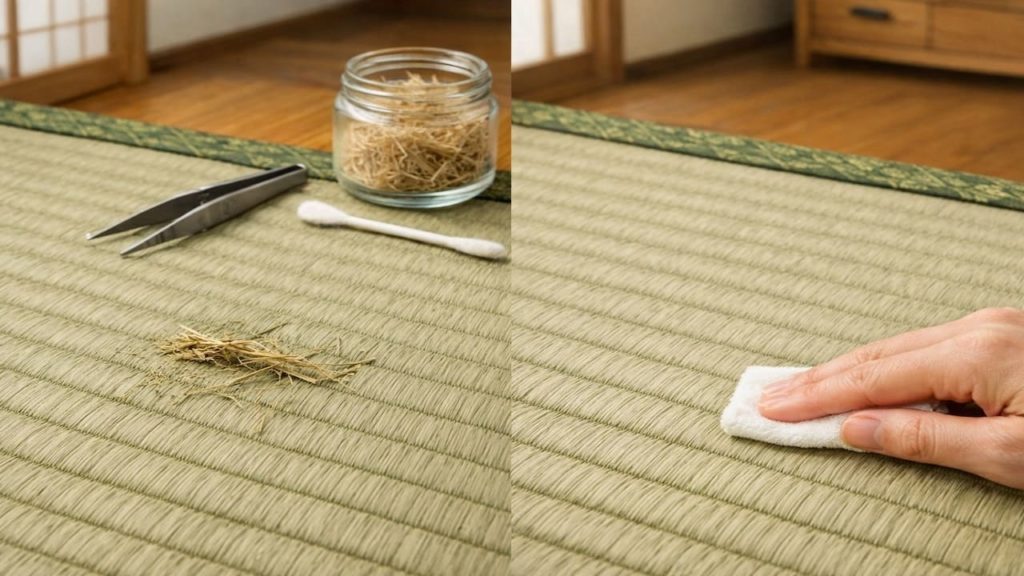
Stop aggressive vacuuming and switch to gentle strokes along the weave. Pick off loose fuzz with your fingers or low-tack tape, then vacuum lightly again. Avoid wet wiping unless needed.
Q5. Can I vacuum mold on tatami?
No, vacuuming can spread spores through the air. Dry the area, wipe carefully, and handle mold separately before normal cleaning. If growth is wide, get help.
Pro's Tough Talk

I’ve been on site for 20+ years. I’ve worked on hundreds of jobs. Japan’s humid summers and dry winters both mess with tatami if you bully it.
Three causes, clean and cold. One, you vacuum across the weave because you are in a hurry. Two, you press down like you are sanding a deck. Three, your nozzle is full of grit, so every pass is a scratch test.
Do it in this order. Find the smooth direction per mat. Lift at seams and edges. Clean the nozzle, then do two slow passes. You hear the head catch on the seam and yank it back anyway. You do a quick clean before guests and leave zebra stripes.
Go with the weave and let the vacuum do the work. Tatami is like hair, brush it the wrong way and it throws a tantrum. Your nozzle is like a skate blade, smooth when clean and savage when dirty.
Yeah, keep vacuuming sideways, champ.
Summary
Consistency. Vacuum parallel to the weave and keep pressure light, especially in Japan’s humid season.
If you see fuzz or stripes, your direction or turning technique is the issue—fix the contact points at seams first. Treat each mat separately and lift the head when you turn.
Stay consistent with weave direction every week and keep the room ventilated so tatami stays smooth, clean, and comfortable. Keep learning small tatami habits that match your season and room.