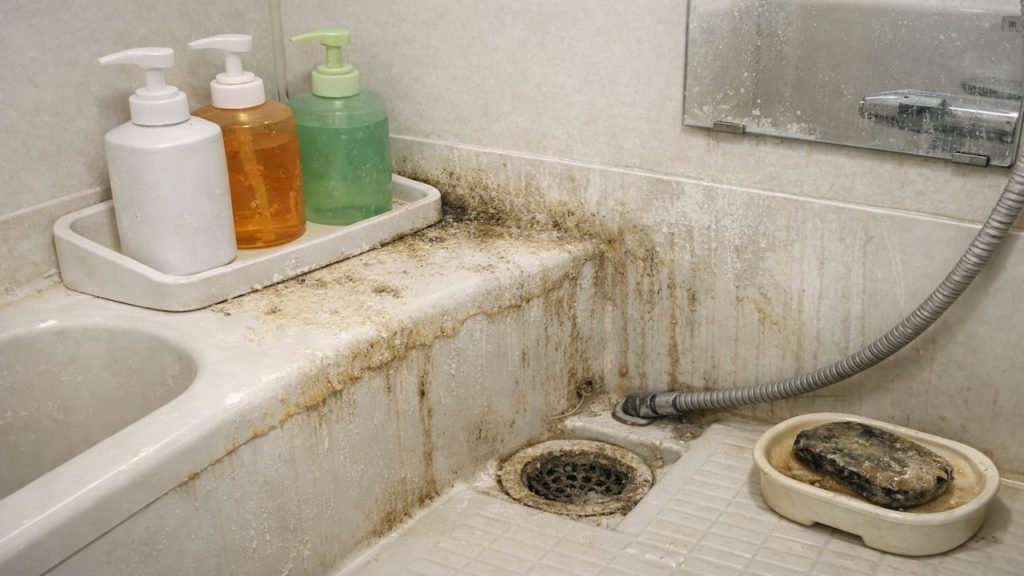
You scrub the unit bath, rinse, and it still feels slick. That never-clean feeling.
In Japan, many bathrooms are compact unit baths with smooth surfaces and tight airflow. During humid seasons, leftover foam dries slowly and turns into a stubborn film.
In this guide, you’ll learn why shampoo film keeps coming back and how to confirm the cause in minutes. You’ll also learn a safe reset routine that fits small Japanese bathrooms and daily ventilation habits.

Hi, I’m Ken — I’m Japanese, and I live in Malaysia long-term, so I explain everyday life in Japan from a practical ‘from abroad’ perspective.
I hold a building design qualification and I’ve been on site for 20+ years across hundreds of jobs. I turn Japan’s unspoken rules into simple checks, so you can avoid costly mistakes and take the next step with clear actions that feel safe.
1. Unit bath shampoo buildup: 5 Checks
You can stop the slick feeling by doing five quick checks before you scrub harder.
In a typical Japanese unit bath, surfaces are non-porous, so residue sits on top and spreads. Thin film. One missed rinse can dry into a layer—then every shower adds more. Start with checks that remove what your eyes miss.
- Rinse walls and ledges with hot water
- Scrub silicone seams with soft brush and soap
- Wash bottle bottoms and rack with dish soap
- Clear drain hair catcher and rinse trap
- Run bathroom ventilation fan for 2 hours
You might think “I clean weekly, so this can’t be it.” Weekly works only if you remove the daily film first. If the slickness returns in one day, it is not your effort. It is the rinse, airflow, and touch points.
2. Why it feels never clean
If the tub feels greasy after rinsing, you are fighting residue not dirt.
Shampoo and body wash leave surfactants that cling to skin oils, then grab dust and hair. The film feels “soapy,” but it is really product plus body oil—so it smears when you rinse. Early wiping keeps residue from hardening. According to Mr Muscle. Ventilation and drying modes common in Japanese baths change how fast that layer sets. According to Japan Mobility.
- Rub a wet fingertip along the tub edge
- Check slippery spots near the shampoo shelf
- Look for dull haze under bright bathroom light
- Smell the drain cover for sour notes
- Touch silicone corners for tacky residue feel
You may blame hard water or “cheap shampoo” right away. Those can matter, but the feeling usually comes from where foam dries, not what brand it is. Pattern clues. Fix the pattern first.
3. Why shampoo film sticks in a unit bath
The buildup happens because foam dries in layers in the spots you never rinse well.
Unit-bath shelves, rails, and bottle rings create tiny dams that trap rinse water and product. In Japan’s warm and humid months, that trapped mix dries slowly and turns sticky. A small door gap is not enough. Your ventilation fan may be running, but the filter and airflow path decide the real drying speed—quietly.
- Reduce bottle count on the shower shelf
- Keep shampoo pumps from dripping after use
- Rinse corners with a cup of water
- Wipe ledges with cloth before leaving bathroom
- Open the door slightly after fan starts
You might say “I rinse everything with the shower head.” The shower head often misses the underside of racks and the back corners. Back corners. Target those traps, and the whole bath feels cleaner.
4. How to remove shampoo buildup without scratching
A gentle reset works when you dissolve then wipe, instead of grinding the surface.
Use warm water, a mild cleaner, and a soft tool, then finish with a full rinse and dry. Basics. If you need supplies, keep it simple at ¥100–500 for basic items like a sponge and cleaner. Do one focused session, then switch to a tiny daily wipe—your Japanese unit bath will stay smooth longer.
- Soak surfaces with warm water for 3 minutes
- Spray mild cleaner and wait 2 minutes
- Wipe shelves and seams with soft sponge
- Rinse twice until water feels squeaky clean
- Dry ledges with towel and start ventilation
You may worry that cleaners will damage coatings or make it worse. Strong chemicals and rough pads are the real risk, not steady gentle wiping. If the film returns fast, you skipped the dry step. Drying removes the last surfactant layer that keeps attracting dirt.
5. FAQs
Q1. Is it okay to use hot water every time?
Yes, hot water helps soften residue in a unit bath—just avoid scalding temperatures on sensitive parts. Warm rinse beats cold rinse when you want the surface to stop feeling slick.
Q2. Should I leave the ventilation fan on all day?
In many Japanese apartments, the fan is meant to run long hours, especially in humid seasons. If noise is an issue, run it at least after bathing and until the walls feel dry.
Q3. Why do bottle bottoms get so sticky?
Drips collect under the bottle, then dry into a ring that glues itself to the shelf. Bottle rings. Wipe the bottoms once a week and keep a small tray you can rinse.
Q4. Can I use vinegar or baking soda?
They can help some residue, but test a small spot first and never mix them with other cleaners. If you hate the smell, skip it and use a mild bathroom spray instead.
Q5. When should I call maintenance or a pro?
If the surface stays slimy even after a full reset, check if the drain is backing up or the ventilation is weak. If you see leaks, loose caulk, or recurring mold, get help before it spreads.
Pro's Tough Talk

I’ve spent 20+ years working around Japanese homes, so I’ve seen what tends to work—and what tends to go wrong—in everyday use. I’ve been on site for 20+ years. I’ve worked on hundreds of jobs. In the rainy season, that “clean” film can turn into a slip hazard fast.
Cause 1: you rinse the front, but the shelf underside stays coated, like syrup on a plate. Cause 2: bottle rings keep feeding fresh drips, like chewing gum on a shoe. Cause 3: weak airflow lets surfactants dry instead of wash away. You rinse, it squeaks for one second, then feels slick again. Your shampoo bottle leaves a sticky halo on the ledge.
Now, rinse the traps, not the whole room. Today, wipe the ledges before you step out. This weekend, deep-clean the rack and drain.
Stop polishing the film and remove it with soak then wipe, then dry like you mean it. If you did this and it still fails, next is checking the ventilation fan filter and airflow path. That is the hidden switch most people ignore.
No, your hands are not a scrub brush. Keep scrubbing blind and the unit bath will keep laughing at you.
Summary
Do the five checks: rinse traps, clean touch points, clear the drain, and run ventilation. Dry surface, clean feel.
If it still feels greasy after a full reset, suspect airflow or hidden drip points—then inspect the fan filter and shelf underside. Airflow reality.
Tonight, do one warm rinse and one quick wipe, then start the fan. Small daily wipes beat big weekend scrubs, so browse related bathroom habits and keep the routine light.


