Your unit bath smells clean for five minutes, then the odor creeps back. That “almost fresh” feeling is the worst.
In Japan, compact unit baths trap steam and tiny residues in drains, gaskets, and shelves. In rainy season humidity or winter condensation, smells stick around longer.
In this guide, you’ll learn how to make freshness last without blasting perfume. You’ll learn quick checks and habits that fit Japanese bathrooms and daily ventilation routines.

Hi, I’m Ken — I’m Japanese, and I live in Malaysia long-term, so I explain everyday life in Japan from a practical ‘from abroad’ perspective.
I hold a building design qualification and I’ve been on site for 20+ years across hundreds of jobs. I turn Japan’s unspoken rules into simple checks, so you can avoid costly mistakes and take the next step with clear actions that feel safe.
1. Unit bath deodorizing: 5 Tips
The clean smell lasts when you remove the odor source instead of covering it.
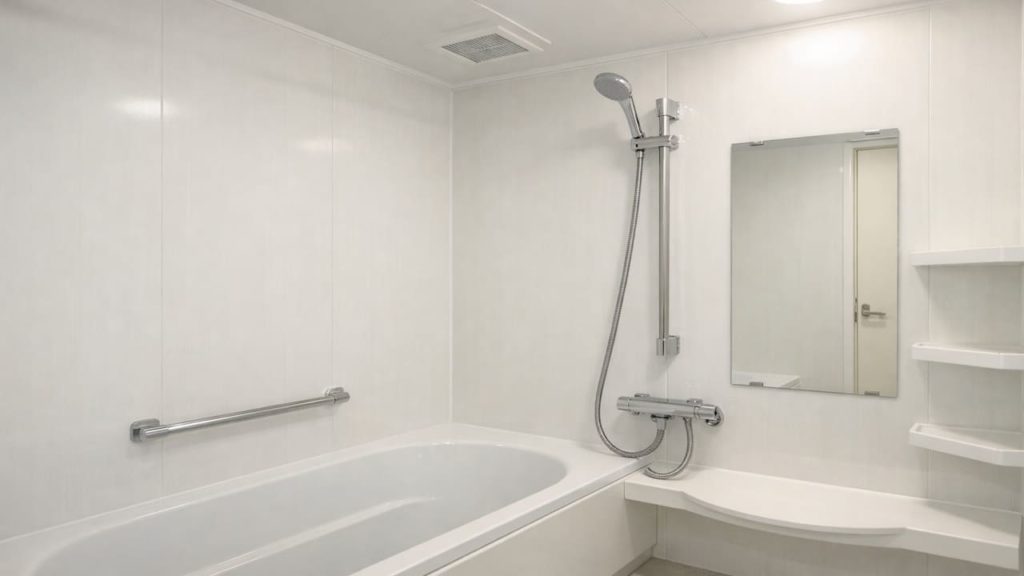
Most unit bath odors are a mix of damp air, drain gases, and invisible soap film. In Japanese rentals, airflow is often limited, so the same corners stay humid and keep feeding smell. Source first, scent second. Freshness.
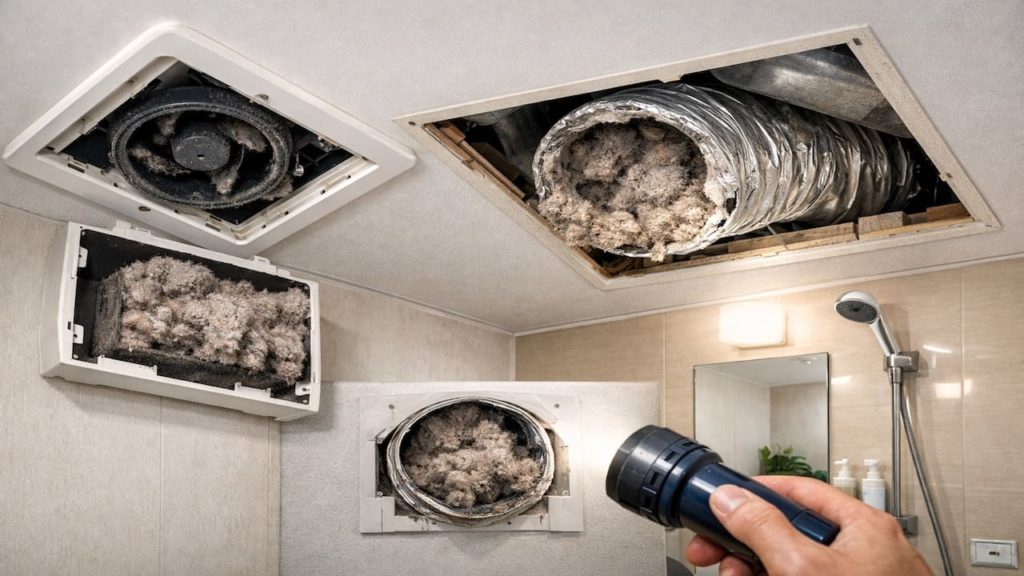
Ventilation and drying after bathing are commonly emphasized in bathroom care guidance. According to Panasonic.
- Run fan during shower and 60 minutes after
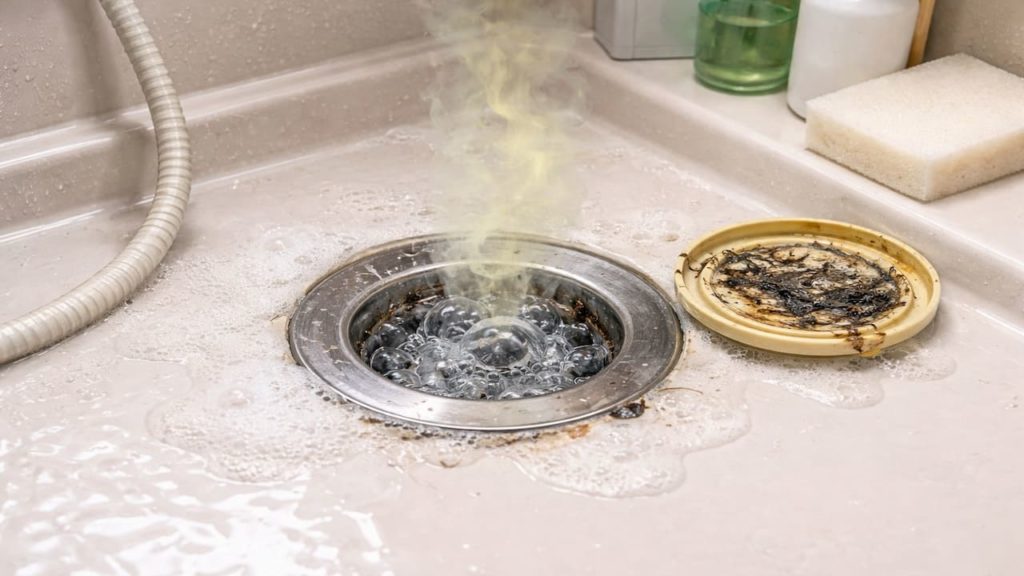
- Rinse drain cover and hair catcher daily
- Wipe door gasket line after the last shower
- Wash bottle bottoms and shelf tray weekly
- Dry ledges with towel to stop damp film
You might think deodorizing means buying sprays. Sprays work for guests, not for daily life. In Japan’s small unit baths, leftover moisture will defeat fragrance fast. Beat moisture, then your bathroom finally stays neutral.
2. Make the clean smell last
You keep the clean smell by keeping surfaces truly dry between showers.
Odor returns when water sits in seams, corners, and drain parts even after “cleaning.” In Japanese unit baths, the mirror may clear while the gasket stays wet and slimy. A short dry finish changes everything—especially in humid seasons. Drying is deodorizing.
Mold and moisture cleanup guidance stresses controlling moisture and improving airflow. According to CDC.
- Crack the door for fan intake airflow
- Hang wet towels outside the bathroom overnight
- Keep bath mats dry and off the floor
- Clean the drain rim where slime clings
- Store bath items so air can circulate
You may feel like “it smells fine right now, so I’m done.” That’s the trap. In Japan, the odor often appears after the room cools and humidity settles. Make dryness your finish, and the clean smell stays.
3. Why unit bath odors come back
Odors come back because biofilm rebuilds quietly in the same hidden spots.
Hair and soap create a sticky layer, then bacteria feed on it and release odor compounds. The drain trap can also vent smell when water flow is weak or the rim is coated. In Japanese apartments, tight bathrooms mean small problems concentrate fast. Pattern logic.
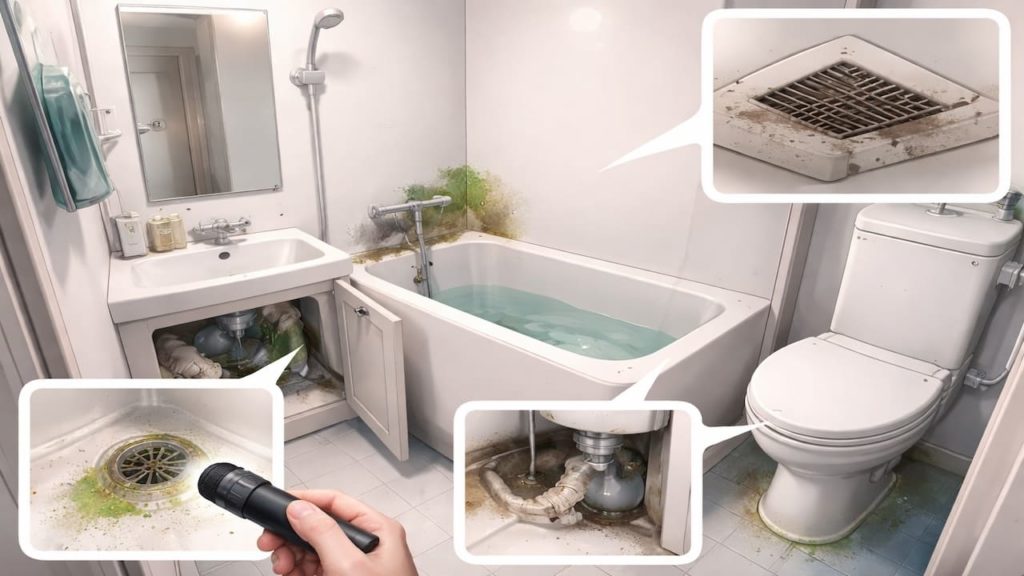
- Check for pink slime on gasket edges
- Smell drain after running warm water briefly
- Inspect shelf underside for sticky residue
- Touch corner seams for tacky damp film
- Listen for gurgling after water drains away
You might blame your shampoo or body wash. Sometimes fragrance mixes badly, sure. But the repeating odor is usually the same biofilm loop. Break the loop at the drain and gasket, and Japan’s unit bath smells normal again.
4. How to deodorize a unit bath without masking
The fastest deodorize method is clean then dry then ventilate in one short sequence.
Do one weekly reset with a mild cleaner, a soft brush, and a cloth, then finish with airflow control. For supplies, ¥300–1,500 is enough for a small brush, cloth, and basic cleaner in Japan. Keep it gentle so you do not scratch surfaces and create new grime traps.
- Remove bottles and rinse shelf tray thoroughly
- Scrub drain cover and rim with soft brush
- Wipe gasket line and corner seams carefully
- Rinse with warm water until slippery feel clears
- Dry ledges then run fan with door cracked
You may worry this sounds too simple to work. Simple works because it hits the sources that actually stink. In Japan’s compact bathrooms, drying and airflow are half the deodorizing. If the odor remains after this, you need to inspect deeper causes.
5. FAQs
Q1. Is it okay to use air freshener in a unit bath?
It is okay for short-term comfort, but it does not remove the source. Use it only after you clean and dry, or it will mix with damp odor.
Q2. Why does the drain smell worse at night?
As the room cools, moisture sits and odors become more noticeable. Night cooling. Running the fan longer after the last shower helps.
Q3. Should I pour hot water down the drain?
Hot tap water can help loosen residue, but avoid boiling water that may stress plastic parts. Pour slowly and re-check flow.
Q4. What is the quickest daily deodorizing habit?
Wipe the gasket and dry the ledges after the last shower, then run the fan. That habit cuts the damp film that keeps odor alive.
Q5. When should I ask maintenance for help?
If you smell sewage-like odor even after cleaning and drying, the issue may be deeper than surface biofilm. In rentals, report early if gurgling or backups appear.
Pro's Tough Talk

I’ve spent 20+ years working around Japanese homes, so I’ve seen what tends to work—and what tends to go wrong—in everyday use. I’ve been on site for 20+ years. I’ve worked on hundreds of jobs. In the rainy season, a “clean” bathroom can still smell damp.
Cause 1: drain rim biofilm, like jelly stuck under a plate. Cause 2: gasket slime, like a wet sponge sealed in a zipper bag. Cause 3: weak airflow, so moisture just keeps hanging around. You finish a shower, step out, and the mirror is clear but the corner seam is still wet. You lift the bottle tray and find a damp ring and do the slow blink.
Stop sniffing and start checking.
Rinse the drain parts and wipe the gasket.
This weekend, pull everything off shelves and reset.
Neutral is the goal, not “fragrance bomb,” and your unit bath should smell like nothing. If you did this and it still fails, next is checking the drain trap seal and ventilation fan suction. That’s the line between routine stink and a real fix.
Yeah, the bathroom is not supposed to smell “like a bathroom.”
Summary
Make the smell last by removing drain and gasket sources, then drying the ledges and running ventilation. In Japan’s unit baths, moisture control is the main deodorizer.
If odor returns after a proper reset, use a clear rule: sewage-like smell, gurgling, or recurring damp corners means you investigate the trap and airflow. Do not keep spraying and hoping.
Tonight, do one quick rinse, one gasket wipe, and a longer fan run after the last shower. Keep it neutral and consistent, then browse more unit bath habits that keep the whole room stable.