You finish a shower, step out, and the unit bath smells damp within minutes. It feels unfair because you were just trying to get clean.
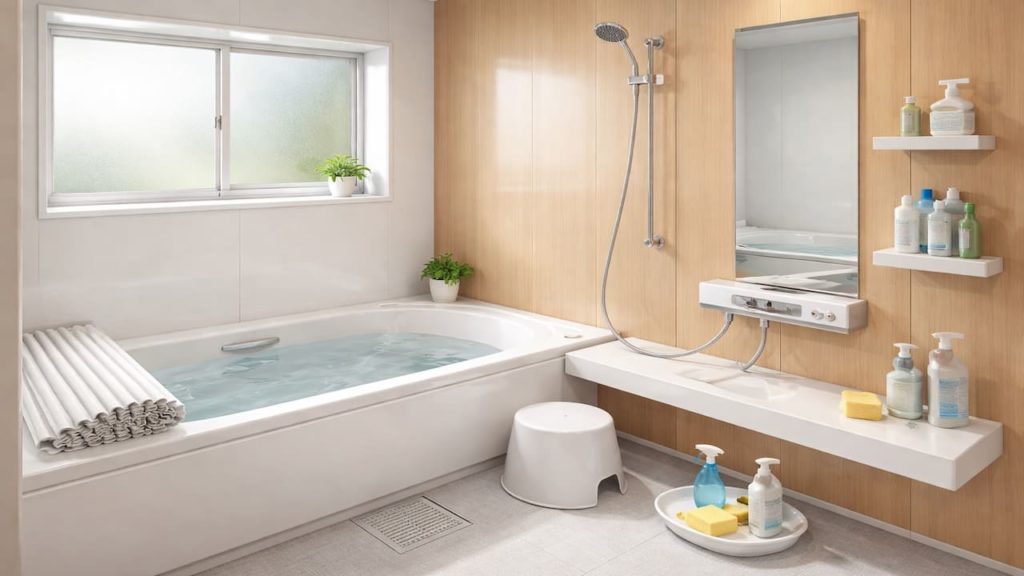
In Japan, unit baths are compact and sealed, so steam condenses fast and clings to seams and drain parts. During rainy season humidity or winter condensation, the damp smell builds even faster.
In this guide, you’ll learn a fast drying routine you can do every time without turning it into work. You’ll learn 5 steps that fit Japanese unit baths so the clean smell lasts longer.

Hi, I’m Ken — I’m Japanese, and I live in Malaysia long-term, so I explain everyday life in Japan from a practical ‘from abroad’ perspective.
I hold a building design qualification and I’ve been on site for 20+ years across hundreds of jobs. I turn Japan’s unspoken rules into simple checks, so you can avoid costly mistakes and take the next step with clear actions that feel safe.
1. Unit bath smells after shower: 5 Steps
The smell drops fast when you remove water before it sits in Japan’s humid air.
Damp odor is usually moisture plus leftover film on ledges, gaskets, and the drain rim. If you let water sit for 20–30 minutes, biofilm wakes up and smell blooms. In a Japanese unit bath, drying speed is the whole battle—small steps win. Two minutes.
- Rinse walls quickly to remove soap residue
- Squeegee walls once from top to bottom
- Wipe ledges and gasket line with towel
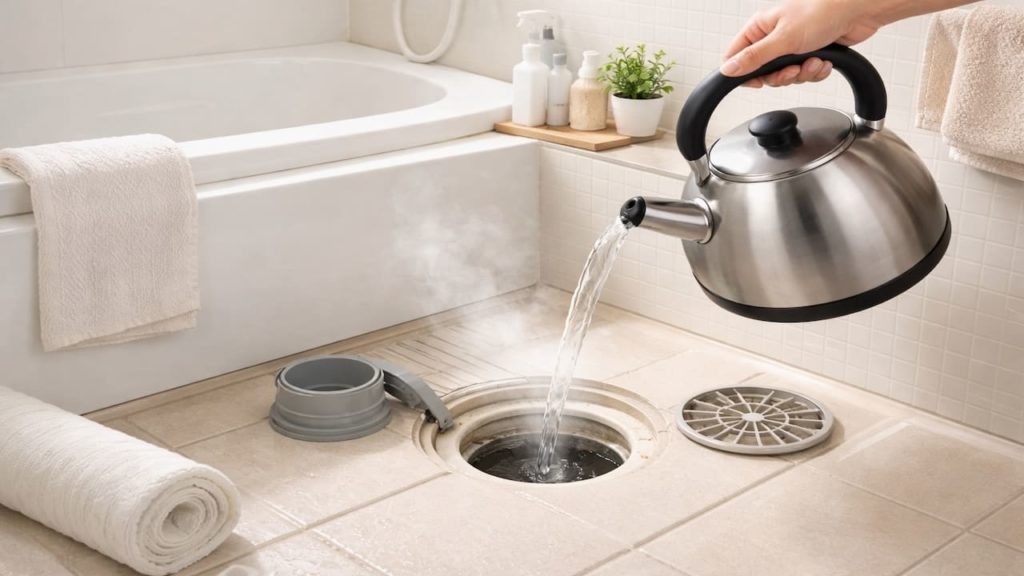
- Rinse drain cover area and remove hair
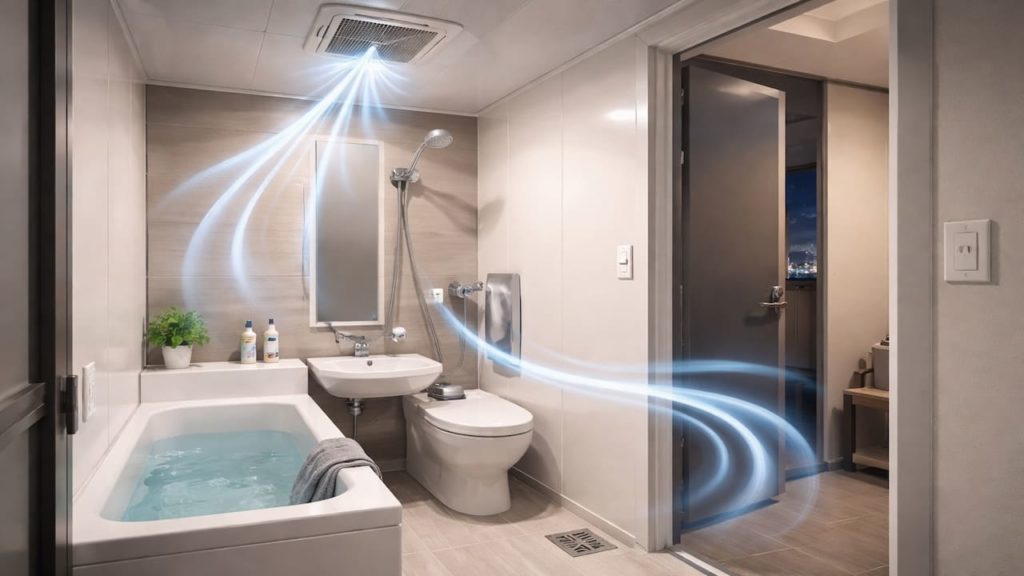
- Run fan with door cracked for intake air
You might think “I already ran the fan, so I’m done.” Fan alone can be too slow if water is still pooled on ledges and seams. Dry the traps first, then the fan actually finishes the job.
2. Dry it fast every time
You dry it fast when your hands follow a fixed route without thinking.
Decision fatigue kills routines, especially after a long day. In Japan’s small bathrooms, the route is short: wall → ledge → gasket → drain → fan. If you keep the same order, you finish before you can complain. Habit math. Neutral smell.
- Hang towel within reach before you shower
- Keep squeegee on hook near the door
- Start wiping from highest drip points first
- Finish with the drain rim and hair catcher
- Leave door open a finger width for airflow
You may worry this is “too much” for daily life. It is less work than re-cleaning slime later. In Japan’s rainy season, the routine pays you back in one week.
3. Why the unit bath smells right after showering
It smells because warm steam reactivates old residue and traps it in damp corners.
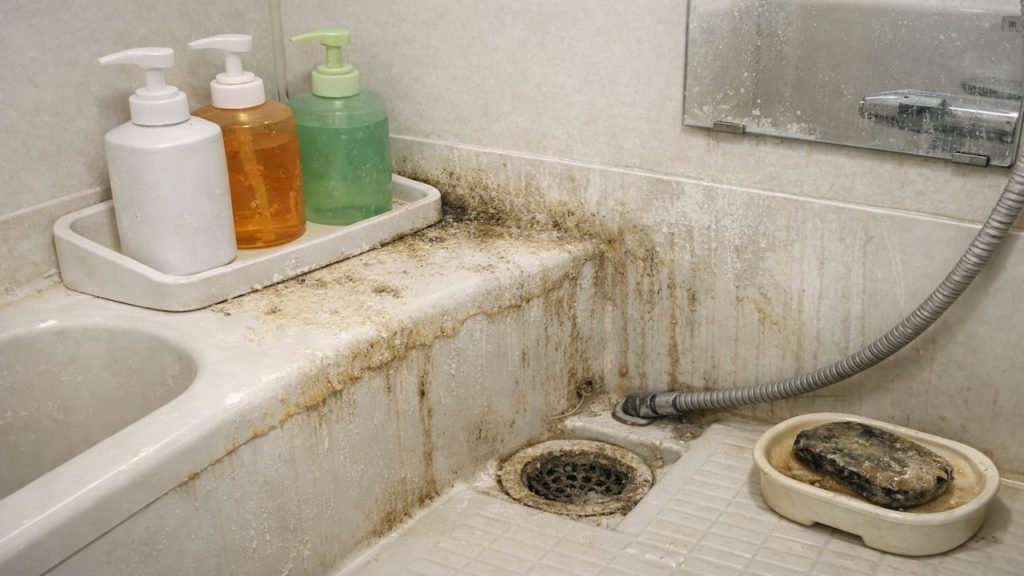
Even if the bathroom looks clean, a thin film on the drain cover, gasket, and shelf underside can hold odor. Warm water and steam amplify it, so you notice it right after showering. In winter, temperature gaps create heavier condensation, so everything stays wet longer. Same trigger.
- Smell near drain rim right after warm rinse
- Check gasket line for pink slime residue
- Touch corner seams for tacky damp film
- Inspect shelf underside for sticky drip rings
- Notice mirror edge staying wet the longest
You might blame the drain trap or the whole building. Sometimes that’s true, but most “after shower” odor is surface film plus slow drying. Fix the drying loop first, then you know what’s left.
4. How to stop damp smell after every shower
Stop the smell by combining mechanical wipe and airflow every time.
Do the same 5-step loop, then keep ventilation running long enough for the ceiling edge to feel dry. In Japan’s unit baths, small airflow changes matter, so crack the door for intake while the fan runs. cost is mostly time/effort. If you want it even easier, make one towel “bath finish towel” and use it only for ledges and gaskets.
- Rinse soap film off walls before drying
- Squeegee walls once to reduce drip volume
- Wipe ledges and gasket line until dry
- Clear hair and rinse drain rim briefly
- Run fan and crack door until air feels dry
You may feel like it still smells sometimes. That’s normal on heavy-humidity days in Japan. Stick to the loop and the smell window shrinks, then disappears for most days.
5. FAQs
Q1. How long should I run the fan after shower?
Many people do 30–60 minutes depending on humidity and season in Japan. If the ceiling edge still feels damp, run it longer or improve intake airflow.
Q2. Is leaving the door open always okay?
In some rentals, you may prefer privacy or rules. A small crack is often enough to help intake air while keeping the space mostly closed.
Q3. What is the one step that changes everything?
Wiping the ledges and gasket line dry changes everything because those spots stay wet the longest. Fan-only drying often misses them.
Q4. Why does it smell more in rainy season?
Outdoor humidity slows evaporation, so water stays on surfaces longer. That gives residue more time to release odor and grow slime.
Q5. When should I suspect a plumbing issue?
If you get sewage-like odor even when dry, or you hear gurgling and see slow draining, check the trap and flow. In rentals, report early if symptoms persist.
Pro's Tough Talk

I’ve spent 20+ years working around Japanese homes, so I’ve seen what tends to work—and what tends to go wrong—in everyday use. I’ve been on site for 20+ years. I’ve worked on hundreds of jobs. In tsuyu season, your “fresh shower” can turn into “damp towel vibe” in minutes.
Cause 1: you leave water on ledges, like leaving a wet cutting board in a closed drawer. Cause 2: gasket and drain film hold odor, like a sponge that never fully dries. Cause 3: fan runs with poor intake, like trying to dry laundry in a closet with the door shut. You finish showering and sniff the air like a detective. You step out, see the mirror clear, and still smell that damp note and go “why.”
Now squeegee once and wipe the ledges. Today clear hair and rinse the drain rim. This weekend do a quick weekly reset of gasket and shelf tray.
Dry the traps first then ventilate and the smell stops showing up after every shower. If you did this and it still fails, next is checking fan suction and the drain trap seal. That’s where routine ends and real fixing starts.
Seriously.
If you keep leaving puddles, the bathroom will keep leaving you that damp “welcome back” smell.
Summary
Do the 5 steps right after every shower: rinse, squeegee, wipe ledges and gasket, clear the drain rim, then ventilate with intake air. In Japan’s unit baths, speed is the deodorizer.
If smell persists despite fast drying, use a clear rule: sewage-like odor, gurgling, or slow draining means you check the trap and airflow next. That prevents endless guessing.
Tonight, run the loop once and stop at two minutes. Make drying your last habit, then browse more unit bath airflow and drain care routines to keep it effortless.