You press the unit bath fan button, and nothing happens. The air stays heavy, and the mirror fog hangs around.
In Japan, unit baths are compact and sealed, so one weak fan can make moisture and smells linger fast. In tsuyu humidity or winter condensation, the problem feels twice as bad.
In this guide, you’ll learn what to check in minutes before you call anyone. You’ll know if it is power, settings, or simple dust so you can act calmly.

Hi, I’m Ken — I’m Japanese, and I live in Malaysia long-term, so I explain everyday life in Japan from a practical ‘from abroad’ perspective.
I hold a building design qualification and I’ve been on site for 20+ years across hundreds of jobs. I turn Japan’s unspoken rules into simple checks, so you can avoid costly mistakes and take the next step with clear actions that feel safe.
1. Unit bath fan not working: 5 Checks
The fastest win is to confirm power and airflow basics before you assume the motor is dead.
Many “dead” fans are actually a timer setting, a tripped breaker, or a dust-choked cover. Japanese bathrooms collect fine lint and steam residue that turns into a sticky layer, and winter dust clumps fast—then the motor struggles. Check the obvious spots first so you do not pay for a five-minute fix.
Regular cleaning helps exhaust fans keep working efficiently. According to Panasonic.
- Check wall switch and any timer settings
- Confirm breaker and bathroom outlet power status
- Inspect fan cover for dust blocking airflow
- Listen for hum when you start the fan
- Test other modes like ventilation or drying
You might think the motor failed instantly. Often the fan is trying to start but cannot breathe because the cover is packed with lint. If you hear even a faint hum, treat it as “blocked or stuck” before “broken.”
2. What to try before calling
Try a quick reset routine to restart the fan safely without opening anything risky.
In many Japanese rentals, the control panel has modes that look similar, and a timer can end the run early without you noticing. Some fans also pause after overheating if airflow is blocked. A simple power cycle plus cover cleaning solves a surprising number of cases when the unit bath is used daily.
Basic troubleshooting starts with checking power and switches before assuming a fault. According to p-cube.panasonic.com.
- Reset timer to ten minutes and retry
- Turn off power then turn it on
- Clean intake grille with vacuum and soft brush
- Check remote panel for locked child settings
- Run fan with door cracked for intake
You may worry a reset is pointless. It is not pointless if the unit is stuck in a short timer, a wrong mode, or an overheat pause. Do this routine once—then call with clear facts if it still refuses to run.
3. Why unit bath fans stop working
Most “not working” cases are power control or airflow failure rather than a sudden mystery.
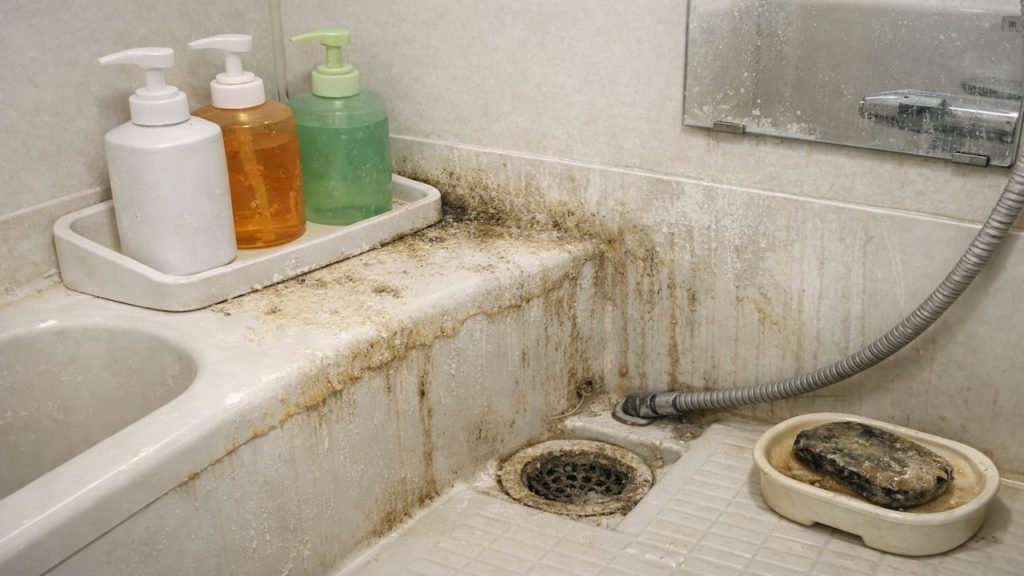
Japanese unit bath fans live in a wet environment, so dust and moisture combine into a paste that slows the blades. If the drain area is slow and steam lingers, the fan housing stays damp longer and collects film. Sometimes the wall switch is fine, but the fan is starved for air and trips its own protection. Predictable causes.
- Look for moisture condensation dripping near the grille
- Check if lint mat blocks the filter mesh
- Notice if fan stops after a few seconds
- Confirm lights work even when fan fails
- Compare sound now versus last month closely
You might blame the building age. Age matters, but the pattern usually shows itself in sound, airflow, and moisture behavior. If it runs weakly and then stops, airflow blockage is a prime suspect.
4. How to restore airflow and keep it running
The best prevention is to clean the intake and keep airflow stable after every shower.
Do a light clean on the cover and intake area, then keep the door position consistent so the fan gets enough intake air. In Japan’s humid months, the fan works harder and dust sticks more, so small maintenance keeps performance steady. cost is mostly time/effort. Keep it gentle, especially in rentals.
- Remove cover and wash it with mild soap
- Wipe motor housing gently with dry cloth
- Clear dust from blades using a soft brush
- Restore power and run fan for five minutes
- Set daily ventilation schedule after final shower
You may feel like cleaning is not “a fix.” It is a fix when dust is the problem, and dust is often the problem in a unit bath. Clean and test—then decide whether you truly need a service call.
5. FAQs
Q1. Why does the fan fail more in winter?
Cold air makes condensation form on damp surfaces in Japan—especially after hot showers. That moisture helps dust stick, and the fan cover clogs faster.
Q2. The light works but the fan does not, what does that mean?
It often means the fan circuit or motor side has an issue, not the whole unit power. Do the timer and airflow checks first so you do not miss an easy fix.
Q3. What is the quickest check with the biggest impact?
Clean the intake grille and cover before anything else. If airflow returns, the fan often returns with it.
Q4. Is it safe to open the cover myself?
Cleaning the cover surface is usually fine if the power is off and you do not touch wiring. If you see exposed connections or water dripping, stop and report it.
Q5. When should I call maintenance right away?
If you smell burning, hear grinding, or the breaker trips repeatedly, do not keep testing. In rentals, that is a “report now” situation.
Pro's Tough Talk

I’ve spent 20+ years working around Japanese homes, so I’ve seen what tends to work—and what tends to go wrong—in everyday use. This is common, and it is fixable. In tsuyu season, a weak fan turns the whole unit bath into a damp closet.
Cause 1: the intake clogs and the fan chokes, like trying to breathe through a pillow. Cause 2: moisture plus dust becomes paste, like wet flour turning into glue on the grille. Cause 3: settings and timers look “on” but are actually ending the run early, so you think it died. You press the button, stare at the panel, and wait for a sound that never comes. You crack the door, sniff the air, and realize the steam is winning again.
Now turn the fan off and back on. Today vacuum the grille and wipe the cover. This weekend wash the cover and confirm intake airflow.
Airflow first then settings is the fastest way to stop wasting time. If you did this and it still fails, next is a service call to check the motor capacitor or the control board.
Yeah, no. If you keep ignoring the lint mat, the fan will keep pretending it is retired.
Summary
Start with power, timer, and intake airflow checks, because most unit bath fan failures are not sudden. In Japan’s compact bathrooms, a clogged cover can feel like a dead motor.
If the fan hums, stops quickly, or performs worse in humid seasons, treat airflow blockage as the main suspect. If there is burning smell or repeated breaker trips, escalate immediately.
Do the five checks once today and keep the grille clean weekly. Small airflow habits keep the fan alive and keep your unit bath feeling fresh without extra work.