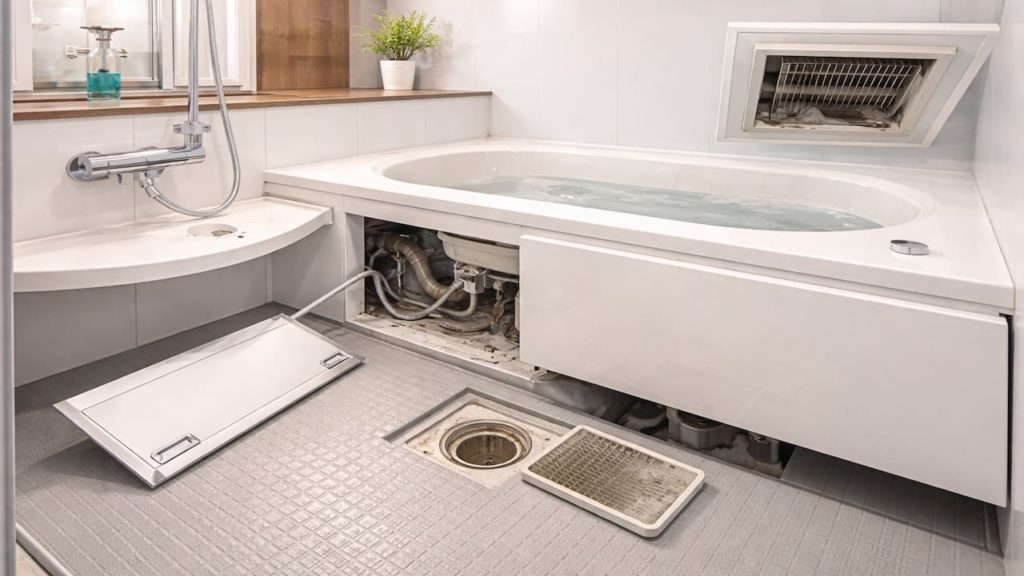
You cleaned the unit bath, yet mold got worse, faster. That feels unfair, especially when you did the “right” steps.
Some cleaning habits leave moisture and residue behind, so mold gets a better home than before. In Japan, sealed unit baths and long humid seasons turn small mistakes into repeat spots.
In this guide, you’ll learn 5 mistakes that quietly feed mold growth and how to stop them. You will also know what to change first for faster drying.

Hi, I’m Ken — I’m Japanese, and I live in Malaysia long-term, so I explain everyday life in Japan from a practical ‘from abroad’ perspective.
I hold a building design qualification and I’ve been on site for 20+ years across hundreds of jobs. I turn Japan’s unspoken rules into simple checks, so you can avoid costly mistakes and take the next step with clear actions that feel safe.
1. Unit bath cleaning mistakes: 5 Mistakes
Most mold problems come from cleaning that leaves water behind—not from cleaning too little.
In a unit bath, cleaning stirs up grime, then the room stays wet if you finish and walk away. That leftover moisture keeps soap film soft, and mold eats it. In Japan’s rainy season, the air is already heavy, so drying time stretches. A wet finish is a mold invitation.
- Rinse surfaces then wipe dry with microfiber cloth
- Keep bathroom door closed while fan runs
- Clean drain cup and hair catcher weekly
- Remove bottles and wipe shelf corners dry
- Run strong ventilation for 20 minutes after
Some people blame the building, but habits decide the daily moisture load. If the mirror and floor edge are dry within an hour, your basics are working. If they stay wet, your routine is feeding mold. Dry finish wins.
2. What makes mold worse
Mixing products and leaving residue makes mold harder to kill—and it can also damage surfaces.
“More chemical” is not smarter when you do not rinse, because residue becomes sticky food for grime. Some cleaners also weaken rubber and coatings when left too long, which creates rough spots that hold moisture. In Japan rentals, surface damage becomes a long-term mold magnet. Rinse is part of cleaning.
Do not mix cleaners, and rinse thoroughly after use. According to qa.toto.jp.
- Use one cleaner at a time only
- Rinse longer than you think is needed
- Do not leave spray on metal parts
- Wipe rubber seals to remove cleaner residue
- Dry the area before you close up
People say “it smells clean,” but that does not mean it is clean. If the room feels sticky after drying, residue is still there. Clean should feel neutral and dry. That is the target.
3. Why cleaning can make mold spread
Scrubbing can spread spores into damp corners—then they grow where airflow is weakest.
Mold likes warmth, moisture, and food, and cleaning can accidentally provide all three if you do it wet and rushed. In Japan winter, condensation forms again on cold corners, so fresh moisture returns overnight. If you scrub without removing soap film first, mold remover cannot reach the roots well. Sequence matters.
- Remove soap film first using neutral cleaner
- Dry the surface before applying mold remover
- Target corners and seals where water sits
- Ventilate strongly while chemicals are working
- Rinse and dry before putting items back
It is not about being perfect, it is about being in order. Clean, then dry, then protect the airflow path. If you keep everything wet during “cleaning,” you are gardening mold. Wrong order.
4. How to clean without feeding mold
Clean fast, dry hard, then ventilate long enough—that three-step rhythm prevents repeat spots.
Start with a neutral cleaner to remove film, then use mold remover only where needed, then rinse and dry like you mean it. Basic supplies usually cost ¥100–500 for simple tools, and the rest is habit. In Japan, many people bathe at night, so drying must happen before sleep to stop overnight bloom. Speed plus dryness is the trick.
If mold is already present, close the door and ventilate while using mold remover, then rinse well. According to LIXIL.
- Squeegee walls and floor for 60 seconds
- Wipe seals and corners with dry cloth
- Run strong ventilation and keep door shut
- Store bottles outside until surfaces feel dry
- Clean drain parts and rinse slime away
Some say “just spray and leave,” but that leaves moisture and chemical residue together. Others over-scrub and damage glossy surfaces, which then hold more water. If you can touch the wall and it feels dry, you are winning. Dry touch test.
5. FAQs
Q1. Why did mold appear right after I cleaned?
You probably left moisture in corners, or you spread spores while scrubbing and did not dry afterward. Finish with wiping and ventilation to cut that rebound.
Q2. Is it bad to leave the bathroom door open to dry?
It often pushes humid air into the home, then the bathroom still stays damp. Keep the door shut and let the fan pull air out.
Q3. Should I use strong chemicals every time?
No, daily film removal and drying is the real cure, and chemicals are for visible mold only. In Japan’s humid seasons, the faster win is drying habits, not stronger bottles.
Q4. Can I scrub with a melamine sponge everywhere?
No, it can scratch some finishes, and scratches hold moisture and grime. Use soft tools on glossy panels and reserve abrasive tools for safe surfaces only.
Q5. When is it a building or fan problem?
If the fan airflow feels weak and the room stays wet for hours despite wiping, report it. Mention what mode you used and how long you ventilated.
Pro's Tough Talk

I’ve spent 20+ years working around Japanese homes, so I’ve seen what tends to work—and what tends to go wrong—in everyday use. I’ve been on site for 20+ years. I’ve worked on hundreds of jobs. In Japan’s rainy season, “just cleaned” can still mean “still wet.”
Cause one: you clean like painting over rust, so the film stays and mold comes back. Cause two: you leave cleaner residue, like sealing a wet lunchbox and hoping it behaves. Cause three: you finish wet, shut the room, and give mold a private gym.
Seriously.
You spray mold remover on soap scum and wonder why it laughs. You wipe the mirror, leave the floor edge wet, and act surprised tomorrow.
Stop finishing wet now. Do a wipe-down and a long vent today. Deep-clean the drain parts this weekend.
Clean in order and end dry every single time. If you did this and it still fails, next is checking the exhaust fan airflow and duct with building support. That is the line between habit and hardware.
Keep “cleaning” while leaving puddles, and congrats, you’re basically running a mold daycare.
Summary
The biggest mistakes are finishing wet and leaving residue behind. Fix those first, and mold loses its daily advantage.
Clean film first, use chemicals only where needed, then rinse and dry before you close up. If drying still fails, treat airflow as the next suspect.
Wipe dry and run ventilation tonight without exceptions, then repeat for a week and watch the spots fade. Once it works, keep the same rhythm and stop experimenting.