You cleaned the unit bath, rinsed everything, and felt proud for five minutes. Then the odor comes back anyway, like the room is mocking you.
This usually happens when a seal is not seated, biofilm stays hidden, or damp air never truly leaves. In Japan, unit baths are compact and humidity swings by season, so smells rebound fast.
In this guide, you’ll learn 5 checks that stop odor from returning after cleaning. You will also know when the issue is airflow, not soap.

Hi, I’m Ken — I’m Japanese, and I live in Malaysia long-term, so I explain everyday life in Japan from a practical ‘from abroad’ perspective.
I hold a building design qualification and I’ve been on site for 20+ years across hundreds of jobs. I turn Japan’s unspoken rules into simple checks, so you can avoid costly mistakes and take the next step with clear actions that feel safe.
1. Unit bath smells after cleaning: 5 Checks
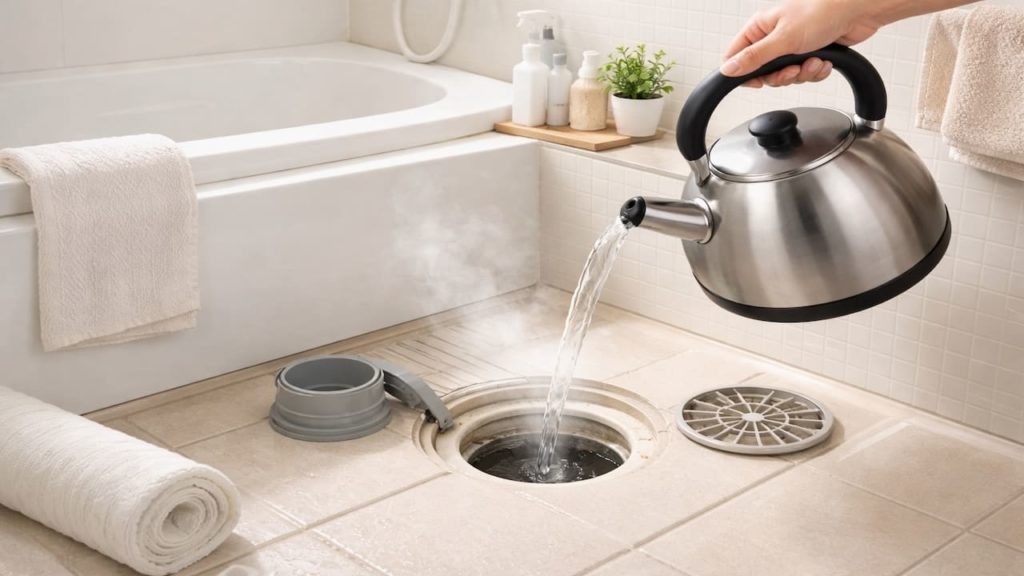
Check the drain trap seal first, because one loose part can leak odor back immediately.
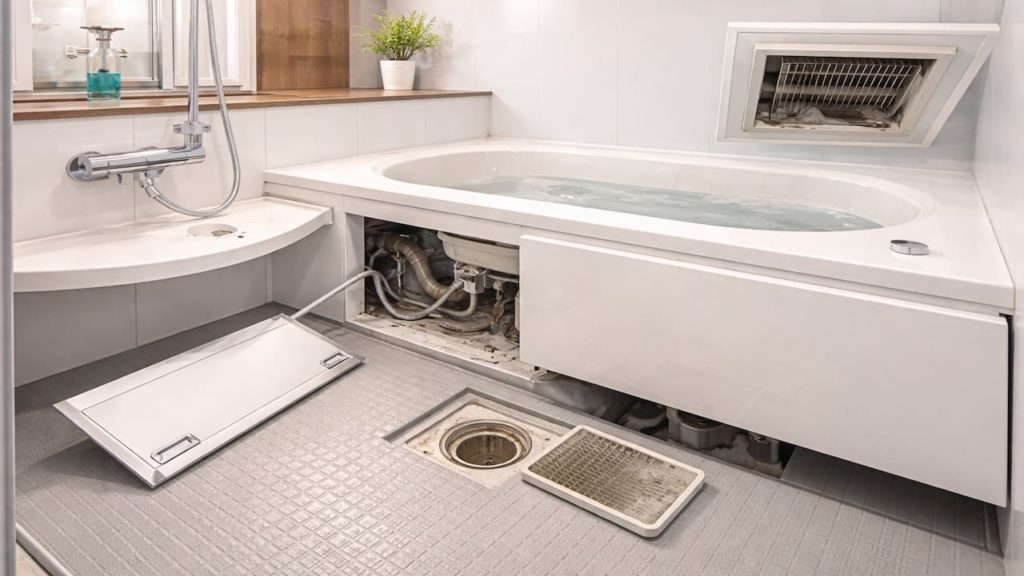
After cleaning, it is easy to reinstall the trap cup slightly off or not fully locked—then sewer odor drifts up even when the room looks spotless. In Japan unit baths, the drain parts are compact and easy to mis-seat when wet. Proof. Start with the simplest “did it seal” check before you deep-clean again.
Odor can improve by cleaning the drain area and tightening the trap cup so it sits correctly. According to TOTO.
- Remove hair catcher and rinse slime thoroughly
- Scrub trap cup and drain edges using brush
- Reseat trap cup and lock it firmly
- Run hot water and confirm no gurgle
- Smell near drain cover after five minutes
People blame “old pipes,” but a missing seal is more common than you think. If odor spikes right at the drain, the trap is the target. Fix the seal and the smell often drops the same day. Simple win.
2. Why odor returns anyway
Odor returns when air never dries out, so residue keeps smelling even after you rinse it.
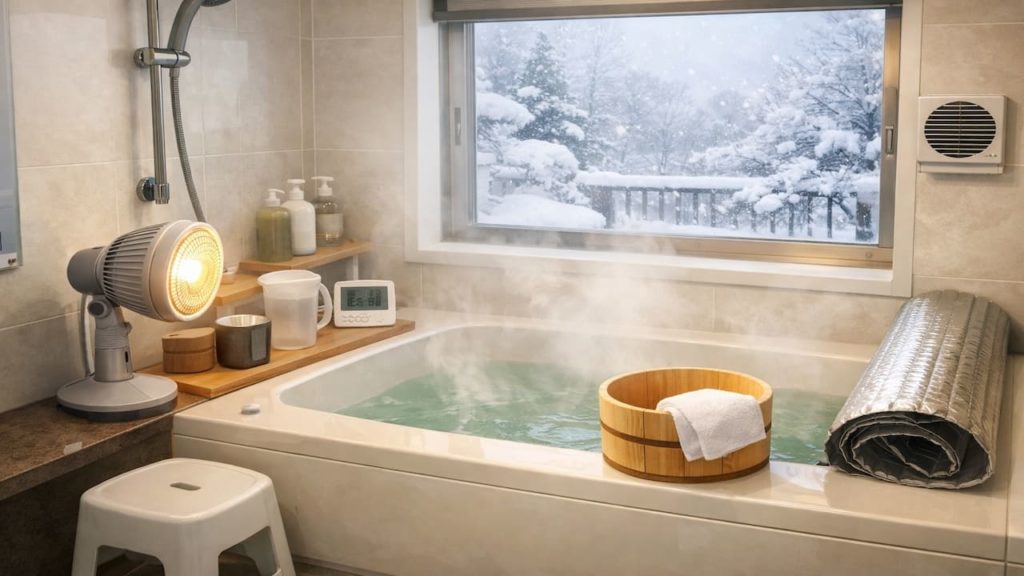
Some odors are not sewage, they are damp residue trapped in seams, seals, and the fan path. In Japan apartments, windows are rare in unit baths, so ventilation habits matter more than product choice. Airflow. If 24-hour ventilation is off, the room can stagnate and smell stronger at night.
Running 24-hour ventilation year-round and cleaning filters regularly is considered correct use for many systems. According to Panasonic.
- Confirm ventilation mode stays on after bathing
- Keep unit bath door closed during ventilation
- Wipe rubber seals and corners completely dry
- Remove bottles and dry shelf surface nightly
- Clean vent cover dust so air can pass
Some people spray fragrance to “cover it,” but damp film keeps producing odor. If strong ventilation reduces smell within 10 minutes, airflow was the missing piece. If nothing changes, return to drain and seals. Two tracks.
3. Why odor comes back right after cleaning
Hidden biofilm survives quick cleaning, then wakes up as soon as the room gets warm.
Biofilm is a thin layer that holds smell in the drain cup, hair catcher edges, and rubber lines. In Japan’s rainy season, surfaces stay tacky longer, so the film never fully dries and odor grows faster. Sticky residue. If you only rinse, you leave the layer that feeds smell.
- Check hair catcher rim for slippery film
- Inspect trap cup underside for dark slime
- Feel door seal for tacky soap buildup
- Look under shelf lip for hidden residue
- Test towel smell after one hour hanging
You might think “I cleaned everything,” but you cleaned what you could see. Focus on contact surfaces where water sits and dries slowly. Once film is gone, the musty note usually fades. Not magic.
4. How to stop the smell from coming back
Lock in a 2 minute dry-down routine, because prevention beats repeating harsh cleaners.
Do actions that remove liquid water and stop residue from staying wet. cost is mostly time/effort. In Japan unit baths, the fastest habit is drying seals and floor edges before sleep so odor cannot build overnight. Routine.
- Squeegee walls and floor toward the drain
- Wipe seals and corners with dry cloth
- Rinse hair catcher and shake it dry
- Run strong ventilation for twenty minutes nightly
- Clean drain parts weekly to prevent biofilm
Some people deep-clean monthly and still lose, because daily moisture resets the smell source every night. Others overuse chemicals and damage rubber, creating new odor pockets. Keep it simple and repeatable. You want boring results.
5. FAQs
Q1. Why does it smell worse at night after cleaning?
At night the room is sealed, and airflow often drops, so odor concentrates. In many Japan apartments, keeping ventilation running is more effective than opening the door.
Q2. What if the odor is not at the drain?
Check rubber seals, shelf seams, and wet towels first. Musty odor can come from damp residue, not sewer gas.
Q3. What is the fastest check after cleaning?
Confirm the trap cup is seated and locked, then retest smell near the drain cover — that single step fixes many “returns anyway” cases.
Q4. Should I use hot water to flush the drain daily?
Occasionally is fine, but daily flushing alone will not remove biofilm on plastic parts. Physical scrubbing of the hair catcher and trap cup works better.
Q5. When should I call management or a pro?
If smell persists after trap reseating and ventilation checks, or if you suspect duct backflow. Report the time pattern and what you tested.
Pro's Tough Talk

I’ve spent 20+ years working around Japanese homes, so I’ve seen what tends to work—and what tends to go wrong—in everyday use. I’ve been on site for 20+ years. I’ve worked on hundreds of jobs. In Japan’s rainy season, smells bounce back fast if you miss one small point.
Cause 1: you cleaned the drain but didn’t reseat the trap cup, so odor leaks like a cracked lid on a lunch box. Cause 2: you rinsed away foam but left biofilm, like wiping a pan without scrubbing the grease. Cause 3: you leave the room damp, so residue keeps “breathing” smell back into the air. Come on.
Reseat the trap cup and sniff-test now. Scrub the hair catcher and trap cup today. Do a nightly dry-down routine this weekend.
Odor stops when seals seat and surfaces dry. If you did this and it still fails, next is asking management to check duct airflow and backdraft dampers.
Keep “cleaning” without checking the seal, and you’ll stay in a long-distance relationship with that smell.
Summary
Smell returning after cleaning is usually a drain seal issue, hidden biofilm, or damp air that never clears. Start by checking the trap cup seating and cleaning the contact surfaces.
Then confirm ventilation habits and remove liquid water so residue cannot stay wet. If smell persists with good checks, suspect airflow or duct backflow and report it clearly.
Do the five checks tonight and keep the dry-down for a week. Once the odor stops returning, the unit bath becomes easy to maintain again.