You clean the unit bath, and the surface still looks cloudy or greasy. Soap scum film makes everything feel older, even when the room is “technically” clean.
Scrubbing harder is tempting, but that’s how people end up with dull patches and tiny scratches. In Japan’s compact unit baths, the light hits flat panels and shows every mistake.
In this guide, you’ll learn how to remove soap scum without turning the surface matte and keep the finish looking normal. You’ll also learn quick habits that prevent the film.

Hi, I’m Ken — I’m Japanese, and I live in Malaysia long-term, so I explain everyday life in Japan from a practical ‘from abroad’ perspective.
I hold a building design qualification and I’ve been on site for 20+ years across hundreds of jobs. I turn Japan’s unspoken rules into simple checks, so you can avoid costly mistakes and take the next step with clear actions that feel safe.
1. Unit bath soap scum: 5 Tips
Soap scum is a layered mix of soap oils and minerals, so you need soften then lift.
In Japan’s humid seasons, residue stays wet longer and bonds to walls and tubs—then it turns into a stubborn haze. The goal is to break the bond first, not grind it off. Start with heat and gentle surfactants before any “scrub.”
- Rinse walls with hot water for one minute
- Apply neutral cleaner and wait ten minutes
- Wipe film with soft sponge in straight lines
- Rinse again and feel for remaining slick spots
- Dry surfaces with towel to stop new film
People think the answer is a stronger chemical, but most film loses grip when you use time and warmth. If you rush and scrub, you win today and lose for months with dull marks. Slow first, fast later.
Soft sponges are recommended for bathroom cleaning tools. According to LIXIL.
2. Remove film without scratching
Your cleaning tool choice matters more than your cleaner, especially on glossy panels.
Unit bath walls often have coatings or smooth resin surfaces that show micro-scratches in Japan’s bright bathroom lighting—one wrong sponge can leave a permanent “fog.” Use soft materials and keep grit out of the cloth. Tiny sand-like particles are the real scratch machine.
- Use microfiber cloth and keep it grit free
- Rinse sponge often under running warm water
- Scrub with light pressure and wide strokes
- Avoid melamine foam on glossy resin panels
- Test one small corner before full wipe
You may feel like gentle wiping is “not enough,” but that mindset is how scratches happen. If the film does not budge, change the method, not the force. Clean smart, not angry.
Abrasive cleaners and abrasive sponges can damage bathroom surfaces. According to Panasonic.
3. Why soap scum builds up so fast
Soap scum builds fastest where water dries slowly, not where you use soap most.
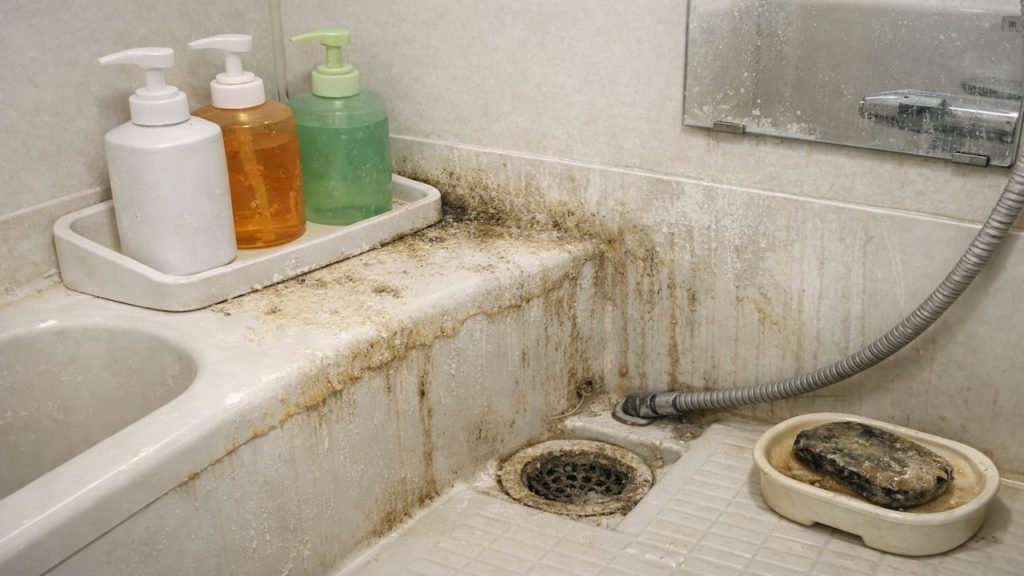
In many Japanese apartments, ventilation is decent but the bathroom still stays damp after showers. Film forms when water evaporates and leaves behind what it carried, then fresh soap sticks on top. Corners, shelves, and the tub rim become “film factories.”
- Check tub rim where water line always dries
- Inspect wall corners near shampoo bottle shelf
- Look at mirror edges for dull white haze
- Feel door gasket for slippery residue buildup
- Check floor texture where suds collect nightly
It’s easy to blame your soap, but airflow and drying time usually decide the speed. If you remove standing water and residue early, buildup slows dramatically. Drying is prevention, not a bonus.
4. How to remove soap scum safely
Do a two-pass clean: soften first, then wipe clean for a scratch-free reset.
In a Japanese unit bath, do this when the room is warm, because heat helps soften film—no hero scrubbing needed. The cost is mostly time/effort. Think “controlled routine,” not “deep-clean panic,” and your finish stays glossy.
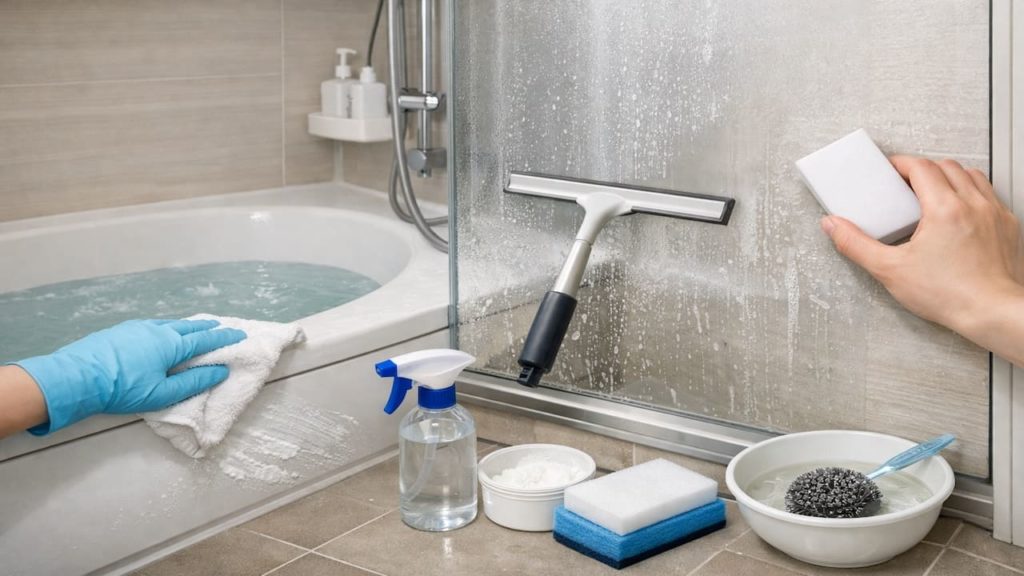
- Spray diluted dish soap on cloudy wall areas
- Wait ten minutes while keeping surfaces wet
- Wipe with soft sponge then rinse completely
- Spot treat with baking soda paste gently
- Finish by towel drying walls and tub rim
You might want to do everything at once, but overworking the surface is how scratches and dullness start. If one pass did not fix it, repeat the soften step and keep pressure low. Consistency beats force every time.
5. FAQs
Q1. Is vinegar safe for unit bath walls?
It can be, but it depends on your surface and any coating. If you try it, dilute it, rinse well, and test a small corner first.
Q2. Should I use a magic eraser for soap scum?
Be careful, because it can act like a fine abrasive on glossy resin. If you use it at all, keep it for tough spots and test first.
Q3. What is the fastest fix when the film looks “greasy”?
Use warm water plus neutral cleaner and wait before wiping. That short waiting time often releases the film without heavy scrubbing.
Q4. Why does the film come back the next day?
Leftover rinse water dries and leaves residue behind. Dry the tub rim and wall bottom line after showers to slow the return.
Q5. How often should I do a full soap scum reset?
For many households, once a week is enough if you do small after-shower drying. If humidity stays high, do quick wipes more often.
Pro's Tough Talk

I’ve spent 20+ years working around Japanese homes, so I’ve seen what tends to work—and what tends to go wrong—in everyday use. I’ve been on site for 20+ years. I’ve worked on hundreds of jobs. In the rainy season, soap scum sets up camp fast.
Three causes: minerals glue the surface like candle wax, soap oils add a slick topcoat, and body grime locks it in. You wipe once, it looks fine, then the haze shows up the moment the light hits. You scrub harder, the shine disappears, and the film still laughs back at you. That harsh sponge is basically sandpaper in a cute outfit.
Rinse the walls with hot water now. Apply neutral cleaner and wait today. Do a full towel dry pass this weekend.
Soft tools and time beat brute force every single time. If you did this and it still fails, next is checking for existing scratches and switching to a maker-approved non-abrasive method. Don’t blame yourself, just stop escalating the damage.
Seriously, stop trying to sand plastic.
Summary
Use heat and waiting time to loosen soap scum, then wipe with soft tools. In Japan’s unit baths, drying time decides whether film returns.
Do a two-pass reset, and finish by towel drying the rim and lower wall line—small habit, big difference. If the surface already looks dull, treat it as scratch damage and change methods.
Soften first then wipe clean today, and keep a quick after-shower dry routine. Your unit bath will look clearer without risky scrubbing.