Your unit bath feels steamy, but the air barely moves. After a shower, the mirror stays foggy and the room feels slow to dry.
Weak ventilation can come from tiny blockers, not a broken fan. In Japan’s humid seasons and sealed apartments, those blockers show up fast.
In this guide, you’ll learn how to boost airflow using only simple checks and stop the damp cycle. You’ll also learn habits that keep it working daily.

Hi, I’m Ken — I’m Japanese, and I live in Malaysia long-term, so I explain everyday life in Japan from a practical ‘from abroad’ perspective.
I hold a building design qualification and I’ve been on site for 20+ years across hundreds of jobs. I turn Japan’s unspoken rules into simple checks, so you can avoid costly mistakes and take the next step with clear actions that feel safe.
1. Unit bath ventilation weak: 5 Checks
Most weak ventilation is a blocked air path not a weak motor.
Vent fans can only move air if fresh air can enter and damp air can exit. In Japan’s rainy season humidity, a small restriction can make drying feel impossible—especially in a tight unit bath. Airflow map.
- Close window and door before running fan
- Find air inlet and confirm it is open
- Check door gap and keep it consistent
- Clean snap in filter and reinstall it dry
- Feel suction at grille with tissue strip
You might think “leave everything open,” but that can short-circuit the airflow and skip the wet corners. Do these checks first, then choose the best door position for your specific intake setup. Fast diagnosis.
If there is no air inlet, opening the bathroom door slightly can help ventilation performance. According to TOTO.
2. Improve airflow without tools
You can improve airflow by controlling the door and intake instead of “more fan time.”
Many unit baths work best when the room is mostly closed, so the fan pulls air through the intended inlet. In winter, cold outside air can change the draft, so a stable setup matters—don’t keep changing it mid-cycle. Small control.
- Close door and leave inlet or grille open
- Open door only one to two centimeters
- Run fan after shower before wiping mirrors
- Remove filter and rinse it under water
- Wipe grille dust using damp microfiber cloth
It sounds too simple, but airflow is a path problem, not a motivation problem. If you keep the path clean and stable, the same fan suddenly feels stronger without buying anything. Control beats hope.
Many bathroom ventilation units include a filter check indicator and routine filter care guidance. According to Panasonic.
3. Why unit bath ventilation feels weak
Ventilation feels weak when humidity stays trapped in slow-dry zones.
A unit bath has corners, gaskets, and ceiling lines where moisture clings. In Japan’s long humid stretches, those surfaces re-evaporate water for hours, so the room feels like it never clears. Also, dust on the grille creates drag and noise without moving much air. Damp physics.
- Check ceiling corners for hanging water droplets
- Inspect door gasket folds for wet residue
- Look for blocked intake slot near door
- Notice towel and mat drying inside bathroom
- Compare airflow with door fully closed
You may blame the fan, but the fan is only one part of the system. If air cannot enter smoothly, the fan just recirculates nearby air and leaves dead zones wet. Fix the path, then judge the power.
4. How to strengthen ventilation with daily habits
Dry the surfaces first, then use the fan to finish.
cost is mostly time/effort, and that is good news. In Japan’s small unit baths, removing droplets by hand cuts the moisture load dramatically, so the fan can actually “win.” Moisture budget.
- Squeegee walls to remove water after shower
- Wipe tub rim and floor edges quickly
- Hang towel outside bathroom to dry
- Keep shampoo bottles off floor after use
- Run fan for consistent set time daily
You might feel wiping is extra work, but it replaces long hours of waiting. If you do a quick wipe and keep the door and inlet setup consistent, ventilation stops feeling weak and starts feeling predictable. Predictable is the goal.
5. FAQs
Q1. Should I keep the unit bath door open while ventilating?
Not always. If your unit bath has a dedicated air inlet, closing the door often improves air circulation inside the room.
Q2. What if there is no air inlet on my door?
Try opening the door slightly so fresh air can enter. In Japan’s humid season, this small gap can reduce lingering dampness.
Q3. How long should I run the fan after a shower?
Run it long enough to clear droplets and steam—then stop, instead of running it “just in case.” Start with one fixed time and adjust once after observing results.
Q4. My fan sounds loud but airflow feels weak. Why?
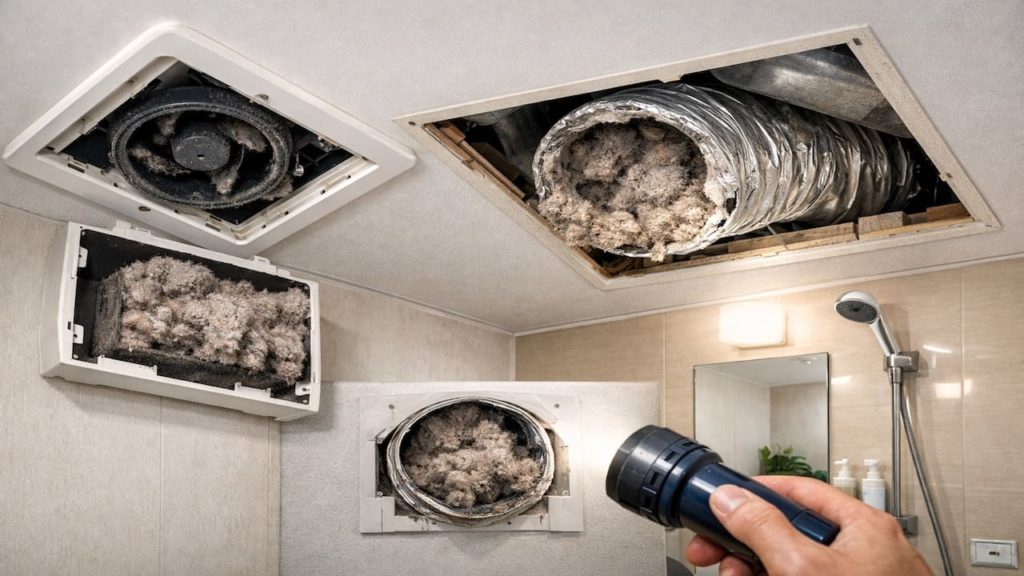
Dust on the grille or filter can create noise and drag. Clean the easy parts first and re-test before assuming mechanical failure.
Q5. Can wet towels make ventilation feel worse?
Yes, because they keep releasing moisture into the same small air volume. Dry towels outside the bathroom and the room will clear faster.
Pro's Tough Talk

I’ve spent 20+ years working around Japanese homes, so I’ve seen what tends to work—and what tends to go wrong—in everyday use. I’ve been on site for 20+ years. I’ve worked on hundreds of jobs. Weak ventilation is usually a blocked airway, not a cursed bathroom.
Three causes: the air inlet is closed so the fan starves, the filter is dusty so the fan chokes, and the room is full of wet stuff so it never catches up. It’s like trying to drink a milkshake through a pinhole straw. You run the fan, stare at the mirror, and it stays foggy anyway. Then you hang a towel inside and act surprised tomorrow.
Close the door and find the intake path now. Rinse the filter and wipe the grille today. Do a quick squeegee routine and re-test this weekend.
Make one clean airflow path and the fan will feel stronger. If you did this and it still fails, next is getting the fan unit inspected or replaced.
Stop blaming the fan while blocking its mouth.
Keep drying laundry in there if you want, but don’t call it “weak ventilation” when it’s really “strong bad habits.”
Summary
Do the 5 checks to confirm an air path exists and the filter is clean. In a unit bath, small restrictions create big drying delays.
Use door position and intake control to prevent airflow short-circuits. If results do not improve after a clean re-test, escalate—don’t loop forever.
Set one airflow routine and repeat it daily so the room dries the same way every time. Consistency builds a dry bathroom.