You run the unit bath fan, but the room still feels sticky and slow to dry. The air feels trapped, and that damp smell keeps hovering.
Most of the time it is not a broken fan, it is one or two habits fighting the airflow. In Japan’s humid seasons and tight housing, those habits show up fast.
In this guide, you’ll learn the 5 ventilation mistakes that keep damp air stuck and how to flip them quickly. You will stop guessing and start getting predictable drying.

Hi, I’m Ken — I’m Japanese, and I live in Malaysia long-term, so I explain everyday life in Japan from a practical ‘from abroad’ perspective.
I hold a building design qualification and I’ve been on site for 20+ years across hundreds of jobs. I turn Japan’s unspoken rules into simple checks, so you can avoid costly mistakes and take the next step with clear actions that feel safe.
1. Unit bath ventilation mistakes: 5 Mistakes
One wrong setup can cancel the fan’s airflow — even if it sounds like it works.
Ventilation is a path, not a wish. If the unit bath cannot pull fresh air in, the fan just spins and the humidity lingers. Japan’s rainy season makes this feel worse because the incoming air is already moist. Dead air.
- Leaving the intake slot blocked by towels
- Opening the door wide during ventilation
- Stopping the fan right after shower ends
- Drying laundry inside the unit bath daily
- Ignoring filter dust until airflow feels weak
It is easy to blame “weak ventilation,” but many cases are self-inflicted. Fix the path first, then judge the fan power after. A small change can flip the whole room from damp to normal.
During ventilation or drying, open the bathroom door intake opening if equipped. According to Mitsubishi Electric.
2. Why damp air stays
Damp air stays when fresh air cannot enter smoothly — the fan needs a supply.
In many Japanese apartments, the unit bath is sealed tight, so the intake route matters more than you think. If you open the door too much, airflow can short-circuit and skip the wet corners. If you close every intake, the fan starves and moves almost nothing. Same noise, less work.
- Locate the door intake and keep it open
- Close the window to prevent airflow short circuit
- Crack the door slightly if no intake
- Keep bottles off floor to reduce wet zones
- Move wet towels outside to dry faster
You might assume “more open is better,” but too open often ruins the intended draft. Pick one setup and repeat it, so the room dries the same way every time. Consistency matters in winter too, when condensation reacts faster.
Do not close the bathroom door intake opening for drying. According to harman.co.jp.
3. Why damp air lingers after you ventilate
Moisture keeps re-evaporating from hidden surfaces — so the room feels “never dry.”
A unit bath has gasket folds, corners, and ceiling lines that hold droplets. In Japan’s humid summer, those droplets keep feeding humidity even after the steam looks gone. If you add laundry or leave mats inside, you are doubling the moisture load. Moisture budget.
- Check door gasket folds for trapped water
- Inspect ceiling corners for hanging droplets
- Wipe tub rim where water line stays
- Remove floor mat and dry it outside
- Run fan longer on high humidity days
Some people clean more and ventilate less, then wonder why dampness returns. The surface water is the fuel, so reduce the fuel before asking the fan to “solve it.” When you lower the load, the same fan finally wins.
4. How to fix the mistakes fast
Use a short routine that removes water first — then let the fan finish the job.
cost is mostly time/effort, not purchases. In Japan’s small unit baths, a 30-second wipe removes more moisture than an extra hour of weak airflow. Do the routine right after showering, when water is still easy to move. Quick reset.
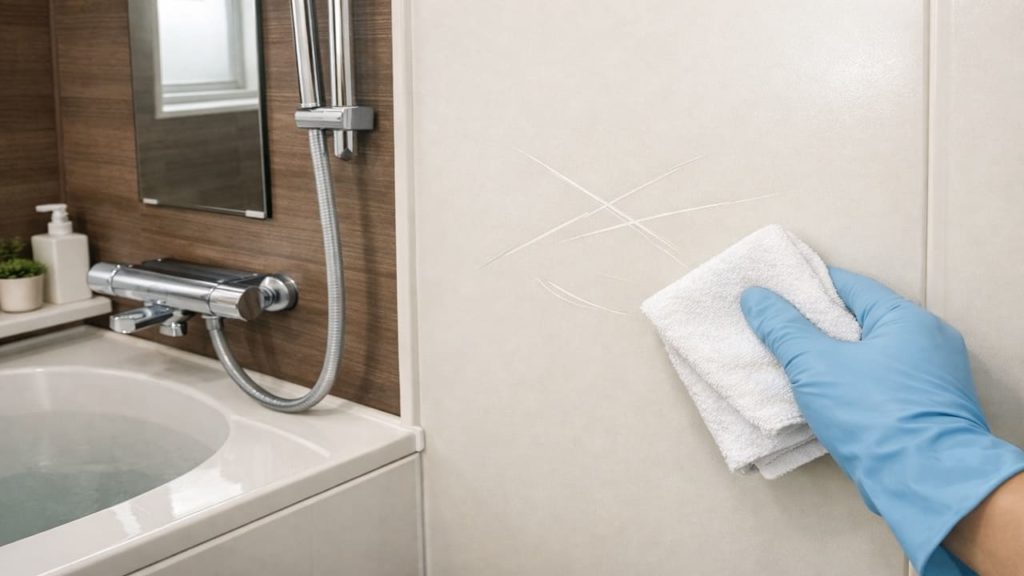
- Squeegee walls to remove visible droplets quickly
- Wipe floor edges and tub rim dry
- Set one timer length and stop adjusting daily
- Keep intake open and door mostly closed
- Ventilate longer only when humidity is high
You might feel this is annoying, but it is the fastest path to a dry room. If you skip the wipe, you are asking the fan to evaporate puddles, and that always takes longer. Build the habit and damp air stops “staying.”
5. FAQs
Q1. Should I keep the unit bath door open while ventilating?
Not wide open. If you have an intake on the door, keep the door closed and the intake open, so airflow stays directed.
Q2. Why does the room still feel damp even after one hour?
If droplets remain on walls and gaskets, they keep feeding humidity. Wipe first, then ventilate, and the same hour will feel stronger.
Q3. Is drying laundry inside the unit bath a bad idea?
It is fine sometimes but it raises the moisture load and makes the room feel like it never clears. If you must do it, ventilate longer and keep intake airflow consistent.
Q4. What is the biggest “hidden” blocker?
Door intake slots and filter dust. Even light dust can reduce airflow and make the fan louder without better drying.
Q5. When should I assume the fan is actually failing?
If airflow is still weak after cleaning the easy parts and fixing the door and intake setup, escalate. Also escalate if you hear grinding, smell burning, or see error indicators.
Pro's Tough Talk

I’ve spent 20+ years working around Japanese homes, so I’ve seen what tends to work—and what tends to go wrong—in everyday use. I’ve been on site for 20+ years. I’ve worked on hundreds of jobs. In the rainy season, damp air punishes sloppy ventilation habits.
Three causes, every time: you starve the fan by closing the intake, you short-circuit the draft by flinging the door open, and you ask the fan to evaporate a small lake off the walls. It is like trying to breathe through a straw while running. You shut the door tight and feel proud, then wonder why the mirror is still foggy. You hang laundry in there and act shocked the room smells damp.
Stop blocking the intake now. Wipe the walls and rim today. Pick one door setup and repeat it this weekend.
Remove the water load first and airflow suddenly works. If you did this and it still fails, next is cleaning the fan interior or calling service for inspection.
You cannot ventilate a puddle with optimism.
Keep fighting humidity with “door wide open” if you want, but do not call it bad luck.
Summary
The fan cannot win if the intake is blocked or the door setup short-circuits airflow. Fix the path first, then you will feel the difference fast.
Wipe droplets, keep wet items out, and use one repeatable timer. If airflow stays weak after these corrections, the next step is inspection, not more guessing.
Fix the intake and do a quick wipe today so damp air stops hanging around. After that, the unit bath dries on schedule instead of on hope.