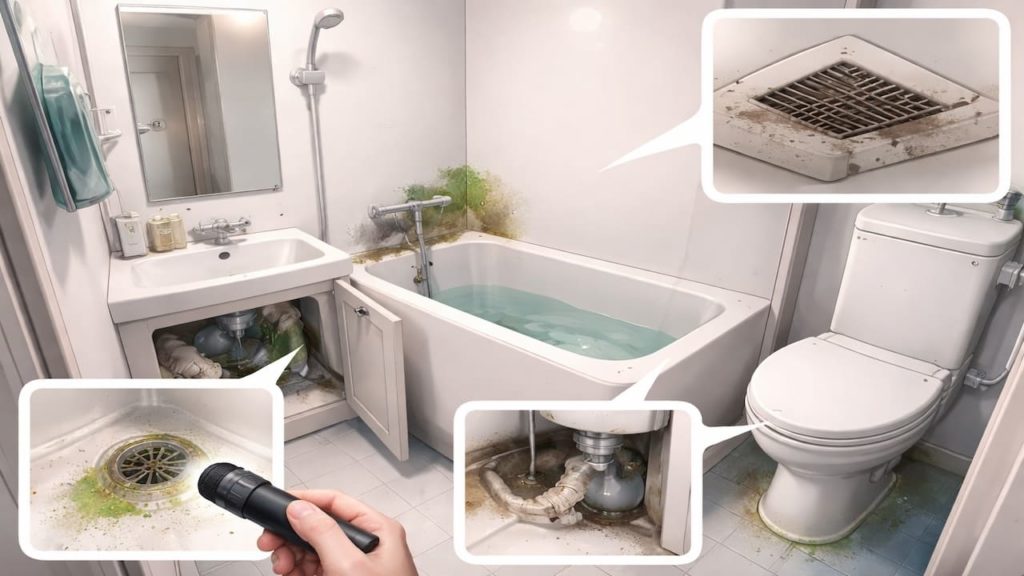
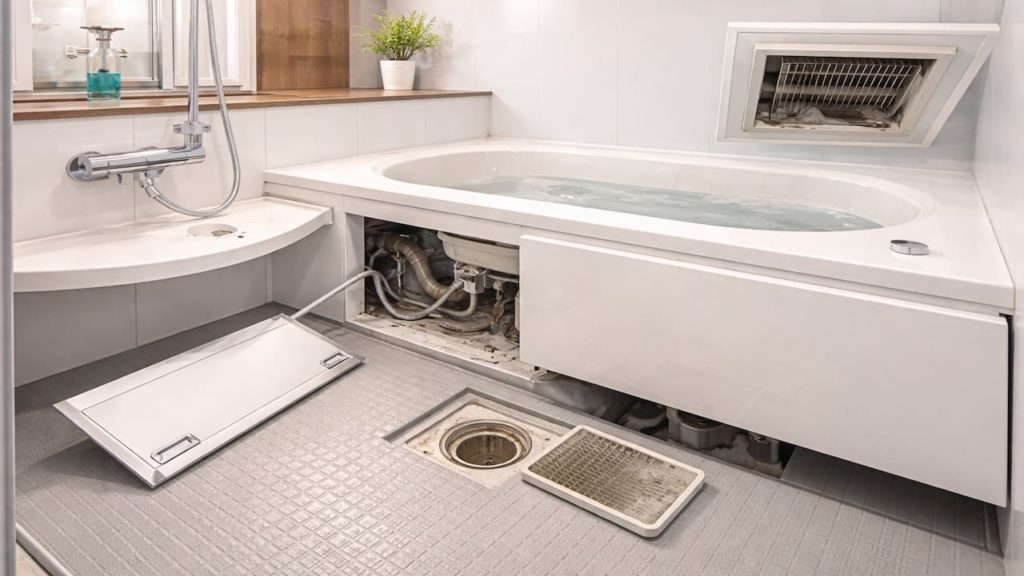
You step into a unit bath in winter and the air feels like a fridge. The floor and walls steal heat fast, and your body tenses up before you even wash.
This is not just discomfort, it can be a safety issue when temperature gaps are big. In Japan, the dressing area and bathroom can be much colder than the living room.
In this guide, you’ll learn how to warm up safely before bathing in winter without overdoing it. You’ll get simple steps that fit Japanese unit bath layouts.

Hi, I’m Ken — I’m Japanese, and I live in Malaysia long-term, so I explain everyday life in Japan from a practical ‘from abroad’ perspective.
I hold a building design qualification and I’ve been on site for 20+ years across hundreds of jobs. I turn Japan’s unspoken rules into simple checks, so you can avoid costly mistakes and take the next step with clear actions that feel safe.
1. Unit bath winter cold: 5 Tips
Reduce the temperature gap before you remove your clothes — that is the safest first win.
Winter in Japan often means a warm living room and a cold hallway, then a colder unit bath. That sudden change can stress your body, especially if you rush. Warm the space a little, then warm your skin gradually. Slow ramp.
- Warm the dressing area for five minutes
- Close the door to keep warm air
- Run hot shower briefly to preheat walls
- Use a small towel to warm neck
- Enter bath only after breathing feels calm
Some people think “just jump in fast,” but that can spike stress and make you dizzy. Gentle warmup is not weak, it is smart control. If you feel lightheaded, stop and sit down right away.
Warming the dressing area and bathroom before bathing is recommended in winter. According to Consumer Affairs Agency.
2. Warm up safely before bathing
Use time and sequence instead of higher water temperature — the order keeps your body steady.
In a Japanese unit bath, space is tight, so heat builds quickly and can also overwhelm you. Start by warming the room air a bit, then warm your hands and feet with water. After that, step into the shower and let your skin adjust. Calm start.
- Turn on ventilation heater if your unit has
- Preheat with shower mist not full blast
- Warm hands and feet before torso soaking
- Keep bathwater moderate and avoid extreme heat
- Sit down first if you feel unstable
You may think hotter water equals faster comfort, but it can raise risk and make you faint. A safer routine feels slower for one minute, then it feels better for the next ten. That trade is worth it.
Set bathwater at 41°C or lower and limit soaking time as a guideline. According to Government Public Relations Online.
3. Why winter unit baths feel risky
Cold air plus hot water creates a sharp body reaction — the swing is the real problem.
In Japan, older apartments often have cold corridors and unheated dressing rooms, so the gap can be large. Your body tightens blood vessels in cold air, then relaxes fast in hot water. That fast flip can make blood pressure swing. Temperature shock.
- Notice cold drafts at the door bottom
- Check if floor feels icy at first step
- Compare dressing area temperature to living room
- Observe if you breathe faster when undressing
- Watch for dizziness when standing up quickly
People blame “weak heating,” but the real trigger is the sudden change plus rushing. Even a small preheat reduces the gap and reduces stress. If you feel off, treat that as a warning signal, not a mood.
4. How to warm up without overdoing it
Build a short preheat routine that you repeat daily — steady habits beat one big “fix.”
cost is mostly time/effort. In winter, the fastest safe method is to warm the dressing area, then use warm shower water to heat the unit bath surfaces. Keep the door behavior consistent, so the airflow works the same each time. Repeatable rhythm.
- Run fan heater and close door tightly
- Flush shower warm for two minutes
- Warm limbs first before full body soak
- Use a bath chair if you get dizzy
- Stand up slowly and hold a rail
You might try to “power through” with hot water, but that can backfire fast. If you did this and it still fails, next is checking heater performance or adding a safe bathroom heating plan. Keep it safe, then keep it simple.
5. FAQs
Q1. How can I warm the unit bath quickly with no heater?
Run the shower with warm water for a short time and keep the door closed. The steam warms surfaces, then ventilation can clear moisture after.
Q2. Is it safe to take a very hot bath to warm up faster?
Hotter is not safer in winter — it can increase stress and make you feel faint. Use a moderate temperature and warm up in steps instead.
Q3. What should I do if I feel dizzy while bathing?
Stop, sit down, and breathe slowly until you feel stable. Do not stand up fast, and ask someone at home to check on you.
Q4. Should I leave the bathroom door open to warm it?
Usually no, because warm air escapes and the room stays uneven. Close the door during preheat, then ventilate after to dry.
Q5. Who needs to be extra careful in winter baths?
Older adults and anyone with blood pressure concerns should be extra cautious. If you have symptoms or worries, follow medical advice and keep changes gradual.
Pro's Tough Talk

I’ve spent 20+ years working around Japanese homes, so I’ve seen what tends to work—and what tends to go wrong—in everyday use. I’ve been on site for 20+ years. I’ve worked on hundreds of jobs. In Japan’s winter, that cold dressing area is the trap people underestimate.
Three causes: you go from a warm room to a cold unit bath too fast, you crank the water too hot to “win,” and you stand up quickly when your body is already stressed. Cold air clamps you down, hot water flips the switch, and your body panics like a cheap thermostat. You sit on the toilet lid shivering while the tub fills, then you rush because you hate the cold. You finally feel warm, stand up fast, and the room tilts for one scary second.
Warm the dressing area now.
Warm your hands and feet first today.
Keep the bath moderate and stand slowly this weekend.
Win by reducing the temperature gap not by raising the heat. If you did this and it still fails, next is a doctor check for dizziness risk and a review of your bathroom heating setup.
Yeah, keep treating winter bathing like a sprint, and act surprised when your body says no.
Summary
Winter safety is about reducing the gap between warm rooms and cold unit baths. Warm the dressing area and warm your skin in steps.
Use a repeatable routine and avoid extreme water temperatures. If you feel dizzy or unstable, stop and treat it as a real signal.
Preheat the space and warm limbs first today so bathing feels safe and steady. Once it works once, repeat the same sequence every night.