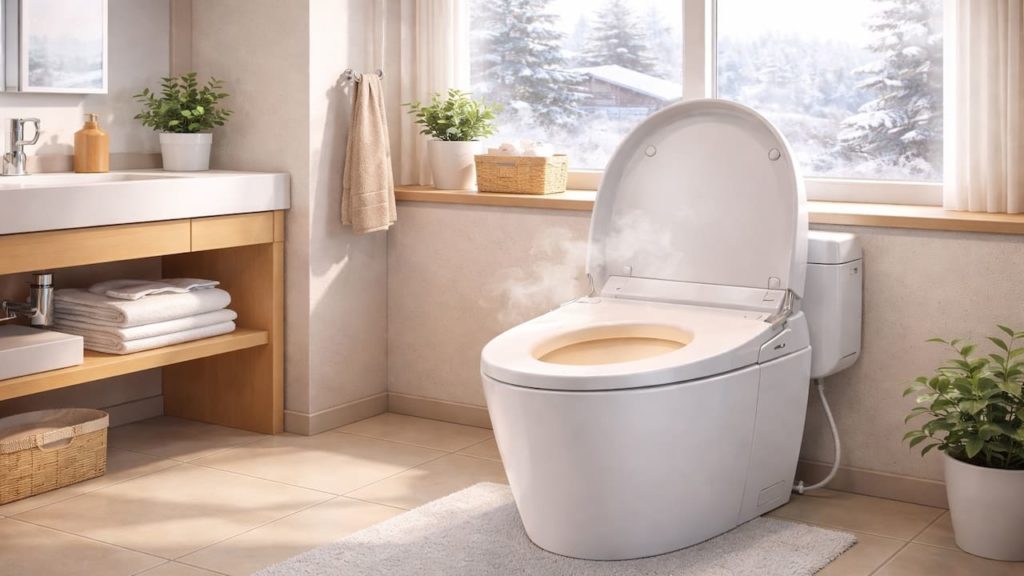
You want to clean a Washlet, but you do not want to scratch it or ruin the finish. One wrong cleaner can turn a glossy seat into a dull sticky mess.
Most damage comes from “strong” products used in the wrong place, or from scrubbing too hard. Japan’s humid summers also make people over-clean to fight smells.
In this guide, you’ll learn which cleaning products to avoid and what to use instead so plastic and coatings stay smooth. You’ll also learn quick checks for the wand area and seat surfaces.

Hi, I’m Ken — I’m Japanese, and I live in Malaysia long-term, so I explain everyday life in Japan from a practical ‘from abroad’ perspective.
I hold a building design qualification and I’ve been on site for 20+ years across hundreds of jobs. I turn Japan’s unspoken rules into simple checks, so you can avoid costly mistakes and take the next step with clear actions that feel safe.
1. Washlet cleaning products: 5 mistakes
Harsh cleaners damage surfaces faster than dirt does.
Washlet plastics and coatings are made to be wiped, not sanded or soaked—small Japanese toilet rooms hide damage until it is too late. The biggest mistakes are bleach, abrasives, solvents, acids, and leaving residue. Smooth finish. According to TOTO USA.
Some official care guides also warn against rough wiping materials and recommend gentle wiping with water or neutral cleanser. Surface care. According to eu.toto.com.
- Avoid bleach sprays on seat and lid
- Skip abrasive powders and scouring pads
- Do not use solvent wipes on plastics
- Avoid acidic descalers on coated parts
- Never leave cleaner film on surfaces
You might think “stronger is safer,” but stronger often means rougher on coatings. Dirt is removable, scratches are permanent. In Japan’s humid season, keep it gentle and frequent.
2. Avoid damage to plastic and coatings
Separate bowl cleaning from seat cleaning every time.
Many toilet bowl products are designed for ceramic, not for resin seats or soft-touch coatings—Japanese homes often use compact toilet rooms where overspray hits everything. A bowl gel splashed on the seat can discolor it. Hidden etching. Keep tools separate, and you reduce risk.
- Use one cloth only for seat wiping
- Use another brush only for bowl scrubbing
- Wipe overspray off plastic parts immediately
- Rinse cloth with water after mild soap
- Dry hinge area to prevent grime buildup
Some people say “it’s all toilet,” but materials differ a lot. Treat plastic like a phone screen, not like tile. In Japan’s shared bathrooms, a dull seat looks dirty even when clean.
3. Why harsh cleaners ruin Washlet surfaces
Damage happens when chemicals remove the top layer.
Bleach and strong alkali can attack pigments and soft coatings—Japanese summer humidity makes people chase odors with aggressive sprays. Abrasives create micro-scratches that trap grime, so you clean harder next time. Vicious cycle. Solvents can dry plastics and cause cracks, especially near hinges and seams.
- Recognize matte patches as early surface wear
- Check edges and seams for whitening signs
- Inspect around hinge area for trapped residue
- Notice odor return from scratched surfaces quickly
- Stop using new product after first discoloration
You may think the Washlet is “cheap,” but it is usually chemical damage, not age. Once the surface roughens, it holds dirt like Velcro. Japan apartments. Tight spaces.
4. How to clean a Washlet safely with mild products
Use water first then mild soap then rinse.
Make it boring and consistent—Japan’s small toilet rooms reward simple routines, not experiments. Use a soft cloth with warm water, then a tiny bit of mild soap, then wipe again with clean water. Plain work. cost is mostly time/effort.
- Turn off power and wipe seat gently
- Use warm water cloth on lid surface
- Add mild soap to cloth for stains
- Wipe again with clean water cloth
- Dry surfaces with soft towel afterward
You might want to disinfect with something “strong,” but mild plus frequent usually wins. If you need extra hygiene, focus on contact points and rinse well. In Japan’s humid months, drying matters as much as washing.
5. FAQs
Q1. What cleaners are safest for a Washlet seat?
Use mild soap and water only on the seat and lid. Then wipe with clean water and dry, so residue does not attract grime in humid Japan.
Q2. Can I use bleach to kill germs on the Washlet?
Bleach can discolor plastics and stress coatings, so avoid it on the seat and controls. If you use bleach in the bowl, keep it targeted and wipe any splashes fast.
Q3. Is toilet paper okay for wiping the seat?
Some seats can pick up fine scratches from rough wiping, so a soft damp cloth is safer—especially with glossy finishes. If you must use paper, dab gently and do not scrub.
Q4. What should I never use on the control panel?
Avoid solvent wipes, abrasive pads, and anything that leaves a slick film. Japan toilet rooms are tight, so drips can reach seams and cause sticky buttons.
Q5. How often should I clean to avoid harsh products?
Quick daily wiping keeps stains from bonding, so you do not reach for strong chemicals. A weekly deeper wipe with mild soap is enough for most homes.
Pro's Tough Talk

I’ve spent 20+ years working around Japanese homes, so I’ve seen what tends to work—and what tends to go wrong—in everyday use. I’ve been on site for 20+ years. I’ve worked on hundreds of jobs. In Japan’s humid summer, people go full “chemical warfare” and then act surprised.
Cause 1: you use bowl cleaner like it’s a universal soap, and it quietly eats the top layer. Cause 2: you scrub like sanding wood, and the seat turns into a microfiber towel magnet. Cause 3: you leave cleaner residue, and it becomes sticky bait for dust and skin oils. It’s like washing a car with a kitchen scouring pad, then blaming the paint. You know that scene where you spray everywhere, then the remote gets wet and starts misbehaving.
Hit Stop and wipe with plain water now. Switch to mild soap and rinse today. Separate your bowl tools and seat tools this weekend.
Gentle wiping is how you keep it looking new, not louder chemicals. If you did this and it still fails, next is checking for damaged coating and replacing the seat or calling service.
Seriously.
Keep treating it like a frying pan, and the Washlet will age like one too.
Summary
Avoid bleach, abrasives, solvents, acids, and leftover residue on Washlet surfaces. Those five mistakes cause most dulling and discoloration in Japanese homes.
If stains keep returning, assume micro-scratches or residue, then reset to mild soap and rinse well. When surfaces are already rough, cleaning harder only makes it worse.
Clean gentle and dry it every time and you will not need aggressive products. Do that today, and the toilet room stays polite and easy to share.